Showing posts with label Lords and Patricians. Show all posts

Tuesday, September 3, 2013

The Lord Halsbury

. Tuesday, September 3, 2013
0 comments

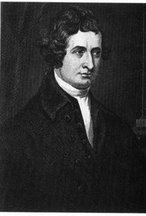
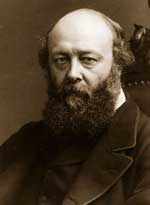
Hardinge Stanley Giffard, 1st Earl of Halsbury PC, QC (1823-1921)

Today is the 190th birthday of Hardinge Stanley Giffard, the 1st Earl of Halsbury.

A biography has been written by a John Hostettler:
Those who have used the serried ranks of volumes of Halsbury in the course of their professional work may, perhaps, have regarded Halsbury the man as almost a mythical figure – a man so much overshadowed by the work which bears his name that he himself has been hidden from public view. John Hostettler in this volume brings him triumphantly to life. Although the many years of his life belonged to the 19th century and to the Victorian era, the later part of his life proved to be the most productive. And what a period tha was : the tumultuous history of the early days of this century, with the social revolution following the end of the Victorian reign, the Lloyd George "Peoples's Budget", the Easter Rising in Ireland, the Taff Vale case, and with the [approach] of the Great War as a dark and terrifying backdrop. John Hostettler has written a biography which is a fully rounded portrait of Halsbury – Halsbury the Barrister; Halsbury the politician, Halsbury the Lord [Chancellor], Halsbury the Judge, and Halsbury as the progenitor of that remarkable [exposition] on the Common Law which bears his name so proudly as a great jurist.

During the crisis over the bill that became the Parliament Act of 1911, Lord Halsbury was one of the principal leaders – if not the principal leader – of the rebel faction of Tory peers that resolved on all out opposition to the government's bill.

Lord Halsbury is known to have said at a meeting of Conservative peers on the 21 July 1911: "I will divide even if I am alone."

On August 8th of that year, the House of Lords resolved:
That in the opinion of this House, the advice given to His Majesty by His Majesty’s Ministers, whereby they obtained from His Majesty a pledge that a sufficient number of Peers would be created to pass The Parliament Bill in the shape in which it left the House of Commons, is a gross violation of constitutional liberty, whereby, among many other evil consequences, the people will be precluded from again pronouncing upon the policy of Home Rule.
Two days later Their Lordships yielded with a dissentient, the dissentient having the following justification:
  1. Because it destroys the balance of the Constitution itself.
  2. Because it deals with the problem of Constitutional responsibility, but as a party measure.
  3. Because it is destructive and not constructive.
  4. Because it abrogates the authority of the House of Lords without substituting anything for it.
  5. Because it releases the House of Commons from all substantial control.
  6. Because it thus establishes in these realms, contrary to all the traditions of this country and the experience of all great Constitutional Powers, a Single-Chamber Government.
  7. Because it preserves this House in a nominal existence so as to obscure from the people of this country the absolute and unrestrained power of the House of Commons.
  8. Because it is avowedly brought forward as a means of carrying a further Constitutional measure of the first importance without referring that measure to the people of the United Kingdom, who have twice expressed their repugnance to it.
  9. Because the method of carrying it is almost as great a strain on the Constitution as the measure itself.
  10. Because the whole transaction tends to bring discredit on our country and its institutions.
We salute Lord Halsbury on this his birthday – September 3.


BTW, Lord Halsbury was born on the 40th anniversary of the signing of the Treaty of Paris, which formally ended the American War of Independence.

Read More »»

Friday, December 23, 2011

The Viscount Bolingbroke

. Friday, December 23, 2011
3 comments

260 years ago today (December 12 in the old calendar), Henry St John, 1st Viscount Bolingbroke passed on.


Alexis Simon Belle: Henry St John, 1st Viscount BolingbrokeAlexis Simon Belle: Henry St John, 1st Viscount Bolingbroke


Lord Bolingbroke wrote The Idea of a Patriot King, in which – amongst other things – he wrote:
Among many reasons which determine me to prefer monarchy to every form of government, this is a principal one. When monarchy is the essential form, it may be more easily and more usefully tempered with aristocracy, or democracy, or both, than either of them, when they are the essential forms, can be tempered with monarchy. It seems to me, that the introduction of a real permanent monarchical power, or any thing more than the pageantry of it, into either of these, must destroy them and extinguish them, as a greater light extinguishes a less. Whereas it may easily be shown, and the true form of our government will demonstrate, without seeking any other example, that very considerable aristocratical and democratical powers may be granted on a monarchical stock, without diminishing the lustre, or restraining the power and authority of the prince, enough to alter in any degree the essential form.

Read More »»

Sunday, December 11, 2011

Hardinge Giffard, 1st Earl of Halsbury

. Sunday, December 11, 2011
0 comments

The Lord HalsburyHardinge Giffard, 1st Earl of Halsbury


Hardinge Giffard was born on September 23, 1823 – in the reign of George IV. He passed on, 98 years old, 90 years ago today – on December 11, 1921. Lord Halsbury was the most prominent opponent in the House of Lords of what was to become the Parliament Act 1911, whose centenary is marked this year.

Read More »»

Tuesday, August 17, 2010

Monarchist MacArthur

. Tuesday, August 17, 2010
8 comments

I was surprised to read in Secret Places, Hidden Sanctuaries (a jolly good book in which I shall provide a later review) that General Douglas MacArthur was a lifelong monarchist, and apparently even a member of the Royal Stuart Society, after that monarchist society was established in 1926. Prominent Americans are not (never?) renown for this.

h62439
Photo of General Douglas MacArthur inscribed to Admiral Nimitz

Mind you, when you look at the man - his jaunty appearance, that invincible confidence of his, the trademark corncob pipe, the way he carried his riding crop like it was a royal sceptre, or - and especially - here, seated as if upon his throne, photographed in a French chateau at the Front in September 1918. Vanity and hubris was the stuff of the future "American Caesar", who as Supreme Commander seemed to run the war as if it were a one-man show. The old soldier of the ballad acted the part of an absolute monarch.

And indeed he did as Supreme Commander of the Allied Powers and military ruler over that of defeated Japan, which included the Emperor himself. When MacArthur confirmed that the emperor's abdication would not be necessary, he did so over the objections of many members of the imperial family as well as Japanese intellectuals who called for abdication and the implementation of a regency. While the decision to constitutionalize the monarchy in occupied Japan and to establish a Westminster parliamentary democracy would have ultimately required the approval of the American government (with input from the Allies), MacArthur no doubt wielded enormous influence in those discussions, and indeed operated with unilateral control over Japanese reforms until about 1948, when the U.S. State Department stepped in.

As we prepare to mark the 65th anniversary of the Japanese surrender this September 2nd, how about a toast to the old soldier who did his duty as God gave him the sight to see that duty; who now sleeps without the crash of guns, the rattle of musketry, and the strange, mournful mutter of the battlefield.

Read More »»

Friday, July 30, 2010

The Triumph of Lord Black?

. Friday, July 30, 2010
4 comments

Let me tell you a story, 'bout man named Conrad...


In the lead up to Conrad Black’s 2007 criminal trial, a Toronto designer created some t-shirts with the slogan “Conrad will win” printed under a cartoon of Black’s face. As a backer of Black’s from the beginning, I arranged to get myself one. The shirt symbolized what Conrad’s friends and supporters thought was destiny at the time.

But despite being cleared of the majority of criminal charges against him, its wasn’t to be — and Black has been in jail for more than two years. Like many of his “foul-weather friends,” to borrow George Jonas’ term, I held out hope for as long as I could, but I packed away my t-shirt when George W. Bush left the White House. When Bush declined to give Black a pardon, it appeared the war was lost and no plausible battlefields remained. Others I spoke to privately felt the same way.


It's not just National Post hacks who think like that. No, ordinary people, well ordinary readers of the Post, have also chimed in:


If his bail conditions permit him to leave the United States, we should all welcome Conrad Black home. Other exploits notwithstanding, his accomplishments as a newspaperman and writer are prodigious and unusual. And, if he sometimes got profligately confused about what he was entitled to, that is an understandable by-product of being a very prodigious, and ridiculously talented, individual. As long as he doesn’t insist on being addressed as “Lord”, I’ll be happy to buy him a welcome-back beer at any time. Bring him home now.

I am fine with referring to Mr Black as His Lordship. But I'm a Whig Monarchist Reactionary, so my position may not be reflective of prevailing trends. The motto of my life. Still Conrad Black has had a kind of cult following for years, especially among conservatives.


They are not quite fans, by their nature they are a reticent lot, but certainly admirers. Black is scarcely the Horatio Alger type of figure the free market minded tend to admire. A scion of a wealthy WASP Montreal family (originally from Winnipeg), Black was famously kicked out of Upper Canada College for selling test answers. His first major success was a corporate coup, seizing control of the legendary Argus holding company in the late 1970s, with a measure of personal charm and strategic acuity that would have impressed Talleyrand.


A documentary on Black's takeover, based on Peter C Newman's book, transformed the thirty-something into a national celebrity. Brilliant, erudite and conservative, Black exuded a charm that was perfectly in step with the age of Reagan, Thatcher and Alex P Keaton, who might have been a younger American cousin. He was not, despite the haranguing of the Canadian Left, a hard-core free marketer. An admirer of Franklin Roosevelt and Richard Nixon (both grand villains in libertarian cosmology), Black is really a sort of moderate British Tory, somewhere to the right of Harold Macmillan and the left of Geoffrey Howe.


To the Canadian media of the era, he was a gift. Canadian businessmen, by instinct and training, are a grey lot who shun public attention. They seek to blend effortless into the soft leather cushions of their limos, being driven at moderate speeds down Bay and King. Black was nothing of the sort. He was flamboyant, albeit by conservative Canadian standards, and like Pierre Trudeau in politics he was accorded points for style. Being so, by the meek standards of the day, militant in his defense of capitalism, he was immediately branded a modern day robber baron. A slag that became more plausible when he became an actual baron in 2001, and was convicted in 2007.


Despite the steady stream of sneers, Black spent the 1980s and 1990s acquiring a reputation as a formidable reorganizer of ailing corporate giants. His passion for newsprint lead him to revitalize Canadian journalism, an effort which met with the typical ingratitude of the hacking class. When he was offered a peerage, a traditional prerogative of owners of the Telegraph, he accepted.


To the fur traders back in Toronto and Montreal, it was further proof that the boy-wonder had delusions of grander. For an anglophile history-nut, the temptation of sitting in the house of Beaconsfield and Liverpool was too much. Jean Chretien, annoyed by the Post's dogged tracking of his Prime Ministerial excesses, decided to block the peerage. He was on the shakiest of constitutional ground, citing the Nickel Resolution of 1919 which allegedly barred Canadians from accepting honours from the Crown.


Yet it was simply a resolution passed by the House of Commons, it was never agreed to by the Senate and no formal request was ever made to the sovereign. The successor government of R.B. Bennett ignored the resolution, and Bennett himself accepted the title of Viscount after leaving office (a step above baron). Frederick Banting and William Stephenson were both made Knights after the passage of the Nickel Resolution. Chretien was playing the vindictive ward heeler.


In his rapid ascent, wide learning and powerful style, Black accumulated a small but dedicated following. Few of these people had ever met Black. They were not friends or allies, but ordinary Canadians, professionals, small business people and conservative fellow travellers. He was a larger than life character, born in a country that in a deep and powerful way was still essentially provincial. The old Canadian joke about the lobsters applies to Lord Black.


How can you tell a pot is full of Canadian lobsters?

When one tries to escape the others hold him down.


He was too bright, too interesting, too grand a figure for the people who believed in Little Canada, a smug colonial outpost that alternately hated and envied its mother and older brother. To those whose vision of Canada is wide and free, who imagine it capable of great things, if only its talents were unleashed, to many of those Lord Black was a prophet in pinstripes. For all his faults he remains prophet. From his ordeal at the hands of a vindictive American government, he has acquired a sort of strange martyrdom, endured with the stoicism of his class and generation. He is a powerful reproach to the worst of modern Canada, especially the cults of envy and greyness. For this alone he deserves to be welcomed back to the land of his birth.

Read More »»

Sunday, April 25, 2010

Manifestal Lunacy

. Sunday, April 25, 2010
4 comments

The United Kingdom is standing before a general election.

Let us see what the major parties' manifestos say on the grand institutional matters.

The Labour Party Manifesto has a chapter 9 entitled “Democratic reform: A new politics: renewing our democracy and rebuilding trust.” Under a subtitle “The next stage of national renewal,” the Labour Party manifests:

  • Referenda, held on the same day, for moving to the Alternative Vote for elections to the House of Commons and to a democratic and accountable Second Chamber.
  • Improved citizenship education for young people followed by a free vote in Parliament on reducing the voting age to 16.
For those interested in details, they can be found in a PDF document.

The Liberal Democrats Manifesto follows suit. In a chapter entitled “your say,” in a section entitled “fairer politics,” amongst the main points are:
  • Give the right to vote from age 16.
  • Replace the House of Lords with a fully-elected second chamber with considerably fewer members than the current House.
For those interested in these details, they too can be found in a PDF document (also a PDF with only the cited chapter).

Then there is the Conservative Party Manifesto. In a chapter entitled “Change politics” and a section entitled “Make politics more accountable,” the Conservative Party manifests:
We will work to build a consensus for a mainly-elected second chamber to replace the current House of Lords, recognising that an efficient and effective second chamber should play an important role in our democracy and requires both legitimacy and public confidence.
“Conservative” indeed! In this manifesto there is no crazy flirting with minors. However, the House of Lords must go, apparently. Details can be found in a “conservative” PDF document.

The House of Lords Chamber

The great High Tory Mr. Gerald Warner today sums up the upcoming election in Scotland on Sunday:
Choice is a luxury that is no longer on offer to British voters. The identical programmes of the three main political parties have effectively created a one-party state. It is the great irony of this general election that the expansion of the traditional two-horse race into a three-horse contest has brought not the slightest philosophical broadening of the electoral landscape.
Mr. Warner goes on:
It would be more accurate to say that Labour, Conservatives and Liberal Democrats share a homogenous culture. It is possible to detect slight differences in their respective agendas – the Liberal Democrats' dissent from the Iraq War would be one instance – but these are purely tactical variations in the implementation of a common political culture that Gordon Brown once described as “the Progressive Consensus”. When the advent of David Cameron as Conservative leader absorbed even the Tory Party into that consensus, multi-party democracy became history.
Progressive democracy marches onwards. The “solution” to the problems of modern democracy is even more democracy. Nothing is to check the will of the popular majority – nor stand in the way of those acting in its name. Liberty and decency be damned.

By the way, anyone care to bet on when universal suffrage is expanded to two-year-olds?

Read More »»

Tuesday, April 13, 2010


The Doctor who Saved the Edwardian Era

. Tuesday, April 13, 2010
1 comments

Whenever your mind wanders back to the Edwardian era, spare a thought for Lord Lister and Sir Frederick Treves. Old Bertie would not have made his coronation without them.

Lister_Joseph
Lord Lister, the Pioneer Surgeon who saved the Edwardian Era

King Edward VII came down with appendicitis two days before his coronation. The surgeons did not dare operate without consulting Britain's leading surgical authority. The king later told Lister, "I know that if it had not been for you and your work, I wouldn't be sitting here today."

Edward's coronation of 9 August 1902 had originally been scheduled for 26 June, but two days before on 24 June, Edward was diagnosed with appendicitis. Thanks to developments by Lord Lister in anaesthesia and antisepsis in the preceding 50 years, he underwent a life-saving operation, performed by Sir Frederick Treves.

This was at a time when appendicitis was generally not treated operatively and carried a high mortality rate. Treves, with the support of Lord Lister, performed a then-radical operation of draining the infected appendix through a small incision. The next day, Edward was sitting up in bed, smoking a cigar. Two weeks later, it was announced that the King was out of danger. Treves was honoured with a baronetcy (which Edward had arranged before the operation) and appendix surgery entered the medical mainstream.

Read More »»

Saturday, October 31, 2009

Beaverado

. Saturday, October 31, 2009
2 comments

"Attack it immediately."

Churchill had asked for advice, he got it. The French fleet at Mers-el-Kébir was in danger of falling into German hands. On July 3rd, in an act as ruthless as it was necessary, Churchill ordered the destruction of the French Fleet. He is said to have wept on giving the order. His interlocutor was not so moved. The Minister of Aircraft Production had reasoned that the French fleet might be blackmailed by the Germans, perhaps by a threat to destroy Marseilles, into joining their weight to the Italian navy, tipping the balance against the Allies in the Mediterranean. The minister's strategic logic was sound. Churchill knew that. He had appointed him to cabinet over the howls of many members of his war-time coalition. In the vital summer of 1940 the RAF was desperately short of Spitfires and Hurricanes. Britain needed pilots and planes. The volunteers were not lacking, their tools were.

A production miracle was needed, Churchill turned to Max Aitken, 1st Baron of Beaverbrook. Max was an old friend. He was also the most powerful press baron in the Empire. His Daily Express sold 3.7 million copies, the largest circulation of any paper in the world. He also had an uncanny knack for finance, making him, his associates and investors very rich. In four months he produced 6400 aircraft for the British war effort. Quadrupling the rate of production. His critics charged he was exaggerating the number of aircraft. Probably. Max had a tendency to do that. He had cut his teeth in the business world selling bonds door to door in rural New Brunswick. The hyper-active salesman never left him. He often went too far in making promises, in saying things he shouldn't. Yet what he did deliver was nothing short of brilliant.

As part of a series of books on influential Canadians, under the guidance of former GG consort John Ralston Saul, the noted New Brunswick novelist David Adams Richards has produced a thin one volume biography of Lord Beaverbrook. Written in a chatty manner, that might be irritating to some, Richards provides what is really a longish personal essay, on arguably the most influential Canadian of the twentieth century. Another son of the Miramichi, Richards intersperses his chronological narrative with personal and family encounters with Beaverbrook. What emerges is a character somewhere between Horatio Alger and Duddy Kravitz, yet on a grand scale. A smooth operator with sharp elbows, always thinking several moves ahead of the opposition.

Beaverbrook Book Cover

It was said of his contemporary, TE Lawrence, that he had a habit of backing into the limelight. So did Max, except he would usually bump into some famous personage of the day, or soon to be, as well. He ran R.B. Bennett's first election campaign, while he was not yet of voting age. He promised voters things that R.B. couldn't, or wouldn't deliver, which did not amuse the future Prime Minister. Yet when Bennett moved west, and ran for Parliament, there was Max with his impish grin and fast moving 5ft 5in frame. You could never quite stay mad at him. No matter how many times he committed adultery, or bent the facts just a wee bit too much, he usually got away with it. Because he could charm, yes. Because he was often right, even when he was wrong, yes. Above all, because people needed Max. He was smarter than they were.

He talked his way into a job with the powerful financier John F Stairs, who put the bright young lad - just in his twenties - to merging a smaller bank to Stairs' Union Bank, then to running Royal Securities. Soon Max was in Montreal, the centre of Canadian Edwardian capitalism. The venerable Sir Sanford Fleming was in distress. His interests in concrete were threatening the pioneering engineer with bankruptcy and disgrace. Lead by the President of the Bank of Montreal, and assisted by the Who's Who that was then the board of the CPR, the great and good of Canadian business asked that Max Aitken figure something out. It was a trap. The fast rising Aitken was a threat, and one with a slippery reputation. The collapse of Fleming's interests in concrete seemed ordained. Best that the blame might be placed on the pushy cad from nowhere New Brunswick. Max had the last laugh. He saved Fleming's fortune, introduced a sweeping consolidation of the Canadian concrete industry - which had been crippled in the wake of the Panic of 1907 - and made his own fortune into the bargain. Yet the whole thing has been just a bit too slick. There were rumours. Max, now a millionaire (pounds not dollars) while not yet thirty, headed for the epicentre of power and finance, London.

Arriving with his beautiful wife - daughter of a Major-General - in England, he set up in great country estate - his neighbour and new friend was Rudyard Kipling. Marital bliss was fleeting. Richards argues that Beaverbrook was chasing love most of life, in the arms of this lovely and that, in the respect of a series of father figures. Among the most influential of the latter, was a fellow Canadian, Andrew Bonar Law. A prominent Conservative, Law was engineered into the leadership of the party by Beaverbrook, a newly minted MP, in 1912. Aitken revered Law, deciding that his friend must become Prime Minister. The Liberals, under H.H. Asquith. were weak. An expected election in 1914 or 1915 would topple them. Sarajevo intervened.

Another one of Aitken's new friends, Winston Churchill, had wanted an Liberal-Tory coalition to fight the war. The Liberals refused. Yet the government's popularity waned. Asquith was to be overthrown through a parliamentary coup in late 1916, among whose leading plotters was Aitken. Law was denied the premiership, instead made number two to another new friend of Max's, David Lloyd George. Though their politics were rarely compatible, they were both in a sense actors. Lloyd George, however, was a professional and Aitken just starting. Dropping hints of a cabinet position, as Minister of Trade, Lloyd George secured Aitken's support.

In expectation of office, Aitken resigned his seat and started campaigning for re-election - as was required by British law at the time. Lloyd George, through Law, instructed Aitken not to run again, allowing the seat to go to "a Georgian" loyalist who would be made Minister of Trade. As consolation Aitken was raised to the peerage. According to legend, Kipling talked him out of becoming Lord Miramichi, on the grounds that Englishmen would be unable to pronounced it. The new Lord Beaverbrook had to console himself with PR work. First promoting the job Canadian soldiers were doing on the Western Front, then as Minister of Information in the war-time cabinet. Dreams of revenged never left him. From the end of the war in 1918 until 1922, Beaverbrook plotted again, to remove Lloyd George and replace him with Law. He succeeded only to have Law resign shortly after from throat cancer.

In the midst of the intrigues surrounding Asquith's fall, Beaverbrook had acquired control of a failing paper called the Daily Express. Lord Northcliffe had told him he would lose his fortune keeping it afloat. Instead he revolutionized the industry. He introduced the first women's section and crossword. No expense was spared on photography and layout. The modern tabloid was born. As the paper grew in importance, Beaverbrook's reputation as a pushy cad never left him. The Establishment found his enthusiasm and energy aggravating. The mixture of envy and hatred that is directed from old money to new money. From self-made men to the scions of great names. Being a colonial didn't help. The British elite were not completely averse to outsiders, the Empire would never have lasted without the ruling classes talent for co-opting rising stars. Disraeli had been Prime Minister the year Beaverbrook was born. Dizzy, however, was a witty novelist and insanely charming dinner guest. The Maritime accent, and manners, hung too closely to the backwoods baron.

They hated him, but they needed him. Nor was the hatred expressed in ordinary terms. That great worshipper of the upper classes, Evelyn Waugh, mocked his former employer as Lord Copper in Scoop. My own personal suspicion for years has been that Rex Mottram, the amoral materialist from Canada in Brideshead Revisited, was another dig at Beaverbrook. Isolated again, he sought out more women and more business ventures. The lure of politics remained. In a quixotic gesture he founded the short-lived Empire Party in 1930. Disgusted with the defeat of the Tories under Stanley Baldwin, who had succeed Law as leader and PM. Never an admirer of the famously pragmatic Baldwin, the Empire Party was a political blunt weapon to be used to take down Baldwinite Tories. The ideas was dropped, but not the party platform. Since coming to England, Beaverbrook had been a highly vocal advocate of Imperial Preference, a free trade zone within the Empire. This was a first step toward some kind of greater imperial unity, which he never defined.

Imperial Preference faded, after a brief vogue during the Ottawa Conference of 1932. Like many middle aged men, Beaverbrook's world view had frozen in his youth. Then the idea of some kind of imperial federation was widely discussed in the first decade of the twentieth century. The idea of empire, however, was fading. The colonial boy made good found himself, so to speak, being more royalist than the king. The centre had no interest in holding. If his views didn't always carry the day in the councils of state, his dominance of the press was unquestioned. He almost single handedly kept news of Edward VIII's relationship to Wallace Simpson secret - in Britain - for much of 1936. Eventually the Daily Express did break the story, once it was clear Edward was set on abdication. If he couldn't prevent a constitutional crisis in the 1930s, he could at least give a platform to his old friend, Churchill, to warn of the gathering storm. Few in late 1930s Britain were interested in what Churchill had to say. The Times and the BBC effectively banned him for long stretches of time. When war came, and in time his appointment as PM, Churchill remember Beaverbrook's aid and comfort.

The post-war world proved disappointing to Beaverbrook. He had resigned from the cabinet in 1942 when Attlee was made Deputy PM. The age of socialism and decolonization was alien to Max. He made a few attempts to resettle in New Brunswick, but England was now his home. In all this he found time to write books. Richards describes his writing style as "Beaverado."So was his life. In his last public appearance, an interviewer asked him if he was disappointed in the ultimate failure of imperial preference. The old man replied quietly: "I was unworthy." Yet again he was exaggerating. Not from hubris, but undeserved humility.

Read More »»

Monday, October 19, 2009

Lord Clark of Civilisation

. Monday, October 19, 2009
6 comments

Old Kenneth Clark was such a towering intellect and man of basic decency and conviction, I weep at the thought and realisation that men like him are now gone. Here are Lord Clark's first ("The Skin of Our Teeth") and final ("Heroic Materialism") episodes of his superb 1969 BBC documentary, Civilisation.


Above, Kenneth Clark opens Civilisation with a quote from Ruskin, who said that the manuscript of a nation is found in a book of their deeds, a book of their words and a book of their art, but mostly in a book of their art. We may not be able to define civilisation in abstract terms, but we sure in the heck know what it is when we see it. The great man explains how European civilisation got through by the skin of its teeth.


In the final episode, Lord Clark re-emphasises his central theme of why civilisations require confidence to survive, and how cynicism and disillusion can do us in as easily as bombs and barbarism. We are not at the end, but we are in trouble because there is no longer a (Christian) Center holding it all together. Heroic materialism is no substitute for the moral and intellectual failure of Marxism. "One may be optimistic, but one can't exactly be joyful at the prospect before us."

A big hat tip to Sunlit Uplands.

Read More »»

Friday, September 4, 2009

Queensland or Saxon Land

. Friday, September 4, 2009
6 comments

Edward_George_Earle_Lytton_Bulwer_Lytton%2C_1st_Baron_Lytton_by_Henry_William_Pickersgill
ROYAL LETTERS: Edward Bulwer Lytton involved in naming of Queensland.

The Courier Mail in Australia reports: "A British historian says Queensland might have been called Saxon Land or Clarence - and Queen Victoria didn't seem to take any interest in the State's naming. Saxon Land, Clarence and Queen's Land were options suggested by The Colonial Secretary, Sir Edward Bulwer Lytton, according to Professor Ged Martin from The University of Edinburgh."

"Professor Martin reveals his findings in letters to his friend John Dawson, a former Queensland Agent General in London, now retired in Brisbane. Professor Martin said letters held in The Royal Archives at Windsor Castle show Lord Lytton's own correspondence to Her Majesty Queen Victoria in 1859."

"When the options were narrowed to Saxon Land and Queen's Land, Lord Lytton wrote a letter. He said "both the names which have occurred to Your Majesty are excellent", adding, "the Colonists would find particular pride" in Queen's Land. So it came to be. But the naming of Queensland seems to have been an afterthought with letters showing Victoria more interested in the naming of British Columbia and its capital, Victoria." Celebrate Saxonland (sorry, Queensland) here and here.

Read More »»

Wednesday, September 2, 2009

The Lord Earl of Halsbury

. Wednesday, September 2, 2009
4 comments

Hardinge Stanley Giffard, 1st Earl of Halsbury PC, QC (1823-1921)

During the crisis over the bill that became the Parliament Act of 1911, Lord Halsbury was one of the principal leaders – if not the principal leader – of the rebel faction of Tory peers that resolved on all out opposition to the government's bill.

Lord Halsbury is known to have said at a meeting of Conservative peers on the 21 July 1911: "I will divide even if I am alone."

On August 8th of that year, the House of Lords resolved:
That in the opinion of this House, the advice given to His Majesty by His Majesty’s Ministers, whereby they obtained from His Majesty a pledge that a sufficient number of Peers would be created to pass The Parliament Bill in the shape in which it left the House of Commons, is a gross violation of constitutional liberty, whereby, among many other evil consequences, the people will be precluded from again pronouncing upon the policy of Home Rule.
Two days later Their Lordships yielded with a dissentient, the dissentient having the following justification:
  1. Because it destroys the balance of the Constitution itself.
  2. Because it deals with the problem of Constitutional responsibility, but as a party measure.
  3. Because it is destructive and not constructive.
  4. Because it abrogates the authority of the House of Lords without substituting anything for it.
  5. Because it releases the House of Commons from all substantial control.
  6. Because it thus establishes in these realms, contrary to all the traditions of this country and the experience of all great Constitutional Powers, a Single-Chamber Government.
  7. Because it preserves this House in a nominal existence so as to obscure from the people of this country the absolute and unrestrained power of the House of Commons.
  8. Because it is avowedly brought forward as a means of carrying a further Constitutional measure of the first importance without referring that measure to the people of the United Kingdom, who have twice expressed their repugnance to it.
  9. Because the method of carrying it is almost as great a strain on the Constitution as the measure itself.
  10. Because the whole transaction tends to bring discredit on our country and its institutions.
We salute Lord Halsbury on this his birthday – September 3.

Read More »»

Tuesday, August 11, 2009

Colonel Strome Galloway (1915-2004)

. Tuesday, August 11, 2009
0 comments

A loyal patriot passed away five years ago today. Colonel Galloway was a veteran of the Second World War, a co-founder of the Monarchist League of Canada and a founder member of the Royal Heraldry Society. A proud Canuck and old Britisher to the end, he was perhaps the last of his breed. The following was his obituary at The Telegraph.

Colonel Strome Galloway, who has died aged 88, was a battle-hardened infantry officer, a prolific if unsubtle writer and a co-founder of the Monarchist League of Canada; with his bristling moustache, he was one of the Canadian Army's "characters", noted for legendary coolness under fire as well as for the maintenance of social standards and the care of his men.

Galloway's battlefield initiation had occurred in 1943 when he was sent with other Canadian officers to gain experience with the British First Army in Tunisia. Attached to the 2nd London Irish Rifles, he was commanding a company when his CO saw paratroopers from the Hermann Goering Division advancing on a large farm, and ordered him to seize it.

Rising to his feet, Galloway yelled "Fix bayonets", then roared "Charge" as he led his men across an open field under tracer fire, by which only one man was hit. They found no Germans on reaching the stables and living quarters of "Stuka Farm". But minutes later the enemy was hurling stick grenades through the windows; and for several hours the London Irish occupied one room while the Germans battled with them from next door. When the Germans finally retired, Galloway discovered that, in the chaos of the battle, the Allied leadership was preparing to take the farm again; he judiciously withdrew several hundred yards to the safety of a slit trench containing cactus.

Andrew Strome Ayers Carmichael Galloway was born at Humboldt, Saskatchewan, on November 29 1915. His family later moved to St Thomas, Ontario, where in 1932 he joined the Elgin militia regiment on 50 cents a day. He was commissioned two years later.

In 1936, Galloway published himself his book, The Yew Tree Ballad and Other Poems. It contained, he admitted in later life, "rather rotten poetry". But after paying printing and postage costs he made a profit of $190, which he invested in a trip to Britain for the coronation of King George VI. After a 16-day voyage aboard a foul-smelling cattle boat, young Strome landed to buy a bowler hat and an umbrella. He filed a story to the St Thomas Times-Journal in Ontario about the shouts of "bloody Nazis" and booing in Trafalgar Square at the carriage containing a German field marshal; but soon he ran out of money, and had to work his passage back to Canada.

Galloway worked as a newspaper sub-editor, and enjoyed saluting the King with drawn sword during the Royal tour of the Dominion in 1939 shortly before being called up; he transferred to the RCR shortly before the outbreak of war. After being advised to take a pair of gumboots with him, he was dispatched to Britain in 1940. There he started the practice, which he maintained long after the war, of having his collars laundered in Britain.

On returning to the RCR following his two months with the London Irish, Galloway led his company on to the beaches of Sicily on July 10 1943. While escorting some German prisoners to the rear, he stopped for a moment to chat with another officer when enemy mortar bombs began exploding near the road. As his prisoners dived for cover Galloway laid into them with his stick shouting: "Get out of that ditch, you bastards - they're your mortars."

In December 1943 the Royal Canadian Regiment was engaged in the costly advance from the Moro River in Italy to the coastal town of Ortona. As they launched two companies in an attack a mile southwest of the port, the artillery barrage which preceded it began falling, due to faulty maps, on a flanking battalion. The guns then ceased firing, and the advancing RCR found themselves face to face with entrenched enemy paratroopers whom the barrage had left unscathed. Murderous cross-fire cost them all their officers. Galloway took over command.

Throughout the following night, with its strength reduced to 178 officers and men, the regiment held its position under mortar fire and sniping. Then, bringing forward every man who could be spared from his support platoons, Galloway formed three companies of 65 men each, who advanced the next day behind an intense barrage to find the opposing German 1st Parchute Regiment had withdrawn back into Ortona.

From his arrival in Italy until the end of the war, Galloway took part in 25 of the 27 actions in Italy and northwest Europe for which his regiment was awarded battle honours, commanding it for short periods at Ortona, in the Gothic Line battles and during the winter fighting west of Ravenna. Although wounded at Motta Montecorvino in September 1943, he was away from the battalion for only five weeks.

With the return of peace, he served in various staff and instructional appointments, being promoted to lieutenant-colonel in 1951 to instruct at the staff college at Kingston, Ontario. He took command of the newly formed 4th Battalion, Canadian Guards; then, having attended the National Defence College, he commanded the winter warfare establishment at Fort Churchill, and became military attaché in Bonn.

After retiring, full of disgust at the ill-advised unification of the Armed Forces, Galloway was for 10 years the Honorary Lieutenant-Colonel of the Governor-General's Foot Guards; in 1989, he was appointed Colonel of the Royal Canadian Regiment.

When Pierre Trudeau barely disguised his republican inclinations in proposals for a new Canadian constitution in late 1969, Galloway became a founder member of the Monarchist League of Canada. He then played a leading part in helping to destroy the attempt to reduce the Queen's importance by transferring her powers to the Governor-General.

Galloway produced nine books, including an autobiography, The General Who Never Was, in which he drew on his diaries to recount his experiences in camp and battle. Although these were hardly classic tales, they contained a wealth of detail, recounting some of the less well-known aspects of soldiering, such as the punishment of officers found in the men's brothels in North Africa, the Arabs' preference for payment in tea rather than money, and the problems involved in writing citations for medals.

In the 1972 general election, he ran unsuccessfully against John Turner, the future Prime Minister, and was amusedly conscious of cutting an absurd figure in progressive eyes. Yet Galloway was an able speaker. Despite his romantic nature, he was also a realist in dealing with contemporary issues, even willing to use the language of public relations.

Strome Galloway died on August 11. He married, in 1950, Jean Love, a journalist, who predeceased him, and is survived by their two daughters.

Read More »»

Monday, July 20, 2009

Kind Hearts and Coronets

. Monday, July 20, 2009
2 comments


A classic was born 60 years ago this summer.
Hat tip: Gods of the Copybook Headings

Read More »»

Thursday, November 13, 2008

High Anthony

. Thursday, November 13, 2008
3 comments

Did Drinamyl, a combination of amphetamines and barbiturates, destroy the British Empire? Or at the very least impair the judgment of its Prime Minister, during one of the gravest moments in British history? In a new book David Owen, a physician and one of the youngest foreign secretaries in history, traces the influence of illness in the personal judgment of various world leaders, including one of his predecessors, Sir Anthony Eden. Blessed with matinee idol good looks, a fine sartorial style and impeccable manners, Eden served three times as Foreign Secretary, and was Churchill's closest ally and lieutenant during his two terms as Prime Minister. Widely popular in the country, and generally respected as one of the century's most effective foreign secretaries, he succeeded Churchill as Prime Minister in April of 1955 with great promise; quickly calling and winning a snap election. In a little more than a year and a half he was out of office, forced out by ill-health and one of the greatest foreign policy blunders in the country's history.

Gamal Abdel Nasser, the opportunistic young military office who helped overthrow the Egyptian monarchy, only to then seize power for himself. Seeking to consolidate his power, both in Egypt and establish his credentials as the leader of the Arab world, he seized control of the Suez Canal. The proximate cause was the refusal by the American government to finance construction of the proposed Aswan Dam, later built with Soviet assistance. Nasser's long-term goal was the removal of British influence in the Middle East, replacing its near century long hegemony with an Egyptian one. Although built by French engineers, the majority of the shares were owned by the British government, thanks to the quick thinking of Disraeli and his friends in the Rothschild banking family during a financial crisis in 1875.

To Eden, who had resigned as Foreign Secretary in 1938, in part, because of Neville Chamberlain's policy of appeasement, Nasser was a latter day Mussolini and nationalization, something akin to the invasion of Ethiopia in 1935. President Eisenhower, and his usually bellicose Secretary of State John Foster Dulles, saw the Suez Crisis differently. Supporters, in principle, of decolonization and keen to supplant British influence in the oil rich region, the American government refused to support military action. It was at this moment that Eden, arguably, committed one of the gravest strategic errors ever made by a minister of the crown. Overestimating the importance of the special relationship in Eisenhower and Dulles calculations, and Britain's comparative economic strength, he launched a plan of subterfuge remarkable for both its scale and complexity.

British, French and Israeli representatives meet in secret at Sèvres, near Paris, and agreed that Israel should invade the Sinai. Using this as a pretext an Anglo-French force would invade and seize the canal, arguing that it was attempting to keep apart the warring parties. The protocols of Sevres, as they became known, recalled the Great Power deals of a different era, like the Sykes-Picot Agreement which divided the Middle East between Britain and France during World War One. 1956 was the era of the Superpowers; Britain and France were now firmly in the American orbit. The deception of Sevres was too convenient and complex not to be discovered. In a less democratic and, from geopolitical perspective, bi-polar world this might not have been a problem. Eisenhower, fearing a Soviet response and greatly annoyed for having been kept out of the loop by Eden, forced London and Paris to agree to a cease-fire and withdraw. Eden had gambled that Nasser's flirtation with the Soviets would compel Washington to accept, if none too happily, an Anglo-French fait acompli over Suez. Instead Eisenhower threatened to, literally, starve Britain into submission if it did not agree to an American cease-fire plan. Much of Britain's war debt was held by the American treasury, Eisenhower threatened to dump enough of this debt on world markets to force a collapse in the pound. A nation dependent on imports of food to survive, Britain would be unable to feed itself. Eden, from force majeure conceded and went to seek medical treatment.

During the tense months of Summer and Autumn 1956, Anthony Eden stood at the center of Anglo-French efforts to retake the Canal. Had he been able to persuade Eisenhower to, at the very least, not interfere in his efforts to undermine Nasser, there would have been no Suez Crisis as we understand it. The retaking of the Canal would have been a dramatic coup for Eden and Britain and probably would have broken Nasser's power. When an elected Persian government nationalized its oil industry, Britain responded by orchestrating a coup - in conjunction with the CIA. Having successful defied a major western power, something no Arab leader had done in centuries, Nasser became a regional hero and icon for decades. Emboldened by Egypt's success a wave of nationalizations swept the Middle East, granting the region's dictatorships a flood of oil wealth to sustain their regimes.

If the sin of Suez lies with Washington, for failing to support British efforts, the error of the crisis lies with Eden, for miscalculating American and, to a lesser extent, Commonwealth support. Neither proved willing to follow London's, and his, lead. Owen points to a medical reason for Eden's poor judgment, a combination of prescription drugs required to deal with a recurring infection, itself the result of a botched surgery to remove gallstones. A slip of a doctor's scalpel may have altered the course of history for the worse. The counter argument to this is that nothing, not even Eden's considerable powers of persuasion, could have convinced Eisenhower to support a military retaking of the Canal. He might, however, in the fashion for which Dulles brothers (John Foster's brother ran the CIA) were well-known even then, have orchestrated a coup against Nasser. The Egyptian dictator was extremely popular, but so was the Iranian government the CIA had overthrown less than three years earlier. Over the long-run, however, Eden looks the most prescient. If Nasser was no Mussolini in the making, the failure of will at Suez established a de facto policy of appeasement toward the Arab world. Two years after Suez the Iraqi monarchy, a British puppet, fell to an Army coup, a military regime was installed and later taken over by Saddam Hussein.

The Gods of the Copybook Headings

Read More »»

Monday, July 7, 2008


Pugnacious Defender of Emperor Charles

. Monday, July 7, 2008
6 comments

Lieutenant-Colonel Edward Lisle Strutt, (1874-1948), formidable Alpiner, fierce partisan of the Old Order and fervent protector of Blessed Charles, the "last" Austro-Hungarian Emperor

Lieutenant-Colonel Edward Lisle Strutt, CBE, DSO

Lt.-Col. Strutt died 60 years ago today

TO PARAPHRASE WHAT PIERRE BURTON SAID OF SAM STEELE, some men are fortunate in the accident of their names, but few are more furtunate than Edward Lisle Strutt. That marvellous surname, rendered both blunt and familiar – suggestive of an unyielding and pontificating aristocrat – was utterly appropriate to the man who bore it. The two names Edward Strutt fitted him as neatly as his puttees; in tandem they sing like a well-tempered sword whirling in battle, and the sound they make is the sound of command – a born leader: bold, resolute, keen-eyed and barrel-chested, all the cliches apply, "erect as a pine tree and limber as a cat".

The Great War

Companion of the Distinguished Service OrderStrutt was born the same year as Churchill as a grandson of the first Baron Belper – after whom he was named – and a future cousin of the third Baron Belper. He was a devout partisan of the Old European Order. Lt.-Col. Edward Lisle Strutt fought in the Boer War between 1900 and 1902, for which he was decorated with Queen's Medal and King's Medal, and where he was mentioned in despatches. He fought in the First World War between 1914 and 1919, where he was wounded and mentioned in despatches four times. He gained the rank of Temporary-Lieutenant and GSO(1) in 1916. He was decorated with the Companion, Distinguished Service Order (D.S.O.) in 1918. He was decorated with the Officer, Legion of Honour. He was decorated with the Croix de Guerre (French). He was decorated with the Chevalier, Order of Romania. He was decorated with the Chevalier, Order of Leopold of Belgium. He was decorated with the Croix de Guerre (Belgian). He was invested as a Commander, Order of the British Empire (C.B.E.) in 1919. He gained the rank of Lieutenant-Colonel in the service of the Royal Scots. He held the office of Allied High Commissioner in Danzig in 1920. In 1922 he was the second in charge of the Everest Expedition. He died on 7 July 1948 at age 74, sixty years ago today, without issue.

The Situation in Austria

EckartsauThe Great War had ended. The democratic republican age was dawning. The monarchical age was setting. Whilst the latter had been challenged for quite some time, the war had completely destroyed the monarchical order’s immune system. This was with “good” help from Woodrow Wilson’s crusade to make the world safe for democracy, but this crusade was of course not the only contributing factor.

The Austrian Emperor had renounced power on November 11, 1918, but without abdicating. His Imperial and Royal Majesty signed a similar declaration as King of Hungary two days later. He had gone with his family into internal exile at Eckartsau – at the hunting lodge there.

That summer the Eastern Emperor and his family had suffered the tragedy at Yekaterinburg. At the Britannic Court in London, King George V reproached himself for what had been allowed to happen to the Russian Imperial Family. There was fear that a similar fate was about to overtake the Western Emperor and his family. With the armed radicals running around in Austria at the time, this was no unfounded fear.

Also, Emperor Charles was remembered as the Emperor who had sought peace and the Archduke who represented the old Emperor Francis Joseph at His Britannic Majesty's own coronation. This indeed gave memories of an old peaceful order that now brutally had been destructed.

At the personal initiative of His Britannic Majesty, the Austro-Hungarian Imperial-Royal Family is put under British protection.

The Background and Sentiment of Strutt

The Coat of Arms of the Baron of BelperLieutenant-Colonel Strutt was a Catholic, like the Emperor he was sent to protect. He was educated in Windsor and at Oxford, and in Innsbruck, Austria. In addition to his native English, the Lt.-Col. was fluent in German and French.

Strutt was, as Gordon Brook-Shepherd noted, a British officer who served the double eagle and the Habsburg black and yellow colors with a fervor second only to the loyalty to His Britannic Majesty.

In addition to having served in the Great War, he did service in the Boer War (1900-1902), for which he was also honored and decorated.

Edward Lisle Strutt was a partisan of the Old European Order. He was a symbol of personal powers of a monarch, as he was sent on the monarch’s personal initiative. He was a symbol of solidarity between monarchs. Strutt was on the fringe related to the Habsburgs. On arrival at the hunting lodge in Eckartsau, he found a photo of the late Archduke Franz Ferdinand, who was assassinated in Sarajevo on June 28, 1914, and himself.

As a grandson of the first Lord Belper, Lt.-Col. Strutt was a British aristocrat. The Belper motto was and is Propositi tenax (‘Firm of purpose’). There was indeed purpose with the Lt.-Col.

Strutt was to have a life-long passionate devotion for the Habsburg family. He was a life-long friend of the Archduke Otto.

On Mission in Austria

The Royal ScotsA few officers preceded Lt.-Col. Strutt in this protection mission. Strutt arrived at Eckartsau on February 27, 1919.

On March 17, Strutt received advice from the War Office in London that the Emperor should depart Austria for Switzerland, without any guarantees for the journey.

The new republican government was talking about abdication, exile, and internment.

On March 20, as an officer of the Royal Scots on the territory of a defeated ex-enemy, Lt.-Col. Strutt walks into the office of the republican government’s Chancellor, Dr. Karl Renner, and demands: “Please stand up in future when I enter your room!” Renner immediately jumped to his feet. Not much later he ordered an Imperial train to be assembled. The Emperor was to leave as, yes, Emperor!

Chancellor Renner shortly before the departure demanded that the Imperial-Royal family and their luggage be searched. Strutt refused, and Renner wanted to send a “High Commissioner.” The officer of the Royal Scots replied that the Chancellor could very well send such a commissioner, but he also promised that such a commissioner would be shot, and by Strutt himself. The republican Chancellor backed down.

On the eve of the departure though, Lt.-Col. Strutt was called to Dr. Renner’s office, where the Chancellor required the Emperor to abdicate in order to be allowed to leave the country. Then comes the Royal Scots officer’s best bluff on this mission. Strutt had drafted a telegram beforehand, stating:
To Director Military Intelligence London
     Austrian Government refuses permission for departure of Emperor unless he abdicates. Consequently give orders to re-establish blockade and stop all food trains entering Austria.
No more conditions were demanded. The Emperor and his family were to go Imperially. The Imperial train left for the Austro-Swiss border on March 23 with Strutt in charge and an NCO and six British Military Policemen accompanying the Imperial and Royal Family and members of what was left of the Court.

On March 24 the train arrived at the Austro-Swiss border. The Emperor issued the Feldkirch Manifesto, declaring the November 11 power renunciation null and void, and denouncing the authority of the republican government.

The old order may have lost the war, but it certainly won the Austrian departure.

Order of the British Empire

Commander of the Military Division of the Most Excellent Order of the British EmpireOn May 30, 1919, on the occasion of His Britannic Majesty’s birthday, Lieutenant-Colonel Edward Lisle Strutt was appointed as Commander of the Military Division of the Most Excellent Order of the British Empire.

Later in Life

In 1920, Lt.-Col. Strutt served as High Commissioner of the Free City of Danzig.

In the spring of 1921 he returned to the Habsburg site of exile in Switzerland, and he helped the exiled Emperor-King in preparations for the spring Hungarian restoration bid. After the failure of the second Hungarian restoration bid that year, the British officer helped with communication between the Imperial-Royal couple aboard the HMS Cardiff and their children in the Helvetic Confederation. Lt.-Col. Strutt also served as messenger to the Habsburgs of an offer to let a house in Madeira.

After retiring from the military, Strutt was second-in-command of a 1922 British Everest expedition. Mountaineering continued to engage Edward Lisle Strutt. He was active in the Alpine Club, where he also served as President and editor.

He died on July 7, 1948, after also having seen the war that indeed and sadly cemented the destruction of Old Europe.

Conclusion

The Royal ScotsThe now 95 year old Archduke Otto, who not long ago still thought of Strutt with great respect and gratitude, was once asked if he was not full of resentment against the British for their treatment of his father, the Emperor. The Archduke replied:
But after all, there was Colonel Strutt.
Lieutenant-Colonel Strutt most definitely serves as a hero for those on the Allied side who did not and do not second the crusade against, or the dismantling of, the Old European Order. Our hero is a shining example that one did not need be a new order crusader to serve on the Allied side.

Lt.-Col. Strutt was loyal to his Sovereign, and he did what he could for the order that the modernists had destroyed. Had Lloyd George been anything close to Lt.-Col. Strutt in character and sentiment, the old order just might have survived.

We salute the memory of Lieutenant-Colonel Edward Lisle Strutt, C.B.E., D.S.O. on this day, 60 years after his passing.


Elsewhere: LewRockwell.com, Wilson Revolution Unplugged

Read More »»

Tuesday, December 4, 2007

The American Churchill

. Tuesday, December 4, 2007
15 comments

Theodore "Teddy" Roosevelt (1858-1919), the greatest and youngest President of those United States of America.

Above: 1903 official portrait by John Singer Sargent (in T.R.'s words, a "man's portrait" by a "real man's artist").

TO CALL TEDDY ROOSEVELT the American Churchill might not be entirely perfect, comparisons never are, but does perfectly convey the esteem in which I hold him (on some qualities, I would rank T.R. the better). Like a biography on Churchill, a biography on Roosevelt leaves the reader with an heroic and implausible life's tale that is difficult to fathom and surprising to contrast. Animated by an indomitable spirit, both men seem larger than life and bigger than history.

To begin with, both served in their respective armies, headed their respective navies and led their respective countries; both were serious historians and gifted orators, and both read and wrote voraciously; both were Freemasons, Nobel laureates and Kipling imperialists; both were men of the greatest integrity, and possessed of the most irreproachable personal virtue, for whom loyalty was a core quality; both shared a fraternity to Anglo-Americanism and both were horrified and exasperated by the unwillingness of their opponents to save civilization when it needed to be saved - Churchill with Chamberlain, Roosevelt with Wilson. Isolated or ostracised, both stood virtually alone in a flood of filth against a tide of evil.

The image of Roosevelt rightfully stands alongside Washington, Jefferson and Lincoln on Mount Rushmore as a colossal figure of the American experience. This is astounding when you consider that the great man was neither a founding father, nor a serving president during a turbulent period in the Great Republic's history. Yet, on the list of greatest presidents, scholars consistently rank T.R. among the very top with an average placement score of 4.83 out of 42 presidents. Only Lincoln (1.58), F.D.R. (2.00), Washington (2.83) and Jefferson (4.42) rank higher, all of whom faced the titanic upheavals of revolutionary, civil or world war. Without an epic struggle by which to stake his claim with the best, Teddy was left to win it on his personality.

That legendary personality introduced America to the arena of international power politics, thrusting aside the American tradition of isolationism. Under Roosevelt's leadership (1901-1909), the American navy went from fourth largest in the world to largest after the grand British Imperial Fleet. Henceforth, the United States would "speak softly and carry a big stick" (his phrase), admittedly sometimes too softly (Wilson, Eisenhower, Carter), sometimes with too much stick (Johnson/Nixon, "Dubya"). Better than all his peers, T.R. exemplified manly virtue, understanding the delicate balance between manly restraint and manly assertiveness in the effective wielding of state power.

The great conservationist (way ahead of his time on that one) also exemplified conservative virtue with both feet firmly anchored to Nature's ground, who wasn't prone to Wilsonian liberal idealism that has affected most every president since, including the current incumbent in "making the world safe for democracy". Although Woodrow Wilson is ranked highly in his own right, it is nonetheless remarkable that Roosevelt is rated higher by scholars, even though Wilson led the United States through the Great War, albeit not until very late in the game. We know that Roosevelt thought the president "weak" up to 1917, that if it were up to him, America would have been in the thick of it in 1914. Knowing this, Churchill's "great Ifs accumulate" with untold American divisions irresistibly poring into Europe at the outset, becoming battle hardened in Flanders and Ypres in 1915 and marching on to Mons by 1916. No Verdun, no Somme, no Passchendaele, no mass disillusionment. A dramatic altering of the balance of power on the continent would have been impossible for the Germans to ignore. With the benefit of hindsight, we are entertained with the thought of Roosevelt at the helm, the idea that some semblance of the Old World just might have been maintained. But sadly we will never know. Like Churchill, I doubt we will ever see his likes again.

"Of all the public men that I have known, on both sides of the Atlantic (and there are few that I have not known in the past thirty years), he stands out the greatest, and as the most potent influence for good upon the life of his generation."
- Viscount Lee of Fareham, English statesman

Read More »»

Wednesday, November 28, 2007

“It was better under Smith.”

. Wednesday, November 28, 2007
33 comments

In its obituary The New York Times, reliably enough, calls him a white supremacist. The London Times was more balanced in its appraisal, citing the complexity of the land he ruled. The question that will always hang over the memory of Ian Douglas Smith (1919-2007), the eighth and last Prime Minister of what was officially known as Southern Rhodesia, was whether he was a bigot. Proclaiming that “the white man is master of Rhodesia. He has built it, and he intends to keep it,” tends to suggest a rather unenlightened view on race relations. Yet Barry Goldwater said: "We need more men like Ian Smith, I think, in the world today. We have too few leaders and I'd like to see him multiplied a little bit, and spread around." Henry Kissinger, who escaped from Nazi persecution, wept as he told Smith that the United States would force him to accept black majority rule.

Settled in the final years of the nineteenth century by the British, Rhodesia was named in honour of the legendary imperialist Cecil Rhodes and encompassed, at one point, areas of what is now Botswana, Zambia and Zimbabwe. Southern Rhodesia was created as a self-governing colony in 1923. From its inception the stark demographic and economic fact of the young state's existence was that its tiny white population's - 5.5% at its height in the early 1970s - controlled most of its land and wealth. Ian Smith's father, an immigrant Scottish butcher, was fond of remarking that "we're entitled to our half of the country and the blacks are entitled to theirs." The black "half" was often its poorest and least fertile lands. While shocking to modern sensibilities the Rhodesia that Smith was born into in 1919 had many similarities to the frontier societies of Canada, Australia, the United States and Latin America. The meeting of technologically and politically advanced societies, with those scarcely out of the stone age, produced similar inequities everywhere it happened. It was the hard luck of 'old Smithy,' as he was fondly known to white Rhodesians, to lead a frontier European society in the age of de-colonization and the Universal Declaration of Human Rights.

In 1960 the British Prime Minister Harold Macmillan, visiting Cape Town, gave his "Winds of Change" speech, advising his audience of the inevitability of independence for Europe's African colonies. For most British possessions on the continent this was to be largely straight forward process, at least from the perspective of the Colonial Office in London. British rule in India was a Byzantine, quasi-federal structure, from which, somehow, a new nation state was to emerge in a matter of little more than a dozen months. The problems confronting Whitehall in Africa were simpler, its rule more recent and the natives' pre-existing political structure mostly tribal in nature. There were small white settler populations in, mostly, Southern Africa.

In Kenya, Nigeria and Tanzania these were little better than a scattering. Rhodesia and South Africa were the exceptions. White populations had achieved an economic and social critical mass, they had developed an advanced First World society in the midst of poorest areas of the Third World. It was, in the wake of Macmillan's speech, the fond hope of Whitehall that Her Majesty's white African subjects would accept the new realities quietly and sensible. As early as 1948 South Africa had embarked on a policy of Apartheid, sensing the potential loss of power to an increasingly political aware black population. While Rhodesia never adopted policies as draconian as Apartheid, the fear of being "overwhelmed" by the black population was acute and came to a head in 1965. Britain would only countenance granting independence to the colony if black majority rule were accepted by the white leadership. This, the Rhodesian Prime Minister Ian Smith and the vast majority of the country's white population, refused to do. On November 11th of that year Smith read out a unilateral declaration of independence, the first in British Imperial history since 1776:

We have struck a blow for the preservation of justice, civilization and Christianity, and in this belief we have this day assumed our sovereign independence. God bless you all.
International recognition did not come and the new nation remained a pariah. For the next fifteen years Smith, and the approximately quarter of a million Rhodesian whites, found themselves in the glare of the world's media. Denounced as bigots and exploiters, a last hold out, save South Africa, of white misrule on the continent. For seven years the British government attempted to negotiate an end to what was technically a rebellion. Harold Wilson was told by his advisors that military intervention might provoke a mutiny among British forces. He responded by inviting Smith to two meetings in Gibraltar, at the first of which he attempted to berate the Rhodesian PM into accepting black majority rule. In 1972, after a last ditch effort by the Conservative government of Ted Heath, negotiations collapsed. Two years later Smith, under international pressure, released several black nationalist leaders, whom he had arrested nine years earlier. This, probably, served as the catalyst for a guerrilla war that was to last until the end of white rule in 1980.

The myth, spread by a sympathetic western media, emerged during the Bush War, that Robert Mugabe, an African Castro, lead his nation to freedom. The future tyrant, however, was only one of the more prominent of a series of guerrilla leaders vying for control of the country. It was a fight, incidentally, the Rhodesian Army was winning, but at an enormous cost to the country's finances. Facing the beginnings of an international campaign against Apartheid, the South African government of John Vorster began to withdraw financial and military support in late 1974. The real beginning of the end for Rhodesia, however, was not on the African veldt but in the streets of Lisbon on the morning of April 25th, 1974.

Since 1966 the United Nations, backed by the United States and Britain, had maintained a policy of sanctions against the rebel state. South Africa, and several large international companies, had engaged in extensive sanctions busting. Less well known was the support lent by the Portuguese colonial government in Mozambique. The shortest supply route between the Rhodesian capital Salisbury (now Harare) and the outside world lay along the railway line to the port of Beira. The Portuguese Imperial government, fighting its own counter-guerrilla campaigns in Mozambique, Angola, Guinea-Bissau and Cape Verde, was more than willing to support Rhodesia's own efforts. With the overthrow of the country's fascist government in 1974, the colonies were quickly abandoned. Mozambique, under Communist rule, became a haven for anti-government forces in the Rhodesian Bush War. With South Africa now seeking detente with its new neighboring governments, Rhodesia was alone. Near bankrupt, Smith faced Henry Kissinger at the American embassy in Pretoria in September 1976. Kissinger's message was blunt, black majority rule in two years.

Smith's contention, derided as bigoted rationalizations at the time, that black rule would lead to chaos and tyranny proved itself correct, not only in the new Zimbabwe, as Rhodesia was renamed, but through out the continent. In his 1998 book Smith concluded, perhaps somewhat smugly: “I think I can correctly comment: I told you so. History records that my predictions have materialized.” In a 1983 interview he noted: “We gave Rhodesia 15 wonderful years extra, then this sort of scene would have come earlier.” In 2004 he observed:

There are millions of black people who say things were better when I was in control. I have challenged Mugabe to walk down the street with me and see who has most support. I have much better relations with black people than he does.
Unlike Mugabe, who lives in armed compound, Smith, even in the bloodiest years of the Bush War, lived with little in the way of police protection. In his last years perfect strangers would often wander into his house asking for help. “It was better under Smith," said even some of his former enemies.

A clue to the nightmare that has become Zimbabwe comes from Theodore Dalrymple, who worked as a doctor in that country in the last years of the Smith regime. From an article in his collection Our Culture, What's Left of It:

Unlike in South Africa, where salaries were paid according to a racial hierarchy(whites first, Indians and colored second, Africans last), salaries in Rhodesia were equal for blacks and whites doing the same job, so that a black junior doctor received the same salary as mine. But there remained a vast gulf in our standards of living, the significance of which escaped me at first; but it was crucial in explaining the disasters that befell the newly independent countries that enjoyed what Byron called, and eagerly anticipated as, the first dance of freedom.

The young black doctors who earned the same salary as we whites could not achieve the same standard of living for a very simple reason: they had an immense number of social obligations to fulfill. They were expected to provide for an ever expanding circle of family members (some of whom may have invested in their education) and people from their village, tribe and province. An income that allowed a white to live like a lord because of a lack of such obligations scarcely raised a black above the level of his family.

[...]

It is easy to see why a civil service, controlled and manned in its upper reaches by whites could remain efficient and uncorrupt but could not long do so when manned by Africans who were suppose to follow the same rules and procedures. The same is true, of course, of every other administrative activity, public or private. The thick network of social obligations explains why, while it would have been out of the question to bribe most Rhodesian bureaucrats, yet in only a few years it would have been out of the question not to try to bribe most Zimbabwean ones, whose relatives would have condemned them for failing to obtain on their behalf all the advantages their official opportunities might provide. Thus do they very same tasks in the very same offices carried out by people of different cultural and social backgrounds result in very different outcomes. Viewed in this light, African nationalism was a struggle for power and privilege as it was for freedom, though it co-opted the language of freedom for obvious political advantage.
Dalyrmple then turns his attention to the Europeans themselves:

Perhaps the most baleful legacy of British and other colonials in Africa was the idea of the philosopher-king, to whose role colonial officials aspired, and which they often actually played, bequeathing it to their African successors. Many colonial officials made great sacrifices for the sake of their territories, to whose welfare they were devoted, and they attempted to govern them wisely, dispensing justice evenhandedly. But they left for the nationalists the instruments needed to erect the tyrannies and kleptocracies that marked post-independence Africa.
I would like to make clear that I don't regard Ian Smith as an advocate of such views. What I wished to highlight with this post was that Smith, despite the bigotry of many of his supporters, represented the values of freedom and civilization. There is simply no comparison between the American South and Southern Africa. Black Americans were born within an essentially free nation, though one which denied them full status as citizens until very recently. They accepted, overwhelmingly, the values of that society as far as their situation allowed. To imagine that a thug like Robert Mugabe somehow exists on the same moral plain with figures like Frederick Douglas, Booker T Washington or Martin Luther King is blasphemy. Ideas matter and the culture that propagates them matters.

A better solution to the Rhodesian crisis would have been, to offer merely a suggestion, voting qualifications based on education coupled with a massive literacy and educational campaign among the black African population. While such qualifications have a dark history as one of the pillars of Jim Crow, limiting the franchise was one of the keys to Britain's peaceful transition to mass democracy in the late Victorian era. The better Rhodesians, I believe, had the same vision as the British Liberals of the nineteenth century, educate, liberate and then extend the vote. Democracy as the last stage in the development of liberty.

Read More »»

Friday, December 31, 2004

THE HEREDITARY PEERAGES AND BARONETAGES OF ENGLAND, SCOTLAND, IRELAND, GREAT BRITAIN AND THE UNITED KINGDOM

. Friday, December 31, 2004
4 comments

"Nobility is a graceful ornament to the civil order. It is the Corinthian capital of polished society." - Edmund Burke

"There is a natural aristocracy among men. The grounds of this are virtue and talents." - Thomas Jefferson

THE PEERAGE OF ENGLAND

  1. England 1337 - The Duke of Cornwall
  2. England 1483 - The Duke of Norfolk
  3. England 1547 - The Duke of Somerset
  4. England 1675 - The Duke of Richmond
  5. England 1675 - The Duke of Grafton
  6. England 1682 - The Duke of Beaufort
  7. England 1684 - The Duke of St Albans
  8. England 1694 - The Duke of Bedford
  9. England 1694 - The Duke of Devonshire
  10. England 1702 - The Duke of Marlborough
  11. England 1703 - The Duke of Rutland
  12. England 1551 - The Marquess of Winchester
  13. England 1442 - The Earl of Shrewsbury
  14. England 1485 - The Earl of Derby
  15. England 1529 - The Earl of Huntingdon
  16. England 1551 - The Earl of Pembroke and Montgomery (1605)
  17. England 1553 - The Earl of Devon
  18. England 1572 - The Earl of Lincoln
  19. England 1603 - The Earl of Suffolk and Berkshire (1626)
  20. England 1605 - The Earl of Exeter
  21. England 1605 - The Earl of Salisbury
  22. England 1618 - The Earl of Northampton
  23. England 1622 - The Earl of Denbigh
  24. England 1624 - The Earl of Westmorland
  25. England 1626 - The Earl of Manchester
  26. England 1626 - The Earl of Lindsey and Abingdon (1682)
  27. England 1628 - The Earl of Winchilsea and Nottingham (1681)
  28. England 1660 - The Earl of Sandwich
  29. England 1661 - The Earl of Essex
  30. England 1661 - The Earl of Cardigan
  31. England 1661 - The Earl of Carlisle
  32. England 1663 - The Earl of Doncaster
  33. England 1672 - The Earl of Shaftesbury
  34. England 1689 - The Earl of Portland
  35. England 1690 - The Earl of Scarbrough
  36. England 1697 - The Earl of Albemarle
  37. England 1697 - The Earl of Coventry
  38. England 1697 - The Earl of Jersey
  39. England 1706 - The Earl of Cholmondeley
  40. England 1550 - The Viscount Hereford
  41. England 1682 - The Viscount Townshend
  42. England 1682 - The Viscount Weymouth
  43. England 1264 - The Lord de Ros
  44. England 1264 - The Lord le Despencer
  45. England 1283 - The Lord Mowbray, Segrave (1295) and Stourton (1448)
  46. England 1295 - The Lord Hastings
  47. England 1295 - The Lord FitzWalter
  48. England 1299 - The Lord Clinton
  49. England 1299 - The Lord De La Warr
  50. England 1299 - The Lord de Clifford
  51. England 1299 - The Lord Strange, Hungerford (1426) and de Moleyns (1445)
  52. England 1308 - The Lord Zouche
  53. England 1313 - The Baroness Willoughby de Eresby
  54. England 1318 - The Lord Strabolgi
  55. England 1321 - The Baroness Dacre
  56. England 1324 - The Baroness Grey de Ruthyn
  57. England 1331 - The Baroness Darcy de Knayth
  58. England 1375 - The Lord Cromwell
  59. England 1383 - The Lord Camoys
  60. England 1397 - The Lord Grey of Codnor
  61. England 1421 - The Lord Berkeley
  62. England 1432 - The Lord Latymer
  63. England 1440 - The Lord Dudley
  64. England 1447 - The Lord Saye and Sele
  65. England 1455 - The Baroness Berners
  66. England 1461 - The Lord Herbert
  67. England 1491 - The Lord Willoughby de Broke
  68. England 1523 - The Lord Vaux of Harrowden
  69. England 1529 - The Baroness Braye
  70. England 1529 - The Lord Windsor
  71. England 1529 - The Lord Burgh
  72. England 1544 - The Lord Wharton
  73. England 1554 - The Lord Howard of Effingham
  74. England 1559 - The Lord St John of Bletso
  75. England 1597 - The Baroness Howard de Walden
  76. England 1603 - The Lord Petre
  77. England 1608 - The Lord Clifton
  78. England 1615 - The Lord Dormer
  79. England 1616 - The Lord Teynham
  80. England 1621 - The Lord Brooke
  81. England 1626 - The Lord Craven
  82. England 1628 - The Lord Strange
  83. England 1640 - The Lord Stafford
  84. England 1643 - The Lord Byron
  85. England 1644 - The Lord Ward
  86. England 1663 - The Lord Lucas of Crudwell
  87. England 1665 - The Baroness Arlington
  88. England 1672 - The Lord Clifford of Chudleigh
  89. England 1683 - The Lord Guilford
  90. England 1683 - The Lord Waldegrave
  91. England 1698 - The Lord Barnard
  92. England 1703 - The Lord Guernsey
  93. England 1703 - The Lord Gower
  94. England 1703 - The Lord Conway
  95. England 1703 - The Lord Hervey
THE PEERAGE OF SCOTLAND

  1. Scotland 1398 - The Duke of Rothesay
  2. Scotland 1643 - The Duke of Hamilton
  3. Scotland 1663 - The Duke of Buccleuch and Queensberry (1684)
  4. Scotland 1581 - The Duke of Lennox
  5. Scotland 1701 - The Duke of Argyll
  6. Scotland 1703 - The Duke of Atholl
  7. Scotland 1707 - The Duke of Montrose
  8. Scotland 1707 - The Duke of Roxburghe
  9. Scotland 1476 - The Marquess of Ormonde (Royal House of Stuart since 1600)
  10. Scotland 1599 - The Marquess of Huntly
  11. Scotland 1682 - The Marquess of Queensberry
  12. Scotland 1694 - The Marquess of Tweeddale
  13. Scotland 1701 - The Marquess of Lothian
  14. Scotland 1398 - The Earl of Crawford and Balcarres (1651)
  15. Scotland 1445 - The Earl of Ormonde
  16. Scotland 1452 - The Earl of Erroll
  17. Scotland 1404 - The Countess of Mar
  18. Scotland 1430 - The Countess of Sutherland
  19. Scotland 1457 - The Earl of Rothes
  20. Scotland 1458 - The Earl of Morton
  21. Scotland 1469 - The Earl of Buchan
  22. Scotland 1507 - The Earl of Eglinton
  23. Scotland 1509 - The Earl of Cassilis
  24. Scotland 1555 - The Earl of Caithness
  25. Scotland 1565 - The Earl of Mar and Kellie (1619)
  26. Scotland 1562 - The Earl of Moray
  27. Scotland 1605 - The Earl of Home
  28. Scotland 1605 - The Earl of Perth
  29. Scotland 1606 - The Earl of Abercorn
  30. Scotland 1606 - The Earl of Strathmore and Kinghorne (1606)
  31. Scotland 1619 - The Earl of Haddington
  32. Scotland 1623 - The Earl of Galloway
  33. Scotland 1624 - The Earl of Lauderdale
  34. Scotland 1633 - The Earl of Lindsay
  35. Scotland 1633 - The Earl of Loudoun
  36. Scotland 1633 - The Earl of Kinnoull
  37. Scotland 1633 - The Earl of Dumfries and Bute (1703)
  38. Scotland 1633 - The Earl of Elgin and Kincardine (1647)
  39. Scotland 1633 - The Earl of Southesk
  40. Scotland 1633 - The Earl of Wemyss and March (1697)
  41. Scotland 1633 - The Earl of Dalhousie
  42. Scotland 1639 - The Earl of Airlie
  43. Scotland 1641 - The Earl of Leven and Melville (1690)
  44. Scotland 1643 - The Countess of Dysart
  45. Scotland 1646 - The Earl of Selkirk
  46. Scotland 1647 - The Earl of Northesk
  47. Scotland 1660 - The Earl of Dundee
  48. Scotland 1660 - The Earl of Newburgh
  49. Scotland 1661 - The Earl of Forfar
  50. Scotland 1662 - The Earl of Annandale and Hartfell
  51. Scotland 1669 - The Earl of Dundonald
  52. Scotland 1677 - The Earl of Kintore
  53. Scotland 1682 - The Earl of Aberdeen
  54. Scotland 1686 - The Earl of Dunmore
  55. Scotland 1696 - The Earl of Orkney
  56. Scotland 1701 - The Earl of Seafield
  57. Scotland 1703 - The Earl of Stair
  58. Scotland 1703 - The Earl of Rosebery
  59. Scotland 1703 - The Earl of Glasgow
  60. Scotland 1703 - The Earl of Hopetoun
  61. Scotland 1620 - The Viscount (of) Falkland
  62. Scotland 1621 - The Viscount (of) Stormont
  63. Scotland 1641 - The Viscount of Arbuthnott
  64. Scotland 1651 - The Viscount of Oxfuird
  65. Scotland 1442 - The Lord Forbes
  66. Scotland 1445 - The Lord Gray
  67. Scotland 1445 - The Lady Saltoun
  68. Scotland 1449 - The Lord Sinclair
  69. Scotland 1452 - The Lord Borthwick
  70. Scotland 1452 - The Lord Cathcart
  71. Scotland 1464 - The Lord Lovat
  72. Scotland 1488 - The Lord Sempill
  73. Scotland 1490 - The Lady Herries
  74. Scotland 1510 - The Lord Elphinstone
  75. Scotland 1564 - The Lord Torphichen
  76. Scotland 1602 - The Lady Kinloss
  77. Scotland 1604 - The Lord Colville of Culross
  78. Scotland 1607 - The Lord Balfour of Burleigh
  79. Scotland 1609 - The Lord Dingwall
  80. Scotland 1627 - The Lord Napier of Merchistoun
  81. Scotland 1627 - The Lord Fairfax of Cameron
  82. Scotland 1628 - The Lord Reay
  83. Scotland 1633 - The Lord Forrester
  84. Scotland 1643 - The Lord Elibank
  85. Scotland 1647 - The Lord Belhaven and Stenton
  86. Scotland 1651 - The Lord Rollo
  87. Scotland 1651 - The Lord Ruthven of Freeland
  88. Scotland 1681 - The Lord Nairne
  89. Scotland 1690 - The Lord Polwarth
THE PEERAGE OF IRELAND

  1. St. Patrick 1766 - The Duke of Leinster
  2. St. Patrick 1868 - The Duke of Abercorn
  3. St. Patrick 1789 - The Marquess of Waterford
  4. St. Patrick 1789 - The Marquess of Downshire
  5. St. Patrick 1791 - The Marquess of Donegall
  6. St. Patrick 1800 - The Marquess of Headfort
  7. St. Patrick 1800 - The Marquess of Sligo
  8. St. Patrick 1801 - The Marquess of Ely
  9. St. Patrick 1816 - The Marquess Conyngham
  10. St. Patrick 1816 - The Marquess of Londonderry
  11. St. Patrick 1446 - The Earl of Waterford
  12. St. Patrick 1620 - The Earl of Cork and Orrery (1660)
  13. St. Patrick 1621 - The Earl of Westmeath
  14. St. Patrick 1622 - The Earl of Desmond
  15. St. Patrick 1627 - The Earl of Meath
  16. St. Patrick 1647 - The Earl of Cavan
  17. St. Patrick 1660 - The Earl of Mountrath
  18. St. Patrick 1661 - The Earl of Drogheda
  19. St. Patrick 1684 - The Earl of Granard
  20. St. Patrick 1689 - The Earl of Bellomont
  21. St. Patrick 1722 - The Earl of Milltown
  22. St. Patrick 1722 - The Earl of Kerry and Shelburne (1753)
  23. St. Patrick 1725 - The Earl of Darnley
  24. St. Patrick 1733 - The Earl of Egmont
  25. St. Patrick 1739 - The Earl of Bessborough
  26. St. Patrick 1748 - The Earl of Carrick
  27. St. Patrick 1756 - The Earl of Shannon
  28. St. Patrick 1760 - The Earl of Mornington
  29. St. Patrick 1762 - The Earl of Arran
  30. St. Patrick 1762 - The Earl of Courtown
  31. St. Patrick 1766 - The Earl of Mexborough
  32. St. Patrick 1766 - The Earl Winterton
  33. St. Patrick 1768 - The Earl of Kingston
  34. St. Patrick 1771 - The Earl of Roden
  35. St. Patrick 1776 - The Earl of Lisburne
  36. St. Patrick 1776 - The Earl of Clanwilliam
  37. St. Patrick 1776 - The Earl of Antrim
  38. St. Patrick 1785 - The Earl of Carhampton
  39. St. Patrick 1785 - The Earl of Longford
  40. St. Patrick 1785 - The Earl of Portarlington
  41. St. Patrick 1785 - The Earl of Mayo
  42. St. Patrick 1789 - The Earl Annesley
  43. St. Patrick 1789 - The Earl of Enniskillen
  44. St. Patrick 1789 - The Earl Erne
  45. St. Patrick 1795 - The Earl of Lucan
  46. St. Patrick 1797 - The Earl Belmore
  47. St. Patrick 1800 - The Earl Castle Stewart
  48. St. Patrick 1800 - The Earl of Donoughmore
  49. St. Patrick 1800 - The Earl of Caledon
  50. St. Patrick 1803 - The Earl of Limerick
  51. St. Patrick 1803 - The Earl of Clancarty
  52. St. Patrick 1806 - The Earl of Gosford
  53. St. Patrick 1806 - The Earl of Rosse
  54. St. Patrick 1806 - The Earl of Normanton
  55. St. Patrick 1822 - The Earl of Kilmorey
  56. St. Patrick 1822 - The Earl of Dunraven and Mount-Earl
  57. St. Patrick 1822 - The Earl of Listowel
  58. St. Patrick 1827 - The Earl of Norbury
  59. St. Patrick 1831 - The Earl of Ranfurly
  60. St. Patrick 1478 - The Viscount Gormanston
  61. St. Patrick 1550 - The Viscount Mountgarret
  62. St. Patrick 1621 - The Viscount Wilmot
  63. St. Patrick 1622 - The Viscount Valentia
  64. St. Patrick 1622 - The Viscount Dillon
  65. St. Patrick 1628 - The Viscount Lumley
  66. St. Patrick 1660 - The Viscount Massereene and Ferrard (1797)
  67. St. Patrick 1661 - The Viscount Cholmondeley
  68. St. Patrick 1665 - The Viscount Charlemont
  69. St. Patrick 1681 - The Viscount Downe
  70. St. Patrick 1716 - The Viscount Molesworth
  71. St. Patrick 1717 - The Viscount Chetwynd
  72. St. Patrick 1717 - The Viscount Midleton
  73. St. Patrick 1717 - The Viscount Boyne
  74. St. Patrick 1719 - The Viscount Grimston
  75. St. Patrick 1720 - The Viscount Gage
  76. St. Patrick 1720 - The Viscount Barrington
  77. St. Patrick 1723 - The Viscount Palmerston
  78. St. Patrick 1727 - The Viscount Galway
  79. St. Patrick 1743 - The Viscount Powerscourt
  80. St. Patrick 1751 - The Viscount Ashbrook
  81. St. Patrick 1766 - The Viscount Langford
  82. St. Patrick 1776 - The Viscount Southwell
  83. St. Patrick 1776 - The Viscount De Vesci
  84. St. Patrick 1781 - The Viscount Lifford
  85. St. Patrick 1781 - The Viscount Bangor
  86. St. Patrick 1785 - The Viscount Doneraile
  87. St. Patrick 1791 - The Viscount Harberton
  88. St. Patrick 1793 - The Viscount Hawarden
  89. St. Patrick 1796 - The Viscount Mountjoy
  90. St. Patrick 1801 - The Viscount Monck
  91. St. Patrick 1816 - The Viscount Gort
  92. St. Patrick 1397 - The Lord Kingsale
  93. St. Patrick 1439 - The Lord Dunsany
  94. St. Patrick 1461 - The Lord Trimlestown
  95. St. Patrick 1541 - The Lord Dunboyne
  96. St. Patrick 1541 - The Lord Louth
  97. St. Patrick 1543 - The Lord Inchiquin
  98. St. Patrick 1620 - The Lord Digby
  99. St. Patrick 1625 - The Lord Baltimore
  100. St. Patrick 1712 - The Lord Conway and Killutagh
  101. St. Patrick 1715 - The Lord Carbery
  102. St. Patrick 1718 - The Lord Aylmer
  103. St. Patrick 1756 - The Lord Farnham
  104. St. Patrick 1758 - The Lord Lisle of Mountnorth
  105. St. Patrick 1762 - The Lord Clive of Plassey
  106. St. Patrick 1776 - The Lord Westcote of Balamere
  107. St. Patrick 1776 - The Lord Macdonald of Slate
  108. St. Patrick 1776 - The Lord Kensington
  109. St. Patrick 1776 - The Lord Newborough
  110. St. Patrick 1776 - The Lord Massy
  111. St. Patrick 1781 - The Lord Muskerry
  112. St. Patrick 1782 - The Lord Hood of Catherington
  113. St. Patrick 1783 - The Lord Sheffield
  114. St. Patrick 1789 - The Lord Kilmaine
  115. St. Patrick 1789 - The Lord Auckland
  116. St. Patrick 1792 - The Lord Waterpark
  117. St. Patrick 1794 - The Lord Bridport of Cricket St Thomas
  118. St. Patrick 1794 - The Lord Graves
  119. St. Patrick 1796 - The Lord Huntingfield
  120. St. Patrick 1796 - The Lord Carrington
  121. St. Patrick 1796 - The Lord Rossmore
  122. St. Patrick 1797 - The Lord Hotham
  123. St. Patrick 1797 - The Lord Crofton
  124. St. Patrick 1798 - The Lord ffrench
  125. St. Patrick 1799 - The Lord Henley
  126. St. Patrick 1800 - The Lord Langford
  127. St. Patrick 1800 - The Lord Henniker
  128. St. Patrick 1800 - The Lord Ventry
  129. St. Patrick 1800 - The Lord Dunalley
  130. St. Patrick 1800 - The Lord Clanmorris
  131. St. Patrick 1800 - The Lord Ashtown
  132. St. Patrick 1806 - The Lord Rendlesham
  133. St. Patrick 1812 - The Lord Castlemaine
  134. St. Patrick 1812 - The Lord Decies
  135. St. Patrick 1818 - The Lord Garvagh
  136. St. Patrick 1831 - The Lord Talbot of Malahide
  137. St. Patrick 1834 - The Lord Carew
  138. St. Patrick 1836 - The Lord Oranmore and Browne
  139. St. Patrick 1848 - The Lord Bellew
  140. St. Patrick 1868 - The Lord Rathdonnell
THE PEERAGE OF GREAT BRITAIN

  1. King's Flag 1711 - The Duke of Brandon
  2. King's Flag 1719 - The Duke of Manchester
  3. King's Flag 1766 - The Duke of Northumberland
  4. King's Flag 1784 - The Marquess of Lansdowne
  5. King's Flag 1787 - The Marquess Townshend
  6. King's Flag 1786 - The Marquess of Stafford
  7. King's Flag 1789 - The Marquess of Salisbury
  8. King's Flag 1789 - The Marquess of Bath
  9. King's Flag 1790 - The Marquess of Abercorn
  10. King's Flag 1793 - The Marquess of Hertford
  11. King's Flag 1796 - The Marquess of Bute
  12. King's Flag 1711 - The Earl Ferrers
  13. King's Flag 1711 - The Earl of Dartmouth
  14. King's Flag 1714 - The Earl of Bristol
  15. King's Flag 1714 - The Earl of Tankerville
  16. King's Flag 1714 - The Earl of Aylesford
  17. King's Flag 1721 - The Earl of Macclesfield
  18. King's Flag 1722 - The Earl of Graham
  19. King's Flag 1729 - The Earl Waldegrave
  20. King's Flag 1742 - The Earl of Harrington
  21. King's Flag 1743 - The Earl of Portsmouth
  22. King's Flag 1746 - The Earl Brooke and of Warwick (1759)
  23. King's Flag 1746 - The Earl of Buckinghamshire
  24. King's Flag 1752 - The Earl of Guilford
  25. King's Flag 1754 - The Earl of Hardwicke
  26. King's Flag 1756 - The Earl of Ilchester
  27. King's Flag 1761 - The Earl De La Warr
  28. King's Flag 1765 - The Earl of Radnor
  29. King's Flag 1765 - The Earl Spencer
  30. King's Flag 1772 - The Earl Bathurst
  31. King's Flag 1772 - The Earl of Hillsborough
  32. King's Flag 1776 - The Earl of Ailesbury
  33. King's Flag 1776 - The Earl of Clarendon
  34. King's Flag 1792 - The Earl of Mansfield and Mansfield
  35. King's Flag 1784 - The Earl of Abergavenny
  36. King's Flag 1784 - The Earl of Uxbridge
  37. King's Flag 1784 - The Earl Talbot
  38. King's Flag 1784 - The Earl Grosvenor
  39. King's Flag 1786 - The Earl Camden
  40. King's Flag 1789 - The Earl of Mount Edgcumbe
  41. King's Flag 1789 - The Earl Fortescue
  42. King's Flag 1793 - The Earl of Carnarvon
  43. King's Flag 1800 - The Earl Cadogan
  44. King's Flag 1800 - The Earl of Malmesbury
  45. King's Flag 1712 - The Viscount Bolingbroke and (1716) St John
  46. King's Flag 1718 - The Viscount Cobham
  47. King's Flag 1720 - The Viscount Falmouth
  48. King's Flag 1721 - The Viscount Torrington
  49. King's Flag 1747 - The Viscount Leinster
  50. King's Flag 1796 - The Viscount Hood
  51. King's Flag 1796 - The Viscount Lowther
  52. King's Flag 1711 - The Lord Middleton
  53. King's Flag 1711 - The Lord Boyle of Marston
  54. King's Flag 1711 - The Lord Hay of Pedwardine
  55. King's Flag 1716 - The Lord Onslow
  56. King's Flag 1716 - The Lord Romney
  57. King's Flag 1716 - The Lord Newburgh
  58. King's Flag 1723 - The Lord Walpole and (1756) Walpole
  59. King's Flag 1725 - The Lord King
  60. King's Flag 1728 - The Lord Monson
  61. King's Flag 1746 - The Lord Bruce of Tottenham
  62. King's Flag 1749 - The Lord Ponsonby of Sysonby
  63. King's Flag 1750 - The Lord Vere of Hanworth
  64. King's Flag 1761 - The Lord Scarsdale
  65. King's Flag 1761 - The Lord Boston
  66. King's Flag 1762 - The Lord Pelham of Stanmer
  67. King's Flag 1762 - The Lord Lovel and Holland
  68. King's Flag 1762 - The Lord Vernon
  69. King's Flag 1763 - The Lord Ducie
  70. King's Flag 1765 - The Lord Digby
  71. King's Flag 1766 - The Lord Sundridge
  72. King's Flag 1776 - The Lord Hawke
  73. King's Flag 1776 - The Lord Brownlow
  74. King's Flag 1776 - The Lord Harrowby
  75. King's Flag 1776 - The Lord Foley
  76. King's Flag 1776 - The Lord Cranley
  77. King's Flag 1780 - The Lord Dynevor
  78. King's Flag 1780 - The Lord Walsingham
  79. King's Flag 1780 - The Lord Bagot
  80. King's Flag 1780 - The Lord Southampton
  81. King's Flag 1782 - The Lord Grantley
  82. King's Flag 1782 - The Lord Rodney
  83. King's Flag 1784 - The Lord Eliot of St Germans
  84. King's Flag 1784 - The Lord Somers
  85. King's Flag 1784 - The Lord Boringdon
  86. King's Flag 1786 - The Lord Tyrone of Haverfordwest
  87. King's Flag 1786 - The Lord Carleton
  88. King's Flag 1786 - The Lord Suffield
  89. King's Flag 1788 - The Lord Kenyon
  90. King's Flag 1788 - The Lord Howe of Langar
  91. King's Flag 1788 - The Lord Braybrooke
  92. King's Flag 1790 - The Lord Fisherwick
  93. King's Flag 1790 - The Lord Verulam
  94. King's Flag 1790 - The Lord Gage of High Meadow
  95. King's Flag 1792 - The Lord Thurlow
  96. King's Flag 1793 - The Lord Auckland
  97. King's Flag 1794 - The Lord Bradford
  98. King's Flag 1794 - The Lord Dundas
  99. King's Flag 1794 - The Lord Mendip
  100. King's Flag 1794 - The Lord Mulgrave
  101. King's Flag 1794 - The Lord Yarborough
  102. King's Flag 1795 - The Lord Loughborough
  103. King's Flag 1796 - The Lord Rous
  104. King's Flag 1796 - The Lord Stuart of Castle Stuart
  105. King's Flag 1796 - The Lord Stewart of Garlies
  106. King's Flag 1796 - The Lord Harewood
  107. King's Flag 1796 - The Lord Cawdor
  108. King's Flag 1797 - The Lord Carrington
  109. King's Flag 1797 - The Lord Bolton
  110. King's Flag 1797 - The Lord Minto
  111. King's Flag 1797 - The Lord Lilford
  112. King's Flag 1797 - The Lord Wodehouse
  113. King's Flag 1799 - The Lord Eldon
THE PEERAGE OF THE UNITED KINGDOM

  1. British Union Jack 1814 - The Duke of Wellington
  2. British Union Jack 1833 - The Duke of Sutherland
  3. British Union Jack 1874 - The Duke of Westminster
  4. British Union Jack 1876 - The Duke of Gordon
  5. British Union Jack 1892 - The Duke of Argyll
  6. British Union Jack 1900 - The Duke of Fife
  7. British Union Jack 1928 - The Duke of Gloucester
  8. British Union Jack 1934 - The Duke of Kent
  9. British Union Jack 1947 - The Duke of Edinburgh
  10. British Union Jack 1986 - The Duke of York
  11. British Union Jack 1801 - The Marquess of Exeter
  12. British Union Jack 1812 - The Marquess of Northampton
  13. British Union Jack 1812 - The Marquess Camden
  14. British Union Jack 1815 - The Marquess of Anglesey
  15. British Union Jack 1815 - The Marquess of Cholmondeley
  16. British Union Jack 1821 - The Marquess of Ailesbury
  17. British Union Jack 1826 - The Marquess of Bristol
  18. British Union Jack 1831 - The Marquess of Ailsa
  19. British Union Jack 1838 - The Marquess of Normanby
  20. British Union Jack 1876 - The Marquess of Abergavenny
  21. British Union Jack 1892 - The Marquess of Zetland
  22. British Union Jack 1902 - The Marquess of Linlithgow
  23. British Union Jack 1916 - The Marquess of Aberdeen and Temair
  24. British Union Jack 1917 - The Marquess of Milford Haven
  25. British Union Jack 1926 - The Marquess of Reading
  26. British Union Jack 1801 - The Earl of Rosslyn
  27. British Union Jack 1801 - The Earl of Craven
  28. British Union Jack 1801 - The Earl of Onslow
  29. British Union Jack 1801 - The Earl of Romney
  30. British Union Jack 1801 - The Earl of Chichester
  31. British Union Jack 1801 - The Earl of Wilton
  32. British Union Jack 1804 - The Earl of Powis
  33. British Union Jack 1805 - The Earl Nelson
  34. British Union Jack 1806 - The Earl Grey
  35. British Union Jack 1807 - The Earl of Lonsdale
  36. British Union Jack 1809 - The Earl of Harrowby
  37. British Union Jack 1812 - The Earl of Harewood
  38. British Union Jack 1813 - The Earl of Minto
  39. British Union Jack 1814 - The Earl Cathcart
  40. British Union Jack 1815 - The Earl of Verulam
  41. British Union Jack 1815 - The Earl of St Germans
  42. British Union Jack 1815 - The Earl of Morley
  43. British Union Jack 1815 - The Earl of Bradford
  44. British Union Jack 1821 - The Earl of Eldon
  45. British Union Jack 1821 - The Earl Howe
  46. British Union Jack 1821 - The Earl of Stradbroke
  47. British Union Jack 1822 - The Earl Temple of Stowe
  48. British Union Jack 1823 - The Earl Vane
  49. British Union Jack 1827 - The Earl Cawdor
  50. British Union Jack 1831 - The Earl of Burlington
  51. British Union Jack 1831 - The Earl of Lichfield
  52. British Union Jack 1833 - The Earl of Durham
  53. British Union Jack 1833 - The Earl Granville
  54. British Union Jack 1837 - The Earl of Effingham
  55. British Union Jack 1837 - The Earl of Ducie
  56. British Union Jack 1837 - The Earl of Yarborough
  57. British Union Jack 1837 - The Earl Innes
  58. British Union Jack 1837 - The Earl of Leicester
  59. British Union Jack 1838 - The Earl of Lovelace
  60. British Union Jack 1841 - The Earl of Gainsborough
  61. British Union Jack 1847 - The Earl of Strafford
  62. British Union Jack 1850 - The Earl of Cottenham
  63. British Union Jack 1857 - The Earl Cowley
  64. British Union Jack 1859 - The Earl of Winton
  65. British Union Jack 1860 - The Earl of Dudley
  66. British Union Jack 1861 - The Earl Russell
  67. British Union Jack 1861 - The Earl of Cromartie
  68. British Union Jack 1866 - The Earl of Kimberley
  69. British Union Jack 1876 - The Earl of Wharncliffe
  70. British Union Jack 1878 - The Earl Cairns
  71. British Union Jack 1880 - The Earl of Lytton
  72. British Union Jack 1882 - The Earl of Selborne
  73. British Union Jack 1885 - The Earl of Iddesleigh
  74. British Union Jack 1892 - The Earl of Cranbrook
  75. British Union Jack 1898 - The Earl of Halsbury
  76. British Union Jack 1901 - The Earl of Cromer
  77. British Union Jack 1905 - The Earl of Plymouth
  78. British Union Jack 1905 - The Earl of Liverpool
  79. British Union Jack 1911 - The Earl of Midlothian
  80. British Union Jack 1914 - The Earl Kitchener of Khartoum
  81. British Union Jack 1915 - The Earl St Aldwyn
  82. British Union Jack 1919 - The Earl Beatty
  83. British Union Jack 1919 - The Earl Haig
  84. British Union Jack 1919 - The Earl of Iveagh
  85. British Union Jack 1922 - The Earl of Balfour
  86. British Union Jack 1925 - The Earl of Oxford and Asquith
  87. British Union Jack 1925 - The Earl Jellicoe
  88. British Union Jack 1929 - The Earl of Inchcape
  89. British Union Jack 1929 - The Earl Peel
  90. British Union Jack 1937 - The Earl of Strathmore and Kinghorne
  91. British Union Jack 1937 - he Earl Baldwin of Bewdley
  92. British Union Jack 1944 - The Earl of Halifax
  93. British Union Jack 1945 - The Earl of Gowrie
  94. British Union Jack 1945 - The Earl Lloyd George
  95. British Union Jack 1947 - The Countess Mountbatten of Burma
  96. British Union Jack 1952 - The Earl Alexander of Tunis
  97. British Union Jack 1955 - The Earl of Swinton
  98. British Union Jack 1955 - The Earl Attlee
  99. British Union Jack 1958 - The Earl of Chester
  100. British Union Jack 1961 - The Earl of Snowdon
  101. British Union Jack 1984 - The Earl of Stockton
  102. British Union Jack 1999 - The Earl of Wessex

Read More »»
 

Monarchist Labels

Monarchist Articles

2010 ARTICLES

Tony Abbott: Australia's 'mad monk' close to election victory
Dear Guardian: Get out of Oz or shuffle off the coil
Kid Genius: "All monarchists are either stupid or evil"
Republican Vultures: Australia should go republic after Queen dies?
Princess Royal: Hardest working Royal, Princess Anne, Turns 60
Much-Abused Imperial Poet: Rudyard Kipling unburdened
Admiral Cod: Wilfred Thesiger, Archeo-Traditionalist
Diamond Jubilee: Bring Back the Royal Yacht Britannia
On Flickr: The British Monarchy's Photostream
Buck House: No Garden Party tea for BNP leader, Nick Griffin
In Quebec: The Queen is still Wolfe in sheep’s clothing
Queen's PM: Australia will not vote on ties to British monarchy
Camelot: Historians locate King Arthur's Round Table?
Royal Neglect: Is Britain becoming a republic by default?
Monarchy or Anarchy? No third option explains David Warren
Charles vs Modernists: God Bless the Prince of Wales!
After Her Majesty: Who will wear the crown in Canada?
Bargain for Britain: And for the Commonwealth Realms
Queen's Prime Minister: Harper advised by "ardent monarchists"
Muddled Monarchist: A troubled and confused loyalist
Loyal Subject: God Bless Her Majesty!
Queen's Prime Minister: Harper really loves the Queen
Crown & Pants: She wears the crown and he wears the pants
The Maple Kingdom: The ‘iron cage’ of the colonial past dissipates…
The Crown Knows Best: It all Begins and Ends with Monarchy
White Rose Day: Burke's Corner on "Sorrowing Loyalty"
Happy B'day Grand Old Duke: It's a pity they don't make his kind anymore
Saved by the Crown: What monarchs offer modern democracy
Queen's Speech: Black Marks, Brownie Points at the State Opening
The Navy's 100th! Restore the honour 'Royal' Canadian Navy
Happy Birthday! Her Majesty The Queen turns 84.
Abolish the Commons: Suicidal tendencies of the modern political class
Labour Vandalism: Plans to abolish the House of Lords
Lord Black: "The ultimate degradation of the 'white man's burden'"
Old Etonian: Guppy the Ex-Bullingdonian speaks of his loyalty
Duchess of Devonshire: bemoans the demise of the Stiff Upper Lip
Queen Victoria: A film remarkable for its lack of anti-British prejudice
Climate Imperialism: Rich nations guilty of 'climate colonialism'
Bye Bye Britain: The UK officially not a sovereign state
Monarchy Haters: A Strange Form of Bitterness
Royal Intrigue: The secret plot to deny the Queen the throne
Never mind the Queen? Summing up Daniel Hannan in four words
Queen & Country: David Warren on a Big Lie finally corrected
Defending the Royals: Repatriate the Monarchy argues Andrew Coyne

2009 ARTICLES


Classic Warner: The other November the 11th
Brave Loyalist! Lone woman takes on anti-Royal mob in Montréal
Loyal Subject: Evaluating the monarchy against their own little worlds
Death so Noble: An 'almost divine act of self-sacrifice'
Crux Australis: Howard revisits his victory over the republic
Lord Ballantrae: The Would-Be King of New Zealand
Lord Iggy: Anti-Monarchist Leader of Her Majesty's Loyal Opposition
Old Etonian: A modern-day Lawrence of Arabia?
Sir Keith Park: The Commonwealth's Finest Hour
Buckingham Masjid: Buckingham Palace under the Shariah
The Maple Crown: Our ties to monarchy are bigger than the royals
His Tonyness: Holy Roman Emperor, Leader of Progressive Humanity
Young Fogey: Rafal Heydel-Mankoo on Chretien's Order of Merit
He's not a snob, Bob: Why does Canada cling to British colonial roots?
Fount of Justice: Crown sidelined from new Supreme Court
The Clown Prince: The world’s third longest-serving head of state
Hell, Britannia, you’re just nasty: Licence to make crass sexual jokes on the BBC about the Queen is depravity, not liberty
Loyal Subject: The Governor General can't take the Queen out of Canada
Save Our Dukes: Return peerage appointments to the Queen
Lord Black of Crossharbour: Why I became a Catholic
Not Amused: Her Majesty "appalled" at the direction of her Church
A Sad Day in Pretoria: When South Africa Lost its Star
The Queen Mother: Noblesse Oblige vs the Me Generation
Aristocrats: A review of Lawrence James's new book in the FT
Crown and Shamrock: Irish went underground to view coronation
Bye bye Camelot: Obituaries on Ted Kennedy here, here and here.
Scotch Whisky Do not boycott for ye Scots had precious little to do with it
Loyal Subject: God (and Young Liberals) saving the Queen
Aussie Monarchist: A good bloke calls it a day
Blog of the Order: This man can redesign our blog any time he wants
Lord Black: Much ado about the Republic of China
Stalwart Jacobite: But has no problem with Elizabeth II of Canada
Royal Commonwealth Society: Join the Conversation
H.M.A.S. Sydney: Inquiry blames captain for worst naval disaster
Imperial Constitution: Was the American Revolution avoidable?
Hero Harry Patch: Saying Goodbye to All That
King and Country: The 250th Anniversary of the Battle of Minden
King's College: Crosses Return to the Columbia Crown
Lord Salisbury: An interview with the 7th Marquess of Salisbury
Queen's Commonwealth: Quaint historical relic or meaningful bloc?
Queen's Prime Minister: Chrétien's perplexing gong
Why Ma'am Must Stay: The New Statesman is foaming at the mouth
Happy We-Should-Restore-The-Monarchy-And-Rejoin-Britain Day!
CinC: The Queen's Broadcast to Her Armed Forces around the World
Elizabeth Cross follows a tradition that started with Crimean War
Dominion Day: Canada was an act of divine loyalty
LOYAL SUBJECT: A GOOD DAY IN CAPE TOWN
The "Whaddever Monarchy": A Prince and his indulgent public
English Constitution: A written constitution is not the answer
Rest in Peace: Roméo LeBlanc, former governor general, dies at 81
Prince of Wales: Who, apart from the Prince, speaks up for beauty?
Queen's Prime Minister: New Zealand restores Queen's Counsel
Why I accepted my OBE:Radical feminist Marxist accepts "cruel imperial order"
On Lord Loser: Modernist architects carry on where the Luftwaffe left off
The Puissant Prince: Thanks to Prince Charles for meddling
"It's our republic"? It's our monarchy, not a dance with republican elites
Grand Old Duke: Happy 88th Birthday to Prince Philip, the Duke of Edinburgh
Warner: It is time for the Queen to dissolve Parliament.
Royal Fix: Prince Charles resolves diplomatic impasse.
Not Amused: France admits snubbing the Queen.
Useless Monarchy? Prince Charles is taking on the starchitects...and winning.
Vice-Regal Salute: Governor General of Canada least boring vice-regal ever
Loyal Subject: For genuine patriots pride in the monarchy is fundamental
Cranmer: The Mother of Parliaments has become a whorehouse of ill-repute
Poet Laureate: Will ignore royal events if they don't inspire her
Grand Old Duke: The longest-serving royal consort in British history.
Keep our Feudal Failsafes: Monarchy is not a game of 'fair'
Farewell to Helen Clark: "I deeply detest social distinction and snobbery"
Eco-Monarchy: A not completely irreverant look at the future King
Voyage Through the Commonwealth: World cruise around the faded bits of pink.
The Equality Bill: A real nasty piece of work by the Lord Privy Seal
Laughter from the Gallery: Canada's a Republic, claim Australian politicians.
Peter Hitchens on America: Canada and America, two ideas of how to be free.
Let's Not: If the disappearance of newspapers is inevitable, let's get on with it.
Strange Bedfellows: No friend of monarchy, but...we admired the good bits
King Harper: A Parliament of Potted Palms.
Keep our Feudal Failsafes: Monarchy is not a game of 'fair'
Gentleman Royalist: Theodore Harvey is baptised an Anglican
Farewell to Helen Clark: "I deeply detest social distinction and snobbery"
Republican humour: Keeping monarchy means we don't have confidence
Eco-Monarchy: A not completely irreverant look at the future King
Catholic Tory: Amend the Act of Settlement - but not yet
Why you should still read The Guardian: Let's hear it for mad monarchy
Reform the Monarchy? Let's wait another century, says Lord Rees-Mogg
Not Amused: Mr. Rudd, and his totalitarian certainty
Irish Blues: Ireland out in the cold over British Monarchy debate
Act of Settlement: Here's a Tory view, and here's a Whig view
Lord Black: The magnificent absurdity of George Galloway
Vice-Regal Saint: Remembering Paul Comtois (1895–1966), Lt.-Gov Québec
Britannic Inheritance: Britain's legacy. What legacy will America leave?
Oxford Concision: Daniel Hannan makes mince meat of Gordon Brown
Commonwealth Voyage: World cruise around the faded bits of pink.
"Sir Edward Kennedy": The Queen has awarded the senator an honorary Knighthood.
President Obama: Hates Britain, but is keen to meet the Queen?
The Princess Royal: Princess Anne "outstanding" in Australia.
H.M.S. Victory: In 1744, 1000 sailors went down with a cargo of gold.
Queen's Commonwealth: Britain is letting the Commonwealth die.
Justice Kirby: His support for monarchy almost lost him appointment to High Court
Royal Military Academy: Sandhurst abolishes the Apostles' Creed.
Air Marshal Alec Maisner, R.I.P. Half Polish, half German and 100% British.
Cherie Blair: Not a vain, self regarding, shallow thinking viper after all.
Harry Potter: Celebrated rich kid thinks the Royals should not be celebrated
The Royal Jelly: A new king has been coronated, and his subjects are in a merry mood
Victoria Cross: Australian TROOPER MARK DONALDSON awarded the VC
Godless Buses: Royal Navy veteran, Ron Heather, refuses to drive his bus
Labour's Class War: To expunge those with the slightest pretensions to gentility
100 Top English Novels of All Time: The Essential Fictional Library
Royal Racism? Our intellectually febrile self appointed arbiters of modern manners
The Story of Bill Stone, RN: "Contented mind. Clean living. Trust in God"
Bill Stone: Last British veteran of both world wars dies
Reverse Snobbery: "Prince William and Harry are not very bright"
Poet Laureate: The English-Speaking Peoples need a poet laureate
Prince Harry: Much Ado about Nothing
H.M.A.S. Sydney: Australia seeks answers to its worst naval disaster
BIG BEN: Celebrating 150 Years of the Clock Tower
Winnie-the-Pooh: Canada's famous bear, Winnie (Winnipeg), to be published in a sequel
Not Amused: Traditional fairytales are not politically correct enough for our children
The British Empire: "If you were going to be colonized, you wanted to be colonized by the British"
Gross Constitutional Impropriety: Without mandate for change, plebiscites work to undermine the system


2008 ARTICLES


Count Iggy: Michael Ignatieff takes the reigns of the LPC
Lord Black of Crossharbour: Harper and Ignatieff promise a rivalry for the ages
Strange Bedfellows: The monarchy is safe from this republican
Fount of Dishonour: The growing distinction of remaining an unadorned Mister
Republican Poet: Colby Cosh on that mute inglorious Milton
Church of England: The Conservative case for the Established Church of England
Liberal Secular Scrooges: A Blight on the Festive Landscape
Fount of Honour: The Queen's New Year Honours List
Act of Settlement: the last brick in a crumbling wall, by Philip Lardner
What next, Mr. Hannan, the conservative case for disestablishing the monarchy?
Hair to the Throne: Prince William's beard is fit for a King.
Canada's House of Lords: Why reforming the Senate is profoundly unwelcome.
Someone who gets it: The proper relationship between liberty and democracy.
More Pseudo Democracy: Keep on voting until you get it right.
Royal Christmas: Queen's Christmas Message still trumps seasonal schedule.
Archbishop Williams: A 'certain integrity' to a disestablished Church of England.
Loyal Subject: Debunking the antimonarchist claims of The Economist.
Royal Prerogative: Grand Duke says no to legalised murder assisted suicide.
Lord Iggy: The Nobleman versus the Doberman
It's Over: the day, the decision, the crisis, the coalition, and Dion’s leadership
Loyal Subject: Speak out Charles, our teenage politicians never will
Prince Charles at 60: 60 Facts About HRH, Prince Charles of Wales
Remembrance Day Hymns: O Valiant Hearts; Abide With Me
For Liberty and Livelihood! Duke of Norfolk leads hunt protest ban
Keating Remembers: "I have never been to Gallipoli, and I never will"
John Cleese a Republican? An anti-monarchist rant worthy of Monty Python
Balfour Declaration: The precursor to the Statute of Westminster
Beaverbrook's Grandson: SAS Major Sebastian Morley resigns in disgust
"His Mightiness": Yanks and the royals; the Eagle and the Crown
England Expects: The Hero of Trafalgar at 250
Harper and Howard: An embarrassing example of Anglosphere Unity
Crowning Insult: Labour's legacy will be its destruction of the monarchy
Her Excellency: An Interview with Governor-General Quentin Bryce
Age of Oversensitivity: Churchill wouldn't stand a chance in Canadian election
William of Wales: Prince chooses RAF career over that of a 'working Royal'
Australia's Loyal Opposition: Republican Turnbull now on Queen's side
Loyal Subject: The Age of Elizabeth II, by A.N. Wilson
Tory Icon? Daniel Hannan says British Tories should follow Stephen Harper
Chasing Churchill: Around the world with Winston
Her Majesty The Queen - A Life in Film
The Crown in Oz: Australia swears in first female governor-general
Lèse majesté? The Royal Australian Institute of Architects drops the 'royal'
Rest In Peace: David Lumsden of Cushnie (1933-2008), President of the 1745 Assn.
Monarchies Rule: Prominent Australian republican says monarchies are the best
Sir Don Bradman: Oz remembers The Don, the greatest cricketer batsman of all time
Padre Benton: The Living Tradition in Piddingworth
"Stodgy anachronism" More moist, vapid effusions from the Diana cult
Drool Britannia: London Summer Olympics 2012
Taki the Aristocrat: Unrepentedly wealthy and well mannered
Wanted: Uncorker Message in a bottle faster than Royal Mail
The Other St. George: Will Georgia restore its monarchy?
Gentlemen's Clubs: The Great Club Revolution of New York
The Laughing Cavalier: What an utterly absurd article
Health unto His Future Majesty: "Royalty dares to challenge the New Order"
"Grace, Your Grouse!" Better to kill a fellow gun than wing a beater
Boys will be adventurous: To Ulaanbaatar by London cab
A King's Breakfast: A trenchant defence of the full English breakfast
Republican beer: Forget Coopers, support Fosters
Trafalgar Square: Sanity prevails on the fourth plinth
The Empire Builder: How James Hill built a railroad without subsidies
"Harvard was not amused": Alexander Solzhenitsyn, 1918–2008
Greatest Briton: Wellington is "greater than Churchill"
Death of the Necktie? A well-tied tie is the first serious step in life
Not Amused: The next Chief Justice of Australia to be a republican
Royal New Zealand Air Force: God Save N.Z. from the Cannibals
Why English Pubs are Dying: The totalitarian smoking ban.
Swooning over Princess Obama: A Coronation or the Second Coming?
Dreams of an Academic: Gough Whitlam to have the last laugh?
Joshua Slocum meet President Kruger: Yet another reason to love the Boers
Changing of the Guard: Annual Inspection at Rideau Hall
H.M.S. Iron Duke: A Foe for William and Sea Room
Fountain of Honour: Australian pop star gets Order of the British Empire
DOMINION DAY: Read David Warren's Lament for a Nation
Kiwi Tribalism: Sealords, Treelords, what are New Zealanders coming to?
Of Queen and Country: John Elder disects the current state of monarchy in Oz
Not Amused: The Olympic Games trump Buckingham Palace
CMR Returns: The Royal Military College of St. John
Hereditary peers overwhelmingly rejected the Lisbon Treaty
Archbishop Cranmer: Royal Assent given to the Treaty of Lisbon
Crown Commonwealth: Referendum confirms Her Majesty as Queen of Tuvalu
Duke of York: Prince Andrew Visits Troops in Afghanistan
Treaty of Lisbon: A Litmus Test for the British Monarchy
The Queen and I: The man who caused royal kerfuffle gives view of the monarchy
HMS Ontario sunk in 1780, found intact! at bottom of Lake Ontario
Hold the Lime, Bartender: Only lemon properly complements a gin and tonic
Elizabethans Down Under: Are most Australian monarchists merely "Elizabethans"?
Edwardian Gentleman: What To Do When You Find a Hohenzollern in Your Study
Hooray for Kid's Day!! Melbourne newspaper won't come of Age
Unhappy Kingdom: Why Liberal Democracy is Failing Us
Knightless Realm: The world yawns as John Howard is made an AC
Scots Tory: Bring Back the Stiff Upper Lip, says Gerald Warner
HMY Britannia: Let's lay the keel for a new royal yacht
For Queen, Country and Low Pay: PM pledges to do better
Maple Leaf republic? Roger Kimball's sleight of hand (since corrected!)
Queen's Birthday: New Zealand unveils new Vice-Regal Standard
Prince Charming: Quebec author calls Canadian G-G a "negro queen"
The Senior Service: Sub-Lieutenant Wales to take on Pirates of the Caribbean
Crown of Disenchantment: What does it require to withhold royal assent?
Colonial Mentality: Key republican thinks Victoria Cross is a colonial relic
The Red Baron: Billy Bishop, not Mannock, was the British Empire's top ace
Which Scots conservatism: Unionist or Nationalist?
Loyal Subject: After all she has done, we owe the Queen our oath
Victoria Day – Fête de la Reine: Official B'day of the Queen of Canada
Renaming the Victoria Day Weekend: Let's get rid of Heritage Day Bob
Pro Valore: Canada mints its own Victoria Cross in time for Victoria Day
State Visit to Turkey: Mustafa Akyol says God Save the Queen, Indeed
Norn Iron Unites: What issue is uniting all parties of Northern Ireland?
Extreme Loyalist: Michael Stone attempted to slit the throats of Adams and McGuinness because he just "can't handle" republicans being in government.
Canada's Vice-Regal dubbed an elegant mix between Lady Di and Nelson Mandela
Queen of Australia: Support for Australian republic hits new low
A Heroes Welcome: The Windsor Castle Royal Tattoo, 8-10 May 2008
Fat, Vile and Impudent: Alan Fotheringham is back on the bottle
The Devine Right of Bling: Our Royals have become hereditary celebrities
Battle of the Atlantic: Canadians remember the longest battle of WW2
Old Etonian Toff: Boris Johnson installed as Tory Mayor of London
Britain needs a Patron Saint: Cry God for Harry, Britain and St. Aiden?
Anglos in Mont-Royal: Rooting for the Montreal Canadiens
Daniel Hannan: Borders of the Anglosphere and the British Empire was a mistake
Australia 2020: One Big Fat Republican Con Job
Bye bye Tommy: O it's Tommy this, an' Tommy that, an' "Tommy go away"
For what shall it profit a man, if he shall gain the whole world, and lose his own soul?
Carpetbaggers Down Under: Kevin 'Mugabe' Rudd wins 98.5% support for republic
Kipling: The Jeremiah of Empire and the Poet Laureate of Civilisation
Duke of Edinburgh: Behind the gaffes is a man of real sincerity
Lord Rutherford: The Father of the Atom lives on in great great grandson
Queen of Australia: Royalty Protects us from Tyranny, David Barnett
Long Live the Broadsheet! Norumbega, more traditionalist than the Pope.
A Tale of Two Countries: Soldiers of Britain and Canada serve the same Queen but...
Loyal Subject: Polishing the Royal Crown, Matt Bondy & Brendon Bedford
Devoted to the End: Obituary of Sir Phillip Bridges
The Monarchist does not recognize the Republic of Kosova
Loyal Subject: MPs Ruse Defeated; God Save the Queen!
St. Paddy's Day: Edmund Burke, the greatest Irishman who ever lived
Not Amused: The Bunkum of Timothy Garton Ash
Hero Harry: Rave Reviews across the Commonwealth
Patriot Prince: Prince Harry fought for us all, Charles Moore
William F. Buckley, RIP: He had a Tory gratitude for the pleasures of life
Their Lordships' Duty: The House of Lords can influence the Lisbon Treaty debate
Knights of Oz: Revive Sirs or I'll have your guts for garters
Peter Hitchens: People love the Queen...and the BBC hates us for it
Our Greatest Monarch: Paul Johnson says Henry V was our greatest monarch
Princess Diana Inquest: A Dirty Raincoat Show for the World
Malcom Turnbull: 'Queen's death will spark republican vote'
Duke of York: The Royals are not "stuffed dummies". They should have their say
Peers of the Realm: The decline and fall of the House of Lords - Charles A. Coulombe
Peter Hitchens: Get rid of the monarchy and you will get rid of a guardian of liberty
THE FALL OF CHURCHILL
Honouring Sir Edmund Hillary
The Queen versus an E.U. President
Going Solo: Prince William earns his Wings
James C. Bennett: The Third Anglosphere Century
Knights of Oz: Revive Sirs or I'll have your guts for garters
Princess Diana Inquest: A Dirty Raincoat Show for the World
Malcom Turnbull: 'Queen's death will spark republican vote'
Future Peer: The life and times of Lady Victoria Beckham
Peers of the Realm: The decline and fall of the House of Lords - Charles A. Coulombe
Peter Hitchens: Get rid of the monarchy and you will get rid of a guardian of liberty


2007 ARTICLES


New York Times: Ever Backwards into the Royal Future
Peter Hitchens: People love the Queen...and the BBC hates us for it
Christopher Hitchens: An Anglosphere Future
Andrew Cusack: Republicanism is a traitor's game
DIAMOND WEDDING ANNIVERSARY
Courageous Patrician: Rt Hon Ian Douglas Smith (1919-2007)
The Last Rhodesian: What began with Rhodes and ended with Ian?
Gentleman Journalist: The Lord Baron W.F. Deedes, 1913-2007
Not Amused: Blair's sinister campaign to undermine the Queen
Loyal Subject: Queen Elizabeth: A stranger in her own country
Reverence Deference: Bowing and Scraping Back in Tradition
Rex Murphy: Kennedy, Churchill, Lincoln - The rousing bon mot is no more
Gerald Warner: Don't shed a tear for Diana cult in its death throes
The End of Grandeur: Rich, chincy Canada puts Strathmore on the blocks
Confessions of a Republican Leftie: "The Queen charmed the pants off me"
The King's Own Calgary Regiment: Cpl. Nathan Hornburg is laid to rest
The Royal Gurkha Rifles: Prince William grieves the death of Major Roberts
Queensland Mounted Rifles: Trooper David Pearce, 41, killed in Afghanistan
The Order of Canada: 100 investitures later, Canada's highest honour turns 40
Prince Edward on Prince Edward Island: Troop's link to monarchy important
HER MAJESTY THE QUEEN: Unveils the UK Armed Forces Memorial
Great Britain: "A rotten borough with a banana monarchy" - by Europhile
FADE BRITANNIA: THE UNION OF ENGLAND AND SCOTLAND IS OVER - Simon Heffer
Peers of the Realm: The decline and fall of the House of Lords - Charles A. Coulombe
Remembering 'Smithy': An obituary tour de force by Andrew Cusack here, here and here.
NOT AMUSED: Her Majesty The Queen in Right of Quebec not invited to Quebec's tercentenary