Showing posts with label Queen's Prime Ministers. Show all posts

Thursday, July 15, 2010

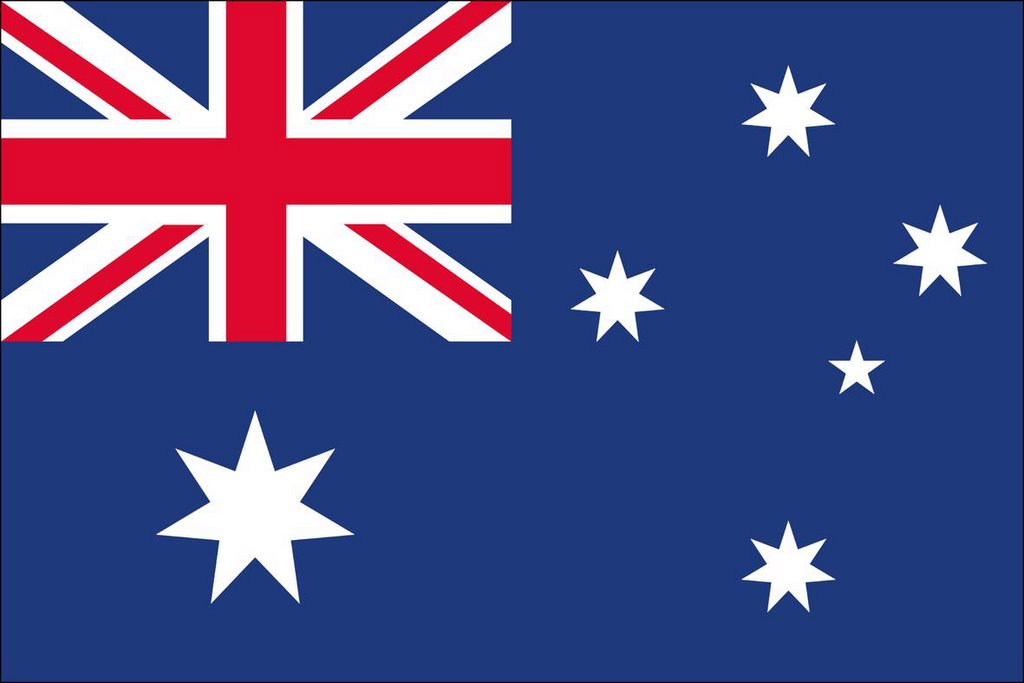
Prime Minister of Australia admits republican agenda is elitist

. Thursday, July 15, 2010
6 comments

Julia Gillard, Australia's new prime minister, may be no monarchist, but she's no Chardonnay republican either:

"Where the republic debate went wrong was that it became too much about what people like me think and not enough about what Australian community thinks," she told the National Press Club in Canberra during her first address as prime minister.

"This has to be about a community consensus and I don't believe we are there yet."
This is a very telling statement, isn't it. It is a startling admission from the Prime Minister of Australia no less, that the whole republican agenda has been an elitist-driven project from the get-go, which did not adequately take into account the people's views. We, of course, have known this for years, but it is refreshing to hear it come directly from the Queen's first minister Down Under.

Win or lose the next election, it appears the whole matter has been safely punted into the long grass. By then Tony Abbott might be prime minister, who is perhaps the most monarchist Australian leader since Sir Robert Menzies. Rest assured, Australian republicans are eating defeat today.

Read More »»

Tuesday, July 13, 2010

Australia's new Prime Minister

. Tuesday, July 13, 2010
3 comments

I would like to make three statements about the seemless transition of power from Prime Minister Kevin Rudd to Prime Minister Julia Gillard a couple of weeks ago.


1. It is wonderful to see that Cabinet Government is alive and well in Australia! I'm politically indifferent between Rudd and Gillard, but the fact that a sitting prime minister can be unseated by his peers is a good thing, and demonstrates the needed flexibility, stability and maturity of our parliamentary democracy in doing so.

2. The swearing-in ceremony was a highly dignified proceeding, and there is no doubt in watching the video who is in charge. Quentin Bryce, the Governor-General doesn't come across as merely a ceremonial rubber stamp, but as a chief of state handing over executive power to the next government in the name of Her Majesty.

3. The Oath of Office is a republican abomination. It is a shame that Julia Gillard has followed the example of Kevin Rudd in making no mention of the Queen in promising only to "well and truly serve the Commonwealth of Australia, her land and her people."

Read More »»

Sunday, July 11, 2010

Never Tickle a Sleeping Dragon

. Sunday, July 11, 2010
5 comments

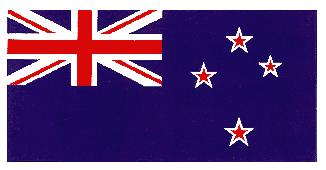
Mr. John Key has been in China lately, talking up New Zealand's Chinese future.


New Zealand know-how, Chinese capital.
New Zealand businesses, Chinese partners.
New Zealand lamb and butter for Chinese T-shirts.

Free trade, and a truce with Coca-Cola Communism.

I studied Mandarin for two years, and have many Chinese friends. There is no Yellow Peril ick factor here. Free trade with India, Thailand, Singapore and Japan doesn't bother me a jot.

But China?

China imprisons priests and nuns, Falun Gong members and political dissents.
China continues the oppression of Tibet.
China is a huge, militaristic, Communist dictatorship.

China does things like this:


What partnership is there between a dragon and a mouse?
What power equality is there between tyrants and the people they victimise?
What influence do we really have with the Chinese?

Apparently not much.

Read More »»

Monday, July 5, 2010

"Ardent monarchists"

. Monday, July 5, 2010
4 comments

Advising the Prime Minister?

4751074780_d8d33f526e

Ardent monarchists close to Stephen Harper are helping to pick the next Governor General, who is likely to be more of a Buckingham booster than recent representatives of the Queen, insiders say.

Conservative sources say Ray Novak, the prime minister's principal secretary, and Kevin MacLeod, Canadian secretary to the Queen, have been involved in the search. They say both men are strong supporters of Canada's links to the monarchy.

"Only a few people in government care about it, but they care about it fiercely," said one source.

At least someone in government does! A determined minority can accomplish quite a lot. Including keeping the monarchy alive in the years ahead. It's true that from a purely constitutional perspective the Queen's position in Canada is impregnable. All ten provinces and the federal government couldn't agree on the entree at a restaurant, much less dramatic constitutional change (last week we marked the 20th anniversary of the death of Meech). Still, Ottawa's caste of determined crypto-republicans, some of whom are working at Rideau Hall, continue to plot.


One of the most frequently mooted approaches would be to fail to proclaim the next monarch. That would leave a constitutional vacuum to be filled by an appointed or elected head of state. Canadian republicans know that the current sovereign is too popular to be overthrown, and denying her grandson the throne is likely to raise strong objections as well. They have zeroed in on Prince Charles as the weak link in the line of succession. Who succeeds to the throne, of course, is of secondary importance. It is the institution of the monarchy which needs to be preserved. Personally, I believe the Prince will turn out rather well. Yet the principle remains, we should not confuse individuals with institutions. We don't junk Parliament because the Prime Minister of the day is a fool or coward - otherwise parliament would have been done away with centuries ago.


Talk, sometimes even from confused monarchists, of skipping Charles and going straight to William is very dangerous. The second you transform the succession into a popularity contest, the monarchy is done and finished. It becomes American Idol or Britain's Got Talent with better scenery. Either you have a hereditary monarch or you don't. By continuing to remind the public of this basic idea these "ardent monarchists" are doing their country a great service.


If Canada were to lose the monarchy, either from direct constitutional challenge or simple neglect, we would lose far more than its pomp and circumstance. The ordinary person - who is ignorant of the Crown's role in our history, and indeed of that history itself - might not care much if Canada became a Republic. This is all the more worrisome. A nation without a sense of its own history and traditions (the later being an embodiment and reminder of history) is a nation of amnesiacs. The amnesiac does not know what he lost, so in a limited sense he feels little pain, regret or longing. Yet imagine his state. Without memory he is without identity, susceptible to suggestion and temporary impulses. All the days of his life filled with a nagging doubt he can't quite define. The question of monarchy vs republic in this country is one over the soul of Canada. Are we a nation with roots and tradition, or a nation of insecure juveniles constantly reinventing itself?


Read More »»

Monday, May 17, 2010


Now You See His Majesty, Now You Don't

. Monday, May 17, 2010
3 comments

The visit of King George VI and Queen Elizabeth (later the Queen Mother) to Canada and the United States on this day 17 May 1939 was truly historic, the first time a reigning monarch had visited North America.

Mackenzie-King-Banff-Doctored-Photo-King-George
The Prime Minister of Canada relished the limelight so much that he diminished the role of the Governor General, and literally airbrushed the King of Canada from this - perhaps the most famous photograph of the royal tour.

William Lyon Mackenzie King is often considered to be one of Canada’s greatest political minds. King, who trained as a lawyer and worked as a professor before becoming a politician, eventually rose to the office of Prime Minister, where he served for twenty-one non-consecutive years. But like most brilliant individuals, privately, King was off-his-rocker. He frequently held séances in which he communicated with his dead mother, Sir Wilfred Laurier, Leonardo Da Vinci, and later, Franklin Delano Roosevelt. The latter is almost certainly false though, as privately, FDR didn’t like King.

Although King managed to keep his fascination with the occult secret during his lifetime, many of his decisions were still guided by his ego and eccentricities. Such was the case, when he decided to doctor a photograph, taken in 1939, of King George VI, Queen Elizabeth (the Queen Mother), and himself at Banff National Park in Alberta. In the original photo, the three are enjoying a laugh amid the scenery. Though we doubt George would be amused if he knew that he would later be erased from history.

a802278

The original photo of Mackenzie King, King George VI, and Queen Elizabeth in Banff, Alberta. (1939)

a802277

The doctored photo of Mackenzie King and Queen Elizabeth. (1939-1940)

By today’s standards, the doctoring job is almost childish. At close inspection, George has clearly been painted over with a tree and some flowers, the shadow where he was standing is still visible, and the brick underneath looks warped. However, it seems that this forgery was good enough to fool the Canadian public, as the doctored photo was used in a campaign poster for the Prime Minister’s reelection bid.

Mackenzie-King-Banff-Doctored-Photo-King-George2

Written by The Intrepid

Read More »»

Sunday, May 16, 2010

Dizzy and the Canal

. Sunday, May 16, 2010
2 comments

Read More »»

Thursday, May 13, 2010

Britain's Top Ten Prime Ministers

. Thursday, May 13, 2010
13 comments

As second guessing the professional media is the raison d'être of this, and come to think of it, most blogs, we provide a counter list to the Top 50 British Prime Ministers proposed by the Times. My criteria? High marks for successful leadership in a conflict which threatened the survival of Britain. Pushing through a major piece of constitutional reform - Mr Blair's efforts were not reform but a vanity inspired bit vandalism - is also a big plus. Generally keeping in mind that people create wealth, not governments, also earns high marks in calculating the following list. The goal here is more to show those who most influenced the course of subsequent history, rather than those whom the author personally admirers.


10. Margaret Thatcher (1979-1990) - Saving Britain from socialist driven collapse was, of course, her signature achievement. Playing Robin to Reagan's Batman in the last days of the Cold War, enough alone to earn her that statue in the Parliamentary lobby. The Falkland War was significant not for its military success, it could easily have become a disaster, but its symbolic importance. A free nation had not tamely submitted to a brazen act of aggression. Having left the NHS in place was her greatest failure, yet like Canadian Medicare, the reverence for this socialistic relic made it politically untouchable. Her biggest mistake was in cutting defense spending in real terms through out her eleven years in office. In early 1982 she had approved of major cuts to the navy, including the sale of the two aircraft carriers, HMS Invincible and HMS Hermes. Had the Argentinian invasion come a year or so later, when the cuts had taken effect, the Falkland campaign could not have been fought.


9. David Lloyd George (1916-1922) - One of my least liked PMs, yet he would no doubt have made a fascinating dinner guest. I can imagine him and Dizzy trying to one-up the other. Who would be more charismatic, the smooth talking Welshman or the elegant lapsed Jew? The headline accomplishment for Lloyd George was having held the country together during the last two years of the First World War. A politician of lesser talent could have let the Empire and even the country fall to bits. He is today better remember for emasculating the House of Lords, and being - along with his predecessor H.H. Asquith - a major architect of the British welfare state. I rank him so high not, I repeat, out of personal admiration but recognition of his enormous influence on subsequent British history. Even if most of that influence was bad.


8. Herbert Henry Asquith (1908-1916) - If David Lloyd George was Britain's Trudeau, then its Pearson was H.H. Asquith. Contrasting sharply with the Welshman's easy eloquence and keen sense of high drama, Asquith's understated style, and careful plotting, gave ballast and direction to one of the most influential ministries in British history. Along with Lloyd George, and a very young Winston Churchill, he helped lay the foundations of the British welfare state. He was broken by the First World War, driven from power just shy of the half-way mark of Europe's first serious attempt at mass suicide.


7. Charles Grey, 2nd Earl Grey (1830-1834) - Napoleon had a brandy named after him, Wellington a dinner course and the shepherd of the Great Reform Act of 1832 and the Slavery Abolition Act of 1833, a tea. The simplest thing to say about Earl Grey is that he fought for all the right causes, in about as intelligent a manner as possible, for most of the right reasons, for pretty much the whole of his career. He was, instinctively a Burkean, indeed he even helped manage the Warren Hastings trial, and wherever possible tried to introduce change gradually, allowing people time to adjust to new circumstances. He pushed for dramatic change only when necessary. In describing his landmark Reform Act of 1832, which dramatically increased the number of people who could vote, he said that any further expansion of the electoral roles would be done "according to the increased intelligence of the people, and the necessities of the times." He was no starry eyed utopian, but a practical statesman of shrewd vision.


6. William Pitt, the Younger (1783-1801, 1804-1806) - His career beggars belief. This Minerva-like political genius became Prime Minister just before his twenty-fifth birthday, and this was after he had been Chancellor of the Exchequer at twenty-three. His meteoric ascent was due to good fortune, most of the other plausible candidates (Shelburne, Rockingham) had died unexpectedly, were discredited (North) or viscerally despised by George III (Charles Fox). After the third request, Pitt accepted George III's offer to form a government. Despite losing a succession of parliamentary votes, including clear no confidence measures, Pitt hung onto power with the King's support. Eventually the opposition collapsed and Pitt's power was only seriously threatened again by the temporary madness of the King. The French Revolution ended Pitt's plans for parliamentary reform, as well as his elaborate Sinking Fund for paying off the national debt. It solidified his hold on power and the opposition shrunk to a handful of members. He died with Napoleon dominating much of Europe, yet he had laid the foundations for eventual British victory nearly a decade later.


5. William Pitt, the Elder (1766-68) - The year was 1759, the annus mirabilis. Pitt was not Prime Minister then, yet from his perch as Secretary of State for the Southern Department (a kind of super-ministry that combined elements of defense, home, colonial and foreign affairs) he dominated the Duke of Newcastle's ministry. In his youth he had opposed Sir Robert Walpole's refusal to intervene in continental affairs, and had an uneasy relationship with George III, particularly when the monarch tried to force an early end to the Seven Years War. It was in that war that Pitt engineered a military turnaround unprecedented in the country's history. From the verge of defeat, with only Prussia as an ally, Pitt snatched key French colonies in North America, the Caribbean and India, while laying the groundwork for later successful attacks on Cuba and a defense of Portugal from Franco-Spanish invasion in 1762. It was from this point on that Britain assumed its place as a global power, which it would retain until the Suez Crisis almost exactly two centuries later. His actual time as Prime Minister was short and disastrous. A defender of the interests of the American colonists, he was too ill to resist the meddling efforts of his ministers, especially Charles Townshend the Chancellor of the Exchequer, and his government succeeded only in further alienating America. For the remainder of his political career he continued to fight for American liberty, only to be dismissed as a spent force at home, and as a hypocrite in America for having allowed Townshend to impose a new series of taxes without American consent. His last days were, like so much of his life, something out of Grand Opera. Delivering an impassioned speech in the House of Lords, urging reconciliation with America, pleading once again for the liberties of the subject, he collapsed. "If we must fall, let us fall like men" were suppose to have been his last words before being carried home. He could not have chosen them better.


4. Sir Robert Peel (1834-5, 1841-1846) - Like his hero Pitt the Younger, Peel was a prodigy, being made Chief Secretary for Ireland (effectively running the Irish government) while still in his twenties. At 34 he was made Home Secretary and launched a series of sweeping legal reforms, simplifying and consolidating the criminal law and reducing the number of capital crimes. In 1828 he established the world's first professional police force for Metropolitan London. An opponent of Catholic Emancipation - the granting of civil liberties of Catholics - he gave way out of fear of widespread unrest in Ireland. He made another vain effort to prevent the passage of the Great Reform Act. It's immediate effect was to make the old aristocratic Tory party obsolete. Issuing the first campaign manifesto in history, named after his family seat at Tamworth, he remodelled the Tories party so as to appeal to the new middle class electors. It is from this point that the modern Conservative Party marks its origins. His first ministry was unsuccessful, but in returning to power in 1841 he began gradually striping away Britain's long standing mercantilist policies, abolishing or reducing tariffs on some 1200 items. The last major hurdle to free trade, the necessity of which Peel had been convinced of for decades, was a series of tariffs on the importation of grain, know as the Corn Laws. The wealth of much of his agrarian political base was tied to high tariffs on grain imports, and they rejected his proposals. In 1846 Peel, with the support of the Whig opposition, passed a phased abolition of the Corn Laws. Shortly thereafter his own backbenchers combined with the Whigs to vote him out of office. In his last speech as Prime Minister he declared:


I shall leave a name execrated by every monopolist...but it may be...sometimes remembered with expressions of goodwill in the abodes of those whose lot it is to labour and to earn their daily bread in the sweat of their brow, when they shall recruit their exhausted strength with abundant and untaxed food, the sweeter because it is no longer leavened by a sense of injustice.


3. William Ewart Gladstone (1868-74, 1880-85, 1886 and 1892-4) - A keen student of mathematics and classics, he retained all his life a mastery of numbers and details. He once spent an hour, from memory, explaining to his cabinet colleagues the details of a budget he had just finished drafting. Beginning his career as the most reactionary of Tories, he at one point argued that the slaves members of his family owned were quite happy, he entered parliament in 1832. It was the beginning of a three decade long odyssey which saw Gladstone move from High Torydom to becoming the paragon of Victorian classical liberalism. His political Damascus moment, an appropriate metaphor given Gladstone's piety, was his appointment to Sir Robert Peel's second cabinet. Peel gradually talked Gladstone out of his reactionary and paternalistic attitudes, including one bizarre proposal to nationalized the new railroad industry. He followed Peel into opposition, and after the great man's death became one of the leaders of the Peelite faction in the Commons. By 1859 he brought the Peelites, and what remained of the Whig party under Lord Palmerston, to help form the new Liberal Party. It was in his role as Chancellor of Exchequer that he continued to reduce taxes and government spending wherever possible. He was obsessed with abolishing the income tax, introduce by the Younger Pitt to fight Napoleon, and re-introudced by Peel to help finance the transition to free trade. A naval arms race with France prevented Gladstone from achieving his goal. He did succeed, after much opposition, in abolishing taxes on paper, a long-standing policy intended on limiting newspaper distribution among the working class. The Austrian economist Joseph Schumpeter hailed Gladstone's time as Chancellor:


Gladstonian finance was the finance of the system of 'natural liberty,' laissez-faire, and free trade...the most important thing was to remove fiscal obstructions to private activity. And for this, in turn, it was necessary to keep public expenditure low. Retrenchment was the victorious slogan of the day...it means the reduction of the functions of the state to a minimum...retrenchment means rationalization of the remaining functions of the state, which among other things implies as small a military establishment as possible.

Upon becoming Prime Minister in 1868 he fought to separate - disestablish - church and state in Ireland, despite his strong Anglican convictions. He pushed for an expansion of the franchise (the right to vote). The Army, the Civil Service and the Poor Laws were all modernized. His view of the emerging socialist movement was blunt:


...they are not your friends, but they are your enemies in fact, though not in intention, who teach you to look to the Legislature for the radical removal of the evils that afflict human life...It is the individual mind and conscience, it is the individual character, on which mainly human happiness or misery depends.


One could elicit Gladstone's sympathies for the sick and lame, for the rent seekers, of all classes, he had only implacable scorn. He was not consistently laissez-faire, having ordered the nationalization of the telegraph network, and the transformation of the Post Office into a kind of savings bank, yet he did more than any other Victorian figure to liberate British economic, political and social life. His few remaining statist instincts were mostly driven by a desire to help the thrifty and industrious poor who, through little fault of their own, fell on hard times or on a scanty retirement. He opposed socialism and collectivism, though perhaps not as heartily as he could have, thanks to his altruistic instincts. He stunned much of Europe by his regular support for trade unions and even large scale strikes, such as those of the London dock-workers in 1889. So strong was the legend of Gladstone that even Asquith and Lloyd George, fearing the rise of the socialist Labour party, invoked his memory on several occasions.


2. Sir Robert Walpole (1721-1742) - Fat, machiavellian, pragmatic and corrupt enough to have grown very rich from his two decades at the head of national affairs. His art collection was so famous that, after his death, it was bought by Catherine the Great of Russia, forming the nucleus of the Hermitage's collection of paintings. He is one of the least inspiring figures, as well as the first, to have occupied No 10 Downing Street. His enormous importance consists in having, essentially, created the office of Prime Minister. Unlike the office of President of the United States, for most of British history there was no statutory definition of the powers of the office of Prime Minister, or even the procedure for appointment. The term Prime Minister first appears in legal documents, a treaty, in 1878. In Walpole's day it was actually a term of abuse, suggesting that the minister in questions was beholden to the King and not Parliament. The office of Prime Minister was not so much created by Walpole as congealed by him over his time in power, establishing precedent with actions rather than through any expounded theory of government. With the emergence of Parliamentary supremacy after the Glorious Revolution of 1688, there became a practical constitutional issue of who wielded day to day executive power. If the King did, then what was the role of Parliament? If Parliament was to wield executive powers, who was to be invested with those powers? For practical purposes a nation cannot be run by some 650 MPs, someone has to be in charge, and after the authoritarian bungling of the Stuarts, it was less and less likely to be the monarch.


Walpole essentially bridged the constitutional gap, taking the existing office of First Lord of the Treasury, effectively the government financial controller, and leveraged its power over his colleagues in the Cabinet. By happy coincidence the reigning monarch, George I, spoke little English and stopped chairing cabinet meetings. Walpole simply replaced the King at the head of the table. While he disliked cabinet meetings, preferring to deal with ministers directly (making them easier to bully), his pre-eminence over this cabinet colleagues came from his delicate balancing of monarchical and parliamentary will. By holding the confidence of both Parliament and the King, he could effectively rule the country. This remarkable power was due to Walpole's personality, there being little legal or constitutional underpinning for his efforts. Yet it established a template, which, over the next century evolved into something resembling a modern prime ministership, including collective cabinet responsibility, non-confidence motions and the right choose ministers, regardless of the wishes of the monarch. It was the office of Prime Minister that allowed for the gradual shifting of executive powers from Crown to Parliament. It was a vital constitutional bridge, however improvised, that allowed Britain to become a modern liberal democracy, with little blood being spilled. Matched with his constitution making, though he rejected suggestions he was being innovative, was Walpole's focus on low taxation and peace. His power, he understood, came from the support of landowning backbenchers, who paid much of the country's taxes. Any increase in expenditure, sooner or later, would result in a tax increase, which would threaten Walpole's political position. The expense of war, he understood, would ruin him, as it ultimately did. He strove for peace among the Great Powers, because in peace lay his position. Taxation were generally abhorrent to Walpole, not out of deep personal conviction - he had few - but an old fashioned sense of political self-preservation. Born a few years after Walpole's political accession, Adam Smith noted the effects of the first Prime Minister's policies on the British economy, it boomed for twenty years after the collapse of the South Sea Bubble. All the while the French economy, and those of the other principal European powers, stagnated. More by accident than design, Walpole had demonstrated that less government leads to more prosperity.


1. Sir Winston Churchill (1940-1945, 1951-1955) - He was right about so many things, when so much of the political establishment was wrong. He was right to try to stop the spread of Bolshevism, including his dispatching of British and Imperial troops to aid the Whites, and assassins to kill Lenin. He was right about returning Britain to the gold standard after the inflationary growth of the First World War, though he set the price of gold in sterling at far above the market rate, forcing the Bank of England to hike interests rates to economy crippling heights. He saw the dangers of socialism, yet as one of the welfare state's godfathers he proved an inarticulate of critic of the Labour Party's post-1945 plans. During a notorious radio broadcast he said that Labour would need a "sort of Gestapo" to run the country. He saw the anarchy that would descend on much of the world when the British Empire collapsed, yet could offer only sentimental nostalgia for keeping it together. His brilliant mind saw opportunities where others saw the impossible. Sometimes the bungling of lesser men destroyed the opportunities, and nearly Churchill himself, as with the Gallipoli fiasco. He was brave to the point of reckless, having to be convinced not to join the early waves at Normandy by George VI. His faults mixed easily with his virtues. Yet at that precise moment in the history of civilization, when totalitarianism was at its maximum strength, when his ill-prepared country stood alone, he knew to act and how. In the flux of inter-war international politics, he saw the constancy of the threat. A handful of his distinguished predecessors had saved their country from its mortal enemies. In the Spring of 1940, he saved more than his country, he saved the very idea of liberty his nation had bequeath to the world.

Read More »»

Tuesday, May 11, 2010


"Dave" becomes the 12th Prime Minister of the Queen's long reign

. Tuesday, May 11, 2010
6 comments

Between Churchill and Cameron, Her Majesty has worked with dozens of prime ministers of course, but there have been a grand total of twelve of them in Britain alone. Ministries come and go, but the monarchy is forever.

queencan_1634852c

Gerald Warner has entertained us throughout the campaign with descriptions of "Cast-Iron Cameron" and the "Vichy Tories" for selling their soul in order to gain power. Dave is now Prime Minister in what the British call a "Hung Parliament", and what we across-the-pond continentals have normalized as rather routine minority government. Whereas Harper would rather play off parties against each other, Dave is content on entering into a partnership with progressives. I don't think this bodes well for the future of conservatism and the Tory long game. Much better to sit this one out, and let the Labour-Lib-Dem progressives bankrupt themselves into oblivion. Dave is now completely beholden to Nick Clegg and will do pretty much anything to not let go. The two are joined at the neck. The Tories call this a victory?

To paraphrase Churchill: some victory...some neck.

Read More »»

Tuesday, December 29, 2009

"so utterly right"

. Tuesday, December 29, 2009
0 comments

Marking the birth of a giant:

What has always struck me most about Gladstone is that he was so utterly right. He applied his massive brain to the problems that faced our country at a turbulent, and near-revolutionary, juncture in its history and almost always found the right answers. So complete was his self-confidence, and his determination to put his country before himself or his party, that he would propound and pursue policies even if they contradicted what he had hitherto believed: any loss of face was nothing to him compared with the damage he feared would be done to the national interest if the country continued to take the wrong course.

Millais_gladstone2

[...]

Three things seem to underpin his genius. The first is the economic policy. He understood that Peel was right to repeal the Corn Laws, and that by applying the principle of free trade more generally, Britain – then the workshop of the world – would become richer. This cast of mind found loud echoes in the north of England, notably in the Manchester liberalism of Cobden and Bright, from whom Gladstone borrowed much. What we now regard as the monuments of Victorian ambition – Manchester, Bradford or Leeds town halls, Joe Chamberlain's Birmingham, the Gothic revival buildings still to be seen all over London and other major cities – are monuments to Gladstone's vision. It was not just his belief in free trade: it was his recognition that a complicated structure of taxation could only impede prosperity. He understood what it would take monetarists another century to demonstrate again: that if you cut taxes, you raise more revenue, because of the provision of the incentive to work and take risks.

Read More »»

Monday, August 3, 2009

Ready, Aye, Ready

. Monday, August 3, 2009
1 comments

6a00d83452553069e20115716236a7970c

"It would be seen by the world that Canada, a daughter of Old England, intends to stand by her in this great conflict. When the call comes our answer goes at once, and it goes in the classical language of the British answer to the call of duty: 'Ready, aye, ready.'"

Wilfred Laurier - August 1914

Read More »»

Wednesday, July 1, 2009

The Old Chieftain

. Wednesday, July 1, 2009
3 comments

475px-John_A._Macdonald_-_Brady-Handy
SIR JOHN A. MACDONALD, FATHER OF CANADIAN CONFEDERATION

The old Tory and flamboyant Scotchman who's greatest achievement was to unite the colonies of British North America into a single polity and become the first Prime Minister of the Dominion of Canada in 1867.

Memorable Quote: "A British subject I was born, a British subject I will die"

Read More »»

Monday, May 4, 2009

A Lady Not For Turning

. Monday, May 4, 2009
14 comments

The Old Testament prophets didn't say 'Brothers, I want consensus'. They said "This is my passion, my vision. If you believe it too, come with me! If you want consensus, vote Labour. If you want the passion and vision to get Britain right, vote Conservative. — Margaret Thatcher, Cardiff, 1979

untitled

Thirty years ago today, Lady Thatcher became Prime Minister of Great Britain. You can read the Daily Telegraph tribute here.

Margaret Thatcher is one of my political heroes. While I was formulating my political philosophy (and I won't tell you how young I was at that stage), I read her memoirs, The Path to Power and The Downing Street Years . I freely admit that at that stage, I didn't understand much of her economic theory, aside of course from the shocking mismanagement of SOEs (state-owned enterprises, for the uninitiated). But I did understand her values, her pride in Britain, her unshakable resolve to back the workers and not the shirkers, her devotion to duty, hard work, thrift, and the values of a Methodist upbringing.

She said Conservatism was not so much a programme, more a way of life. She said Communism was a godless and wicked ideology. She said Galleitri was a tin-pot General, and a playground bully, who would not tyrannise over the Queen's subjects while she was the Prime Minister. She quite simply, saved Britain from Socialism, and with Mr. Reagan, the West from the Soviet Union. She always gives him the Lion's share of the credit, but it was Maggie he turned to, Maggie who backed him, pushed him, supported him. Maggie deserves at least half the credit.

A tough, passionate, and Conservative Lady, she has changed the world. In her memoirs, she has a number of regrets. But the Iron Lady dealt the death blow to Socialism, crushing Scargill and his malcontent shirkers, saving the economy, she put the Great back into Great Britain. She writes that the challenges facing the West are great. Terrorism, rogue States, the break-down of family, the expansion of the government into family life. Welfare reform, standards in education, the reconstruction of civil society, not to mention that our economic troubles have come full circle once more. These are our challenges, and we could go a long way without finding a better model of solving them than Margaret Thatcher - the "lady's not for turning", we could do with her type again.

Baroness Thatcher, you are a Conservative heroine. The Monarchist salutes you on this, the 30th anniversary of your rise to power. Light the Torch of Freedom!

Read More »»

Wednesday, April 8, 2009

Republicans act like Moses

. Wednesday, April 8, 2009
6 comments

"It's a question of not if, but when" — Helen Clark

I have only two criticisms of Helen Clark, the former Prime Minister of New Zealand - that is, the sound of her voice and the words they form:

The most remarkable topic in her speech was when she asserted New Zealand will inevitably give up the British monarchy as head of state.

"It's a question of not if but when," she said during her farewell address, which was light on emotion.

She also took the opportunity to attack the return of titular honours, introduced by the National government shortly after their return to power.
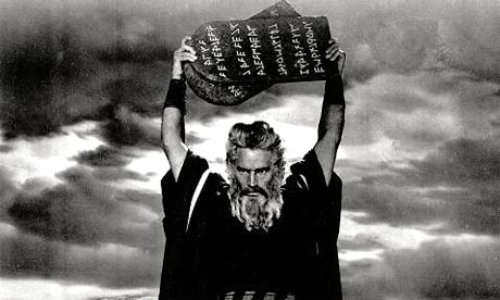
The Prime Minister of Australia too has been guilty of this "not if but when" republican arrogance, as have many others before. It is an attitude that pronounces with totalitarian authority a ruling to which it allows no appeal. Like Moses they command that the monarchy is toast, thou shall not even question the inevitability of what they are saying.

I for one am not so arrogant as to presume what will eventually happen, but I can perceive no weight of inevitablity to the republican position. Our constitutions are not political feathers, they are tablets that can only be changed with sustained hurculean concerted effort. Perhaps that is why republicans talk like Moses, because it would take the equivalent of a Moses to remove the Crown from our constitutions.

You know, there just might be something to the recent academic theory that Moses was hallucinating under the influence of a mind-altering drug at the time of his biblical achievements. It has been revealed that the acacia tree, frequently mentioned in the Bible, contains one of the most psychedelic substances known to man. Republican Boomers know all about psychedelic substances - it is high time they stopped smoking them.

Read More »»

Thursday, April 2, 2009

The Queen Receives Her Canadian and Australian Prime Ministers

. Thursday, April 2, 2009
5 comments

There are probably no two nations more alike or more blessed than Canada and Australia. Both are vast continental federations, both are major resource rich world class economies and both are significant constitutional monarchies, who happen to share the same language, history, culture and Queen.

Above: The Queen receives the Canadian Prime Minister, the Rt. Hon. Stephen Harper MP, at Buckingham Palace, 1 April 2009. Mr. and Mrs. Harper, with the Australian Prime Minister and his wife, were later invited to lunch with The Queen and The Duke of Edinburgh. The Prince of Wales and The Duchess of Cornwall also attended the lunch. © Press Association

Below: The Hon. Kevin Rudd MP, Prime Minister of Australia, is received by The Queen at Buckingham Palace, 1 April 2009. Mr. Rudd and his wife, Ms Thérèse Rein, later joined the Canadian Prime Minister and his wife for lunch with The Queen and The Duke of Edinburgh. © Press Association

Read More »»

Wednesday, April 1, 2009

Mad monarchy over a fair republic

. Wednesday, April 1, 2009
5 comments

"I think in the 21st century people do expect discrimination to be removed"

— Prime Minister Gordon Brown


Well, Mr. Brown, does that mean we should remove the monarchy altogether, surely the whole foundation of monarchy is quite spectacularly a rather deliberate show of institutionalised discrimination. The people don't get to choose their King, birth and hereditary succession choose it for them. Ought we not to tidy our hands of this little tyranny while we're at it?

I won't question the absurdity of denying women and Catholics their rightful inheritance, even if it is the entire apparatus and trappings of state. Some of our best monarchs were Catholic, and few would disagree that three of our most successful sovereigns have been women: Elizabeth, Victoria and Elizabeth again. So no, there is no good reason why our ancient monarchy should have been, for more than a thousand years, dominated by men.

But if you want to talk about discrimination and violations of human rights, when can we expect to see legislation that will reduce the Queen's workload down to a 40 hour work week like everyone else? When can Her Majesty expect a little privacy in her life? What is the mandatory retirement age for Queens anyways, a ripe old 118? If it all were not so laughable:

The royal family, while nominally our betters, are in fact our captives and an interesting and profitable focus for media attention. It's as unfair as life; the royals can't escape and if you want to become royal, you basically can't. It's a more or less functional arrangement that no one would ever have had the wit to devise deliberately.

Which is why Liberal Democrat MP Evan Harris's attempt to fiddle with it is so enervating. He wants to change the Act of Settlement whereby Catholics can't marry the sovereign and end the discrimination against female heirs to the throne. He thinks this will make the monarchy more fair. I suppose it will, in the same way that throwing some bread into the Grand Canyon will make it more a sandwich.

The monarchy is overwhelmingly, gloriously, intentionally unfair - that's the point. The defining unfairness is that you have to be a member of that family to be king or queen; fringe unfairnesses like their not being able to marry Catholics or men having priority in the line of succession are irrelevant in that context. And what's so fair about primogeniture, which Harris is not planning to touch, or the sovereign having to be Anglican, which is also apparently fine? He wants to spend parliamentary time, mid-credit crunch, on a law aimed primarily at helping Princesses Anne and Michael of Kent.

When will people get the message? If you want a fair system, have a republic, elect a president and live with some arsehole like David Cameron giving a speech every Christmas Day afternoon, bitter in the knowledge that you asked for it. Otherwise, we should stick with what we've got, rather than trying to tinker. No abdicating, no skipping Charles, no changing weird ancient laws. We get who we get because we'd rather live with the inadequacies of a random ancient structure than the inadequacies of one designed by Brown and Cameron.

The monarchy's not perfect, but it's also not harmful, powerful or, and this is the clincher, our fault. The inevitable imperfections of anything we replaced it with would be.
So fine, tinker away. However, know that with all the tinkering in the world, we will never devise a "fair monarchy", for that is wishfully absurd. Our best hope is that we retain a monarchy steeped in duty and dignity, heritage and habit, but most importantly one in which the most powerful politician in the country still has to kowtow to someone other than himself. If putting up with some crazy discrimination gets me that, I'm all for a mad monarchy over a fair republic.

Read More »»

Wednesday, October 17, 2007

Where's your morning suit, Mr. Harper?

. Wednesday, October 17, 2007
13 comments

SPEECHES FROM THE THRONE, like yesterday's opening of the Canadian Parliament, are important and prestigious state occasions, and as such deserve the pomp and ceremony traditionally associated with them. Ideally this means that the Queen, if present, is enthroned and crowned; the Governor-General is vice-regally sashed in the Windsor uniform; that chief justices of the Supreme Court are wigged and gowned (though sadly in Canada's case, no longer wigged); that speakers and clerks are robed with bar jackets, and bicorned or tricorned as the case may be; it means the Sergeant-at-Arms is adorned with the custody of the ceremonial mace; that military officers are smartly decked out in all their glory and honour: medals, scabbards, swords and all; and the sitting Prime Minister, the first gentleman of Parliament, is formally dressed in his best morning suit.

I can't remember when the last time a Prime Minister wore morning dress. Mackenzie King was the last to wear a frock coat and top hat. Diefenbaker certainly wore his morning suit, as did Pearson and Trudeau after him. If you didn't wear it at every Throne Speech, you certainly did following your first election as Prime Minister, and you certainly did if the Queen was in attendance. But 1977 was the last time the Queen sat on the Canadian Throne (see below, Prime Minister Trudeau wears morning dress with signature rose). Alas, the tradition of the morning coat has given way to a miserly political culture that is always at pains to demonstrate its frugality. Haute couture for the politician is to be avoided at all costs. For them, the imperative is "business as usual".

But state occasions are not "business as usual". They are supposed to be lavish affairs, their purpose and intent being to lift us up from the drudgery of administration, and to remind us that there is something at play here that is greater than our own petty and lilliputian concerns as taxpayers. Prime Minister Harper understands this, which is why yesterday's Speech from the Throne was godly in its invocation: "May your deliberations be guided by Devine Providence, may your wisdom and patriotism enlarge the prosperity of the country and promote in every way the well-being of its people." This is evidence that we still believe in the function of God, and His supremacy over all events throughout our history. But if God, King and Country are all in the room, the least Harper could do is dress for the part.

(Above/below: Prime Minister's Chretien and Martin dress the part in 2000/2004)

Read More »»

Thursday, January 18, 2007

Vive La Reine!

. Thursday, January 18, 2007
7 comments

History is far stranger than fiction, a truth demonstrated again this week with revelations that in 1956 Guy Mollet, the then French Prime Minister, proposed a union between Britain and France. The soul shrinks at such a prospect. The two best enemies in all the world under one government? Under Her Majesty Queen Elizabeth II no less. Devouted Churchillians will know that the great man himself proposed such a union in the dying days of the Third Republic, as what remained of the French Army evaporated before the German advance. The proposal was Churchill at his most romantic and pragmatic. It would have allowed the French to maintain that they were never defeated by Nazism, a kind if misplaced gesture; it also would have granted Britain immediate and legal control - though for how long? - over the French fleet and colonies. In the end the British were forced to sink much of the French fleet in the attack on Mers-el-Kébir and to gradually pry the French colonies from the control of Vichy.

Mollet's eccentric gesture must be seen in the context of its time. According to recently discovered documents, the proposal was made on the eve of the joint Franco-British retaking of the Suez Canal from that cretin Nasser. Eden had shown signs, at least to the minds of some senior French officials, of vacillation. The proposal of union, even if sure to be rejected, being dramatic and unexpected might have made any backdown over Suez more awkward for the Cabinet and No. 10. "How can we betray so loyal an ally as France?" one might have heard a hesitant minister ask had the Cabinet gotten cold feet over the attack. It was the sort of off the wall, desperate and ruthlessly calculated thing that the Quai d'Orsay has specialized in for centuries.

More broadly than the Suez Crisis, which in the end brought down both Mollet and Eden, the first half of the twentieth century had been unkind to the two former rivals turned erstwhile friend, though especially so for France. The halting and incomplete process of industrialization left the country vulnerable to the rise of the Rhur-powered German economy. This combined with the socio-political divides highlighted over secularization, the Dreyfus Affair and in the 1930s the short-lived Popular Front government, gave the impression to the French people, and to the outside world, of a weak and divided nation. The strange defeat of 1940, in Marc Bloch's famous analysis, only confirmed the image of a weak and fading France. The Fourth Republic (1946-1958) proved another blow. Despite hopes that it would remedy the oft remarked upon instability and ineffectiveness - the latter perhaps exaggerated - of the Third, the disaster of Suez, a still struggling economy - as the Federal Republic of Germany boomed - and finally the Algerian crisis ensured its demise. In this context a desperate French leader might be willing to swallow some national pride for the sake of short-term advantage.

All this changed in 1958. Immediately after the Second World War France had rejected Charles de Gaulle's calls for strong, and at times frankly authoritarian leadership. In 1958 a large majority of the French public practically begged the old war leader to save them from themselves. So he did. Despite being a dirigiste of the old school, de Gaulle was a great improvement on the muddling socialists who dominated the politics of the Fourth Republic. Sweeping away internal trade barriers, protecting private property from the predations of the Left and Far Left and otherwise maintaining a positive climate for investment and trade, de Gaulle engineered an economic miracle almost as spectacular as that of Konrad Adenauer and Ludwig Erhard's Social Market next door. He also matched improved French economic prowess with a more belligerent foreign policy.

From the First Battle of the Marne until Suez the Anglo-French partnership had usually meant a more junior role for the Republic. It was Chamberlain who was the prime force at Munich, Bevin who lead the French toward NATO in 1949 and Eden who first proposed aggressive action against Nasser in 1956. De Gaulle replaced this deference, born out of internal social and economic weakness, with an often juvenile anti-anglo-saxonism. Rejecting Britain's entry into the Common Market twice, pulling out of the NATO command structure in 1966, the pompous declaration at Montreal City Hall in 1967 of "Vive le Quebec Libre," and frequent prickings of the Americans over Vietnam, were as much a matter of policy as of nationalistic revanche for the former leader of the Free French.

The Britain of Harold MacMillan and Harold Wilson, de Gaulle's contemporaries at No. 10, was a bleak place. Supermac had made it a point to suck up to Eisenhower (if you have a more polite description, that is still accurate, please propose it in the comments) and while both he and de Gaulle oversaw the dismantling of their respective global empires, it seemed far more like a retreat for Britain than for France. Wilson had come to power promising to modernize Britain in the "white heat of technology." Hopes that technocracy might overcome class, tradition and stagnation were ill-placed. After Wilson came Heath and then Wilson again and then Callaghan. Then there was the Winter of Discontent. Members of the House of Commons openly talked about Britain becoming another Portugal. If the France of Georges Pompidou, de Gaulle's apprentice and successor, did not prosper as before, it seemed far more vigorous during Stagflation than its old rival. Certainly no French President of the time was seen running to the IMF for help to prop up the franc.

Then came the Eighties. Britain went with Mrs Thatcher and France with Francois Mitterrand. Germany had begun to walk away from the Social Market with Willy Brandt's government. From the distance of a quarter century the three decades after 1945 seem an anomaly. Britain, the homeland of laissez-faire became a case study of the dangers of democratic socialism. Germany and France, previously contemptuous of the free market, made a short-lived truce and prospered greatly as a result. The old patterns re-asserted themselves twenty-five years ago. The French today speak deridingly of Anglo-Saxon capitalism, while straining to catch up to the Anglo-Saxon economies, as they did a century ago. German authoritarianism has assumed a new more pleasant, if bloated, welfare state form in the last years of the 20th century. The Franco-British Union was a dead letter for the simple reason that the two nations were culturally incompatible. One nation prided itself on being "the Mother of the Free," the other "Liberty, Equality and Fraternity." If those differences seemed obscure in 1956 they have become clearer again today. Tony Blair notwithstanding.

Publius

Originally posted at The Gods of the Copybook Headings

Read More »»
 

Monarchist Labels

Monarchist Articles

2010 ARTICLES

Tony Abbott: Australia's 'mad monk' close to election victory
Dear Guardian: Get out of Oz or shuffle off the coil
Kid Genius: "All monarchists are either stupid or evil"
Republican Vultures: Australia should go republic after Queen dies?
Princess Royal: Hardest working Royal, Princess Anne, Turns 60
Much-Abused Imperial Poet: Rudyard Kipling unburdened
Admiral Cod: Wilfred Thesiger, Archeo-Traditionalist
Diamond Jubilee: Bring Back the Royal Yacht Britannia
On Flickr: The British Monarchy's Photostream
Buck House: No Garden Party tea for BNP leader, Nick Griffin
In Quebec: The Queen is still Wolfe in sheep’s clothing
Queen's PM: Australia will not vote on ties to British monarchy
Camelot: Historians locate King Arthur's Round Table?
Royal Neglect: Is Britain becoming a republic by default?
Monarchy or Anarchy? No third option explains David Warren
Charles vs Modernists: God Bless the Prince of Wales!
After Her Majesty: Who will wear the crown in Canada?
Bargain for Britain: And for the Commonwealth Realms
Queen's Prime Minister: Harper advised by "ardent monarchists"
Muddled Monarchist: A troubled and confused loyalist
Loyal Subject: God Bless Her Majesty!
Queen's Prime Minister: Harper really loves the Queen
Crown & Pants: She wears the crown and he wears the pants
The Maple Kingdom: The ‘iron cage’ of the colonial past dissipates…
The Crown Knows Best: It all Begins and Ends with Monarchy
White Rose Day: Burke's Corner on "Sorrowing Loyalty"
Happy B'day Grand Old Duke: It's a pity they don't make his kind anymore
Saved by the Crown: What monarchs offer modern democracy
Queen's Speech: Black Marks, Brownie Points at the State Opening
The Navy's 100th! Restore the honour 'Royal' Canadian Navy
Happy Birthday! Her Majesty The Queen turns 84.
Abolish the Commons: Suicidal tendencies of the modern political class
Labour Vandalism: Plans to abolish the House of Lords
Lord Black: "The ultimate degradation of the 'white man's burden'"
Old Etonian: Guppy the Ex-Bullingdonian speaks of his loyalty
Duchess of Devonshire: bemoans the demise of the Stiff Upper Lip
Queen Victoria: A film remarkable for its lack of anti-British prejudice
Climate Imperialism: Rich nations guilty of 'climate colonialism'
Bye Bye Britain: The UK officially not a sovereign state
Monarchy Haters: A Strange Form of Bitterness
Royal Intrigue: The secret plot to deny the Queen the throne
Never mind the Queen? Summing up Daniel Hannan in four words
Queen & Country: David Warren on a Big Lie finally corrected
Defending the Royals: Repatriate the Monarchy argues Andrew Coyne

2009 ARTICLES


Classic Warner: The other November the 11th
Brave Loyalist! Lone woman takes on anti-Royal mob in Montréal
Loyal Subject: Evaluating the monarchy against their own little worlds
Death so Noble: An 'almost divine act of self-sacrifice'
Crux Australis: Howard revisits his victory over the republic
Lord Ballantrae: The Would-Be King of New Zealand
Lord Iggy: Anti-Monarchist Leader of Her Majesty's Loyal Opposition
Old Etonian: A modern-day Lawrence of Arabia?
Sir Keith Park: The Commonwealth's Finest Hour
Buckingham Masjid: Buckingham Palace under the Shariah
The Maple Crown: Our ties to monarchy are bigger than the royals
His Tonyness: Holy Roman Emperor, Leader of Progressive Humanity
Young Fogey: Rafal Heydel-Mankoo on Chretien's Order of Merit
He's not a snob, Bob: Why does Canada cling to British colonial roots?
Fount of Justice: Crown sidelined from new Supreme Court
The Clown Prince: The world’s third longest-serving head of state
Hell, Britannia, you’re just nasty: Licence to make crass sexual jokes on the BBC about the Queen is depravity, not liberty
Loyal Subject: The Governor General can't take the Queen out of Canada
Save Our Dukes: Return peerage appointments to the Queen
Lord Black of Crossharbour: Why I became a Catholic
Not Amused: Her Majesty "appalled" at the direction of her Church
A Sad Day in Pretoria: When South Africa Lost its Star
The Queen Mother: Noblesse Oblige vs the Me Generation
Aristocrats: A review of Lawrence James's new book in the FT
Crown and Shamrock: Irish went underground to view coronation
Bye bye Camelot: Obituaries on Ted Kennedy here, here and here.
Scotch Whisky Do not boycott for ye Scots had precious little to do with it
Loyal Subject: God (and Young Liberals) saving the Queen
Aussie Monarchist: A good bloke calls it a day
Blog of the Order: This man can redesign our blog any time he wants
Lord Black: Much ado about the Republic of China
Stalwart Jacobite: But has no problem with Elizabeth II of Canada
Royal Commonwealth Society: Join the Conversation
H.M.A.S. Sydney: Inquiry blames captain for worst naval disaster
Imperial Constitution: Was the American Revolution avoidable?
Hero Harry Patch: Saying Goodbye to All That
King and Country: The 250th Anniversary of the Battle of Minden
King's College: Crosses Return to the Columbia Crown
Lord Salisbury: An interview with the 7th Marquess of Salisbury
Queen's Commonwealth: Quaint historical relic or meaningful bloc?
Queen's Prime Minister: Chrétien's perplexing gong
Why Ma'am Must Stay: The New Statesman is foaming at the mouth
Happy We-Should-Restore-The-Monarchy-And-Rejoin-Britain Day!
CinC: The Queen's Broadcast to Her Armed Forces around the World
Elizabeth Cross follows a tradition that started with Crimean War
Dominion Day: Canada was an act of divine loyalty
LOYAL SUBJECT: A GOOD DAY IN CAPE TOWN
The "Whaddever Monarchy": A Prince and his indulgent public
English Constitution: A written constitution is not the answer
Rest in Peace: Roméo LeBlanc, former governor general, dies at 81
Prince of Wales: Who, apart from the Prince, speaks up for beauty?
Queen's Prime Minister: New Zealand restores Queen's Counsel
Why I accepted my OBE:Radical feminist Marxist accepts "cruel imperial order"
On Lord Loser: Modernist architects carry on where the Luftwaffe left off
The Puissant Prince: Thanks to Prince Charles for meddling
"It's our republic"? It's our monarchy, not a dance with republican elites
Grand Old Duke: Happy 88th Birthday to Prince Philip, the Duke of Edinburgh
Warner: It is time for the Queen to dissolve Parliament.
Royal Fix: Prince Charles resolves diplomatic impasse.
Not Amused: France admits snubbing the Queen.
Useless Monarchy? Prince Charles is taking on the starchitects...and winning.
Vice-Regal Salute: Governor General of Canada least boring vice-regal ever
Loyal Subject: For genuine patriots pride in the monarchy is fundamental
Cranmer: The Mother of Parliaments has become a whorehouse of ill-repute
Poet Laureate: Will ignore royal events if they don't inspire her
Grand Old Duke: The longest-serving royal consort in British history.
Keep our Feudal Failsafes: Monarchy is not a game of 'fair'
Farewell to Helen Clark: "I deeply detest social distinction and snobbery"
Eco-Monarchy: A not completely irreverant look at the future King
Voyage Through the Commonwealth: World cruise around the faded bits of pink.
The Equality Bill: A real nasty piece of work by the Lord Privy Seal
Laughter from the Gallery: Canada's a Republic, claim Australian politicians.
Peter Hitchens on America: Canada and America, two ideas of how to be free.
Let's Not: If the disappearance of newspapers is inevitable, let's get on with it.
Strange Bedfellows: No friend of monarchy, but...we admired the good bits
King Harper: A Parliament of Potted Palms.
Keep our Feudal Failsafes: Monarchy is not a game of 'fair'
Gentleman Royalist: Theodore Harvey is baptised an Anglican
Farewell to Helen Clark: "I deeply detest social distinction and snobbery"
Republican humour: Keeping monarchy means we don't have confidence
Eco-Monarchy: A not completely irreverant look at the future King
Catholic Tory: Amend the Act of Settlement - but not yet
Why you should still read The Guardian: Let's hear it for mad monarchy
Reform the Monarchy? Let's wait another century, says Lord Rees-Mogg
Not Amused: Mr. Rudd, and his totalitarian certainty
Irish Blues: Ireland out in the cold over British Monarchy debate
Act of Settlement: Here's a Tory view, and here's a Whig view
Lord Black: The magnificent absurdity of George Galloway
Vice-Regal Saint: Remembering Paul Comtois (1895–1966), Lt.-Gov Québec
Britannic Inheritance: Britain's legacy. What legacy will America leave?
Oxford Concision: Daniel Hannan makes mince meat of Gordon Brown
Commonwealth Voyage: World cruise around the faded bits of pink.
"Sir Edward Kennedy": The Queen has awarded the senator an honorary Knighthood.
President Obama: Hates Britain, but is keen to meet the Queen?
The Princess Royal: Princess Anne "outstanding" in Australia.
H.M.S. Victory: In 1744, 1000 sailors went down with a cargo of gold.
Queen's Commonwealth: Britain is letting the Commonwealth die.
Justice Kirby: His support for monarchy almost lost him appointment to High Court
Royal Military Academy: Sandhurst abolishes the Apostles' Creed.
Air Marshal Alec Maisner, R.I.P. Half Polish, half German and 100% British.
Cherie Blair: Not a vain, self regarding, shallow thinking viper after all.
Harry Potter: Celebrated rich kid thinks the Royals should not be celebrated
The Royal Jelly: A new king has been coronated, and his subjects are in a merry mood
Victoria Cross: Australian TROOPER MARK DONALDSON awarded the VC
Godless Buses: Royal Navy veteran, Ron Heather, refuses to drive his bus
Labour's Class War: To expunge those with the slightest pretensions to gentility
100 Top English Novels of All Time: The Essential Fictional Library
Royal Racism? Our intellectually febrile self appointed arbiters of modern manners
The Story of Bill Stone, RN: "Contented mind. Clean living. Trust in God"
Bill Stone: Last British veteran of both world wars dies
Reverse Snobbery: "Prince William and Harry are not very bright"
Poet Laureate: The English-Speaking Peoples need a poet laureate
Prince Harry: Much Ado about Nothing
H.M.A.S. Sydney: Australia seeks answers to its worst naval disaster
BIG BEN: Celebrating 150 Years of the Clock Tower
Winnie-the-Pooh: Canada's famous bear, Winnie (Winnipeg), to be published in a sequel
Not Amused: Traditional fairytales are not politically correct enough for our children
The British Empire: "If you were going to be colonized, you wanted to be colonized by the British"
Gross Constitutional Impropriety: Without mandate for change, plebiscites work to undermine the system


2008 ARTICLES


Count Iggy: Michael Ignatieff takes the reigns of the LPC
Lord Black of Crossharbour: Harper and Ignatieff promise a rivalry for the ages
Strange Bedfellows: The monarchy is safe from this republican
Fount of Dishonour: The growing distinction of remaining an unadorned Mister
Republican Poet: Colby Cosh on that mute inglorious Milton
Church of England: The Conservative case for the Established Church of England
Liberal Secular Scrooges: A Blight on the Festive Landscape
Fount of Honour: The Queen's New Year Honours List
Act of Settlement: the last brick in a crumbling wall, by Philip Lardner
What next, Mr. Hannan, the conservative case for disestablishing the monarchy?
Hair to the Throne: Prince William's beard is fit for a King.
Canada's House of Lords: Why reforming the Senate is profoundly unwelcome.
Someone who gets it: The proper relationship between liberty and democracy.
More Pseudo Democracy: Keep on voting until you get it right.
Royal Christmas: Queen's Christmas Message still trumps seasonal schedule.
Archbishop Williams: A 'certain integrity' to a disestablished Church of England.
Loyal Subject: Debunking the antimonarchist claims of The Economist.
Royal Prerogative: Grand Duke says no to legalised murder assisted suicide.
Lord Iggy: The Nobleman versus the Doberman
It's Over: the day, the decision, the crisis, the coalition, and Dion’s leadership
Loyal Subject: Speak out Charles, our teenage politicians never will
Prince Charles at 60: 60 Facts About HRH, Prince Charles of Wales
Remembrance Day Hymns: O Valiant Hearts; Abide With Me
For Liberty and Livelihood! Duke of Norfolk leads hunt protest ban
Keating Remembers: "I have never been to Gallipoli, and I never will"
John Cleese a Republican? An anti-monarchist rant worthy of Monty Python
Balfour Declaration: The precursor to the Statute of Westminster
Beaverbrook's Grandson: SAS Major Sebastian Morley resigns in disgust
"His Mightiness": Yanks and the royals; the Eagle and the Crown
England Expects: The Hero of Trafalgar at 250
Harper and Howard: An embarrassing example of Anglosphere Unity
Crowning Insult: Labour's legacy will be its destruction of the monarchy
Her Excellency: An Interview with Governor-General Quentin Bryce
Age of Oversensitivity: Churchill wouldn't stand a chance in Canadian election
William of Wales: Prince chooses RAF career over that of a 'working Royal'
Australia's Loyal Opposition: Republican Turnbull now on Queen's side
Loyal Subject: The Age of Elizabeth II, by A.N. Wilson
Tory Icon? Daniel Hannan says British Tories should follow Stephen Harper
Chasing Churchill: Around the world with Winston
Her Majesty The Queen - A Life in Film
The Crown in Oz: Australia swears in first female governor-general
Lèse majesté? The Royal Australian Institute of Architects drops the 'royal'
Rest In Peace: David Lumsden of Cushnie (1933-2008), President of the 1745 Assn.
Monarchies Rule: Prominent Australian republican says monarchies are the best
Sir Don Bradman: Oz remembers The Don, the greatest cricketer batsman of all time
Padre Benton: The Living Tradition in Piddingworth
"Stodgy anachronism" More moist, vapid effusions from the Diana cult
Drool Britannia: London Summer Olympics 2012
Taki the Aristocrat: Unrepentedly wealthy and well mannered
Wanted: Uncorker Message in a bottle faster than Royal Mail
The Other St. George: Will Georgia restore its monarchy?
Gentlemen's Clubs: The Great Club Revolution of New York
The Laughing Cavalier: What an utterly absurd article
Health unto His Future Majesty: "Royalty dares to challenge the New Order"
"Grace, Your Grouse!" Better to kill a fellow gun than wing a beater
Boys will be adventurous: To Ulaanbaatar by London cab
A King's Breakfast: A trenchant defence of the full English breakfast
Republican beer: Forget Coopers, support Fosters
Trafalgar Square: Sanity prevails on the fourth plinth
The Empire Builder: How James Hill built a railroad without subsidies
"Harvard was not amused": Alexander Solzhenitsyn, 1918–2008
Greatest Briton: Wellington is "greater than Churchill"
Death of the Necktie? A well-tied tie is the first serious step in life
Not Amused: The next Chief Justice of Australia to be a republican
Royal New Zealand Air Force: God Save N.Z. from the Cannibals
Why English Pubs are Dying: The totalitarian smoking ban.
Swooning over Princess Obama: A Coronation or the Second Coming?
Dreams of an Academic: Gough Whitlam to have the last laugh?
Joshua Slocum meet President Kruger: Yet another reason to love the Boers
Changing of the Guard: Annual Inspection at Rideau Hall
H.M.S. Iron Duke: A Foe for William and Sea Room
Fountain of Honour: Australian pop star gets Order of the British Empire
DOMINION DAY: Read David Warren's Lament for a Nation
Kiwi Tribalism: Sealords, Treelords, what are New Zealanders coming to?
Of Queen and Country: John Elder disects the current state of monarchy in Oz
Not Amused: The Olympic Games trump Buckingham Palace
CMR Returns: The Royal Military College of St. John
Hereditary peers overwhelmingly rejected the Lisbon Treaty
Archbishop Cranmer: Royal Assent given to the Treaty of Lisbon
Crown Commonwealth: Referendum confirms Her Majesty as Queen of Tuvalu
Duke of York: Prince Andrew Visits Troops in Afghanistan
Treaty of Lisbon: A Litmus Test for the British Monarchy
The Queen and I: The man who caused royal kerfuffle gives view of the monarchy
HMS Ontario sunk in 1780, found intact! at bottom of Lake Ontario
Hold the Lime, Bartender: Only lemon properly complements a gin and tonic
Elizabethans Down Under: Are most Australian monarchists merely "Elizabethans"?
Edwardian Gentleman: What To Do When You Find a Hohenzollern in Your Study
Hooray for Kid's Day!! Melbourne newspaper won't come of Age
Unhappy Kingdom: Why Liberal Democracy is Failing Us
Knightless Realm: The world yawns as John Howard is made an AC
Scots Tory: Bring Back the Stiff Upper Lip, says Gerald Warner
HMY Britannia: Let's lay the keel for a new royal yacht
For Queen, Country and Low Pay: PM pledges to do better
Maple Leaf republic? Roger Kimball's sleight of hand (since corrected!)
Queen's Birthday: New Zealand unveils new Vice-Regal Standard
Prince Charming: Quebec author calls Canadian G-G a "negro queen"
The Senior Service: Sub-Lieutenant Wales to take on Pirates of the Caribbean
Crown of Disenchantment: What does it require to withhold royal assent?
Colonial Mentality: Key republican thinks Victoria Cross is a colonial relic
The Red Baron: Billy Bishop, not Mannock, was the British Empire's top ace
Which Scots conservatism: Unionist or Nationalist?
Loyal Subject: After all she has done, we owe the Queen our oath
Victoria Day – Fête de la Reine: Official B'day of the Queen of Canada
Renaming the Victoria Day Weekend: Let's get rid of Heritage Day Bob
Pro Valore: Canada mints its own Victoria Cross in time for Victoria Day
State Visit to Turkey: Mustafa Akyol says God Save the Queen, Indeed
Norn Iron Unites: What issue is uniting all parties of Northern Ireland?
Extreme Loyalist: Michael Stone attempted to slit the throats of Adams and McGuinness because he just "can't handle" republicans being in government.
Canada's Vice-Regal dubbed an elegant mix between Lady Di and Nelson Mandela
Queen of Australia: Support for Australian republic hits new low
A Heroes Welcome: The Windsor Castle Royal Tattoo, 8-10 May 2008
Fat, Vile and Impudent: Alan Fotheringham is back on the bottle
The Devine Right of Bling: Our Royals have become hereditary celebrities
Battle of the Atlantic: Canadians remember the longest battle of WW2
Old Etonian Toff: Boris Johnson installed as Tory Mayor of London
Britain needs a Patron Saint: Cry God for Harry, Britain and St. Aiden?
Anglos in Mont-Royal: Rooting for the Montreal Canadiens
Daniel Hannan: Borders of the Anglosphere and the British Empire was a mistake
Australia 2020: One Big Fat Republican Con Job
Bye bye Tommy: O it's Tommy this, an' Tommy that, an' "Tommy go away"
For what shall it profit a man, if he shall gain the whole world, and lose his own soul?
Carpetbaggers Down Under: Kevin 'Mugabe' Rudd wins 98.5% support for republic
Kipling: The Jeremiah of Empire and the Poet Laureate of Civilisation
Duke of Edinburgh: Behind the gaffes is a man of real sincerity
Lord Rutherford: The Father of the Atom lives on in great great grandson
Queen of Australia: Royalty Protects us from Tyranny, David Barnett
Long Live the Broadsheet! Norumbega, more traditionalist than the Pope.
A Tale of Two Countries: Soldiers of Britain and Canada serve the same Queen but...
Loyal Subject: Polishing the Royal Crown, Matt Bondy & Brendon Bedford
Devoted to the End: Obituary of Sir Phillip Bridges
The Monarchist does not recognize the Republic of Kosova
Loyal Subject: MPs Ruse Defeated; God Save the Queen!
St. Paddy's Day: Edmund Burke, the greatest Irishman who ever lived
Not Amused: The Bunkum of Timothy Garton Ash
Hero Harry: Rave Reviews across the Commonwealth
Patriot Prince: Prince Harry fought for us all, Charles Moore
William F. Buckley, RIP: He had a Tory gratitude for the pleasures of life
Their Lordships' Duty: The House of Lords can influence the Lisbon Treaty debate
Knights of Oz: Revive Sirs or I'll have your guts for garters
Peter Hitchens: People love the Queen...and the BBC hates us for it
Our Greatest Monarch: Paul Johnson says Henry V was our greatest monarch
Princess Diana Inquest: A Dirty Raincoat Show for the World
Malcom Turnbull: 'Queen's death will spark republican vote'
Duke of York: The Royals are not "stuffed dummies". They should have their say
Peers of the Realm: The decline and fall of the House of Lords - Charles A. Coulombe
Peter Hitchens: Get rid of the monarchy and you will get rid of a guardian of liberty
THE FALL OF CHURCHILL
Honouring Sir Edmund Hillary
The Queen versus an E.U. President
Going Solo: Prince William earns his Wings
James C. Bennett: The Third Anglosphere Century
Knights of Oz: Revive Sirs or I'll have your guts for garters
Princess Diana Inquest: A Dirty Raincoat Show for the World
Malcom Turnbull: 'Queen's death will spark republican vote'
Future Peer: The life and times of Lady Victoria Beckham
Peers of the Realm: The decline and fall of the House of Lords - Charles A. Coulombe
Peter Hitchens: Get rid of the monarchy and you will get rid of a guardian of liberty


2007 ARTICLES


New York Times: Ever Backwards into the Royal Future
Peter Hitchens: People love the Queen...and the BBC hates us for it
Christopher Hitchens: An Anglosphere Future
Andrew Cusack: Republicanism is a traitor's game
DIAMOND WEDDING ANNIVERSARY
Courageous Patrician: Rt Hon Ian Douglas Smith (1919-2007)
The Last Rhodesian: What began with Rhodes and ended with Ian?
Gentleman Journalist: The Lord Baron W.F. Deedes, 1913-2007
Not Amused: Blair's sinister campaign to undermine the Queen
Loyal Subject: Queen Elizabeth: A stranger in her own country
Reverence Deference: Bowing and Scraping Back in Tradition
Rex Murphy: Kennedy, Churchill, Lincoln - The rousing bon mot is no more
Gerald Warner: Don't shed a tear for Diana cult in its death throes
The End of Grandeur: Rich, chincy Canada puts Strathmore on the blocks
Confessions of a Republican Leftie: "The Queen charmed the pants off me"
The King's Own Calgary Regiment: Cpl. Nathan Hornburg is laid to rest
The Royal Gurkha Rifles: Prince William grieves the death of Major Roberts
Queensland Mounted Rifles: Trooper David Pearce, 41, killed in Afghanistan
The Order of Canada: 100 investitures later, Canada's highest honour turns 40
Prince Edward on Prince Edward Island: Troop's link to monarchy important
HER MAJESTY THE QUEEN: Unveils the UK Armed Forces Memorial
Great Britain: "A rotten borough with a banana monarchy" - by Europhile
FADE BRITANNIA: THE UNION OF ENGLAND AND SCOTLAND IS OVER - Simon Heffer
Peers of the Realm: The decline and fall of the House of Lords - Charles A. Coulombe
Remembering 'Smithy': An obituary tour de force by Andrew Cusack here, here and here.
NOT AMUSED: Her Majesty The Queen in Right of Quebec not invited to Quebec's tercentenary