

Hat Tip: Admiral Cod



 Father Raymond De Souza
 Mark Steyn
David Warren
Mark Steyn
David Warren
 Commonwealth Conversation
Curated Secrets
Commonwealth Conversation
Curated Secrets
 God Save the Queen!
Maintain Personal Union!
Bring Back the RCN/RCAF!
Unite the Kingdoms!
God Save the Queen!
Maintain Personal Union!
Bring Back the RCN/RCAF!
Unite the Kingdoms!
 Commonwealth War Graves
For King and Empire
Commonwealth War Graves
For King and Empire
 Red Ensign Society of Canada
Royal Commonwealth Society
The British North America Blog
Taylor Empire Airways
THE QUEEN
The Loyalist
Red Ensign Society of Canada
Royal Commonwealth Society
The British North America Blog
Taylor Empire Airways
THE QUEEN
The Loyalist
 An Irish Tory
Timothy Belmont
An Irish Tory
Timothy Belmont
 J.K. Baltzersen
 Neil Welton
Padre Benton
Neil Welton
Padre Benton
 The Supreme Governor
Saint Augustine of Canterbury
Church of Ireland
The Supreme Governor
Saint Augustine of Canterbury
Church of Ireland
 Church in Wales
 Church of Rome
Canterbury Cathedral
York Minster Cathedral
Anglicans in Africa
Catholic Church in England
King Charles the Martyr
ST. GEORGE'S CHAPEL
Saint David
St. David's Cathedral
The Ulster Society
Ulster Loyal
SAINT NICHOLAS
Church of Rome
Canterbury Cathedral
York Minster Cathedral
Anglicans in Africa
Catholic Church in England
King Charles the Martyr
ST. GEORGE'S CHAPEL
Saint David
St. David's Cathedral
The Ulster Society
Ulster Loyal
SAINT NICHOLAS
 QUEEN'S ENGLISH SOCIETY
Johnson Society of London
POET LAUREATE
Cavalier Poets
Robert Southey (1774-1843)
Robert Service (1874-1958)
QUEEN'S ENGLISH SOCIETY
Johnson Society of London
POET LAUREATE
Cavalier Poets
Robert Southey (1774-1843)
Robert Service (1874-1958)
 Petition of Right (1628)
The Levellers (1642)
Levellers' Manifesto (1649)
Habeas Corpus (1679)
"Glorious Revolution" (1688)
English Bill of Rights (1689)
Act of Settlement (1701)
Treaty (Acts) of Union (1707)
B.N.A. Act (1867)
Petition of Right (1628)
The Levellers (1642)
Levellers' Manifesto (1649)
Habeas Corpus (1679)
"Glorious Revolution" (1688)
English Bill of Rights (1689)
Act of Settlement (1701)
Treaty (Acts) of Union (1707)
B.N.A. Act (1867)
 Countryside Alliance Ireland
The Montreal Hunt Club (*)
Countryside Alliance Ireland
The Montreal Hunt Club (*)
 Calcutta Polo Club
The Hurlingham Club
Calcutta Polo Club
The Hurlingham Club
 Prince of Wales Stakes
ROYAL ASCOT
Henley Royal Regatta
The Royal Standard
James Joyce Pub
O'Neills Irish Pub
The Bull and Bush
Prince of Wales Stakes
ROYAL ASCOT
Henley Royal Regatta
The Royal Standard
James Joyce Pub
O'Neills Irish Pub
The Bull and Bush

 Duke of York (1986)
 Duke of Edinburgh (1947)
 Duke of Kent (1934)
Duke of Gloucester (1928)
Duke of Abercorn (1868)
Duke of Leinster (1766)
Duke of Northumberland (1766)
Duke of Manchester (1719)
Duke of Brandon (1711)
Duke of Rothesay (1398)
Duke of Cornwall (1337)
ROYAL INSIGHT
Kingston Whig-Standard
A Pint of Unionist Lite
The Daily Bayonet
The British North America Blog
Wilson Revolution Unplugged
Sir Robert Bond Papers
BUCKINGHAM PALACE
England's Windsor Castle
Duke of Kent (1934)
Duke of Gloucester (1928)
Duke of Abercorn (1868)
Duke of Leinster (1766)
Duke of Northumberland (1766)
Duke of Manchester (1719)
Duke of Brandon (1711)
Duke of Rothesay (1398)
Duke of Cornwall (1337)
ROYAL INSIGHT
Kingston Whig-Standard
A Pint of Unionist Lite
The Daily Bayonet
The British North America Blog
Wilson Revolution Unplugged
Sir Robert Bond Papers
BUCKINGHAM PALACE
England's Windsor Castle
 Canada's Rideau Hall
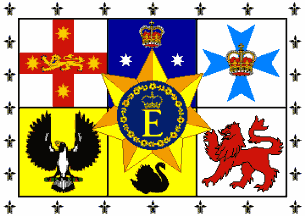 Australia's Yarralumla
Sandringham House
Frogmore House
Kensington Palace
Clarence House
St. James's Palace
Australia's Yarralumla
Sandringham House
Frogmore House
Kensington Palace
Clarence House
St. James's Palace
 Balmoral Castle

 Royal Air Force Club
 Naval and Military Club
 BRANDY AND PORT:
 French Cognac
Thomas Hine Cognac
Hennessy Cognac
French Cognac
Thomas Hine Cognac
Hennessy Cognac
 Jerez Sherry Xeres
Porto Port Oporto
Grand Marnier
Armagnac
CHAMPAGNE:
Dom Pérignon
Moët et Chandon
Pol Roger Champagne
Lanson Pére et Fils
Armand de Brignac
Laurent Perrier
Louis Roederer
Jerez Sherry Xeres
Porto Port Oporto
Grand Marnier
Armagnac
CHAMPAGNE:
Dom Pérignon
Moët et Chandon
Pol Roger Champagne
Lanson Pére et Fils
Armand de Brignac
Laurent Perrier
Louis Roederer
 Sovetskoye Shampanskoye
Krug Champagne
Ready to Tanqueray?
Bombay Sapphire
Juniper Green Organic Gin
Johnnie Walker
Canadian Club ...Queen Vicky's
Kevin Myers
Rex Murphy
Sovetskoye Shampanskoye
Krug Champagne
Ready to Tanqueray?
Bombay Sapphire
Juniper Green Organic Gin
Johnnie Walker
Canadian Club ...Queen Vicky's
Kevin Myers
Rex Murphy
 Richard III Society
 Battle of Britain Society
 Romeo Y Julieta
Cuvée Sir Winston Churchill
Romeo Y Julieta
Cuvée Sir Winston Churchill
 Johnson Society of London
Baldwin and Lafontaine
MacDonald and Cartier
George Grant
Johnson Society of London
Baldwin and Lafontaine
MacDonald and Cartier
George Grant
 Erik von Kuehnelt-Leddihn
Alexander Solzhenitsyn
Liberty or Equality
Reflections on French Revolution
Erik von Kuehnelt-Leddihn
Alexander Solzhenitsyn
Liberty or Equality
Reflections on French Revolution
 The Anglosphere
Ludwig von Mises Institute
The Anglosphere
Ludwig von Mises Institute


 COMMONWEALTH FREE MOVEMENT: SIGN THE PETITION!

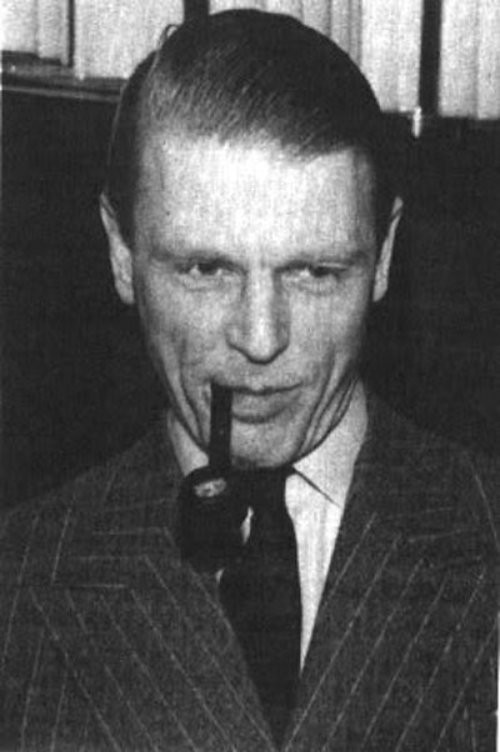
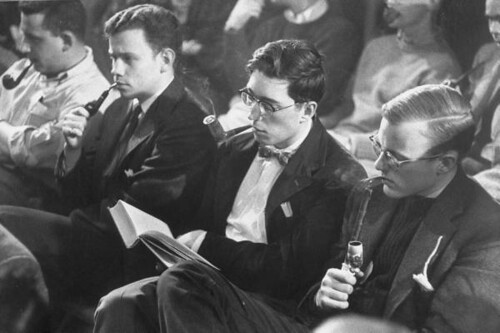
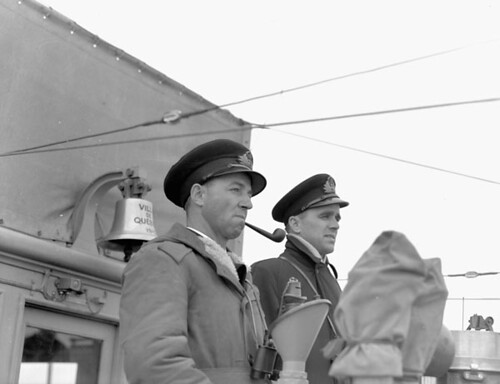
Speaking of pipes and our pipeless times, I just spent about five hours of happy quality time at a fascinating blog by one Mr. Joseph Johnson that is dedicated to famous pipe smokers.
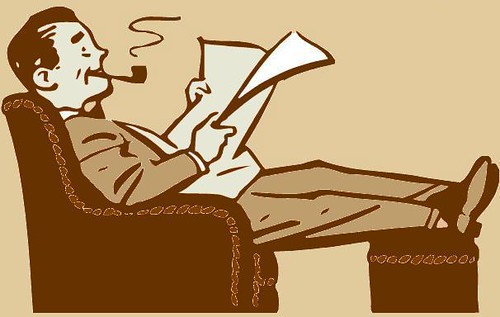
If only we still had open bridges like the old corvettes did, the traditional image of the pipe smoking sea captain might today be more than, well, a pipe dream. Unfortunately smoking in warships today is as banned as it is everywhere else, even for the ship's commanding officer, as if the private quarters of sailors is just another public place to be regulated by the state.
THE LONG BAN ON SMOKING mercifully came to an end with the demise of Queen Victoria in 1901. During that long reign - the longest ever - smoking was frowned upon and not allowed at court. The Empress encouraged an anti-smoking society throughout Victorian England, even while chimney sweeps and gentlemen clubs cluttered the imperial capital. That all changed overnight when Edward VII ascended the throne at the beginning of the 20th Century, and after dinner on his first day as King pronounced, "Gentlemen, you may smoke". 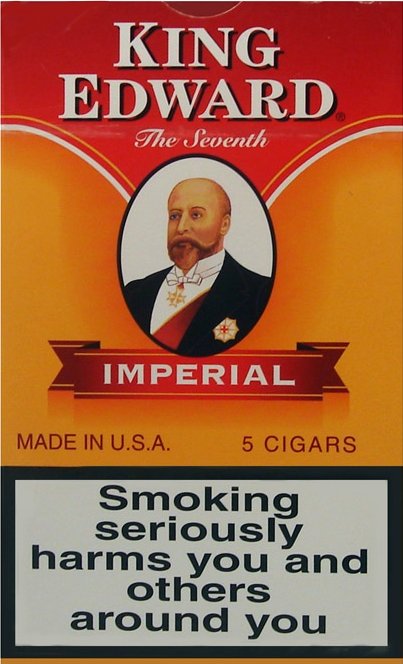 Perhaps that is why a fine cigar is a guilty pleasure for an English gentleman - it goes back to that day when eminent men in their black clad awe were mourning the passing of an era, and then that moment of embarrassed exhilaration arrives when the new King enters the room and declares that men should characterise their gravitas by puffing away! Oh, what sad and strange elation is this, the Edwardian era has arrived!
The Gentleman routinely imbibes himself with Pol Roger champagne, or any other prominent champagne that holds the royal warrant.
WINSTON CHURCHILL WAS A CIGAR-SMOKING PUFFBALL whose daily alcohol regime included sherry at breakfast, whisky at lunch, champagne at dinner and brandy before bed. Or so it has been reported. This may not be quite accurate for the official Churchill Centre states that he preferred beer at lunch and whisky during tea time, whilst before dinner there was sherry, then Champagne, brandy and port. He apparently enjoyed the occasional glass of hock at breakfast, and he would traditionally greet people in the morning with a sherry. Those close to him confide that he couldn't stand cocktails, apart from the "Papa Cocktail", a smidgen of Johnnie Walker covering the bottom of a tumbler, which was then filled with water and sipped throughout the morning according to his daughter. As one observer described it, it was more akin to mouthwash than a highball but that's how Winston liked his scotch and water. It was perhaps this very watered down concoction that gave the great man a seemingly bottomless capacity for drink-soaked endurance, and allowed him to fondly quip that "he had taken more out of alcohol than alcohol had taken out of him." In fact the contention that Churchill was in any way an "Alcohol Abuser" is pointedly debunked by the Churchill Centre as a myth, for no serious colleague had ever reported him the worse for drink. He was not an alcohol abuser per se, he was merely alcohol dependent. As evidence of that dependency there was of course his famous declaration to the King of Saudi Arabia that his absolute rule of life required drinking before, during and after meals, though it was during mealtimes that Churchill did most of his heavy imbibing. There was also the observation that he drank two bottles of Pol Roger champagne a day, his favourite champagne house and the only sparkling wine that he would consume following the Second World War:
 And, of course, there was Mme Odette Pol-Roger, a widow from 1963 until her death in 2000 aged 89, on whom - and on whose wines - Winston Churchill doted so much. Indeed, so smitten with her was Churchill that he named a racehorse after her and promised to visit her in Epernay: `Invite me during the vintage, and I'll press the grapes with my bare feet,' he declared. It is reckoned that in the last ten years of his life more than 500 cases of the stuff passed through his cellars.
 So for those who cannot afford the silky smooth crispness of Dom Pérignon everyday, Pol Roger champagne is probably the next best thing. Its premium bottle, Cuvée Sir Winston Churchill, is named after the gentleman who would tolerate no other. As a testament to its fine quality, the prominent champagne house also holds a Royal Warrant to supply the British Royal Family with cases of its very best, further enhancing Pol Roger's reputation as a "gentlemen's champagne".
It's Henley Royal Regatta week again. Straw hats, Hampstead-collared shirts, striped cotton blazers and rowing repp ties galore. See you gents at the Leander Club. Don't forget to bring your Pimm's!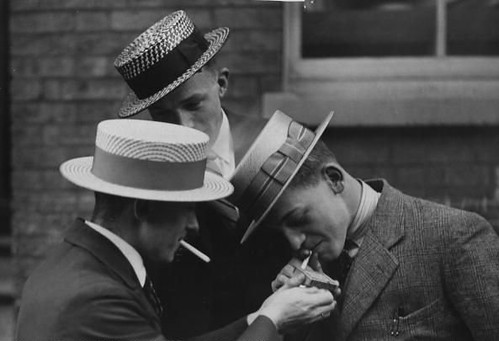 Earlier this month we reported on the Royal Ascot races, one of the highlights of the English social season. This week ushers in another classic British sporting event, the Henley Royal Regatta. The five-day Regatta, held on the River Thames by the town of Henley-on-Thames, takes place over the first weekend of every July.
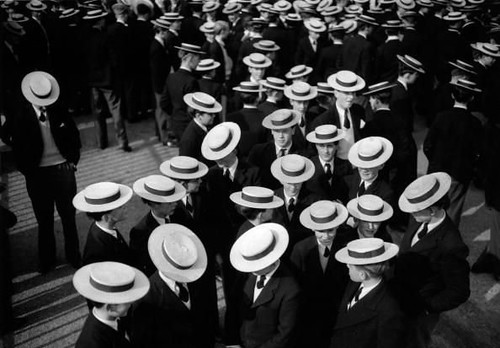 International crews compete in various races at the Regatta, which has been held every year since 1839 except during the two World Wars, the main event being the Grand Challenge Cup for Men's Eights. Prince Albert, Queen Victoria's consort, became the Regatta's first Royal Patron in 1851, a tradition carried on by the reigning monarch ever since, though unlike Royal Ascot they don't always deign to attend.
 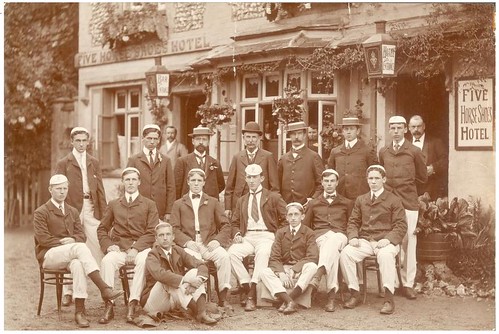 Even more so than at Ascot, Henley provides an opportunity for aristocrats from the sporting and social sets to dress in that distinctively British style which has inspired so many fashion designers over the decades. The commercialization of Henley, unlike Ascot, Wimbledon and cricket at Lord's, has been slower to take hold, and as Godfrey Smith writes in The English Season, it is something of "an Edwardian time warp."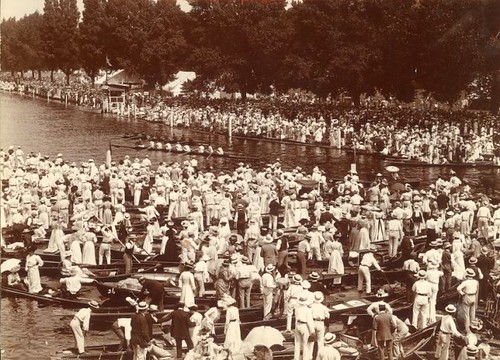
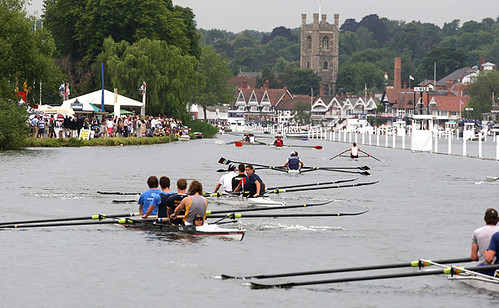 At Henley, members of rowing and boating clubs sport distinctive blazers, straw hats and repp ties - sometimes all three - in often eye-popping club colors. Like the Royal Enclosure at Ascot, Henley has its own inner sanctum where the bon ton congregate, and as at other English social occasions class distinctions involve fastidiousness of dress. The Stewards' Enclosure, adjacent to the last part of the mile-long course and the finish line, is the most coveted locale.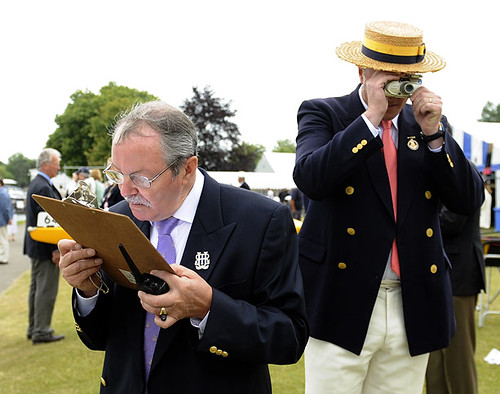
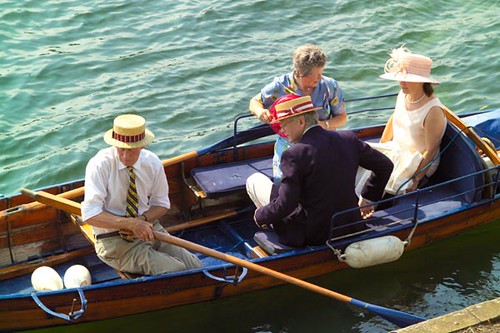
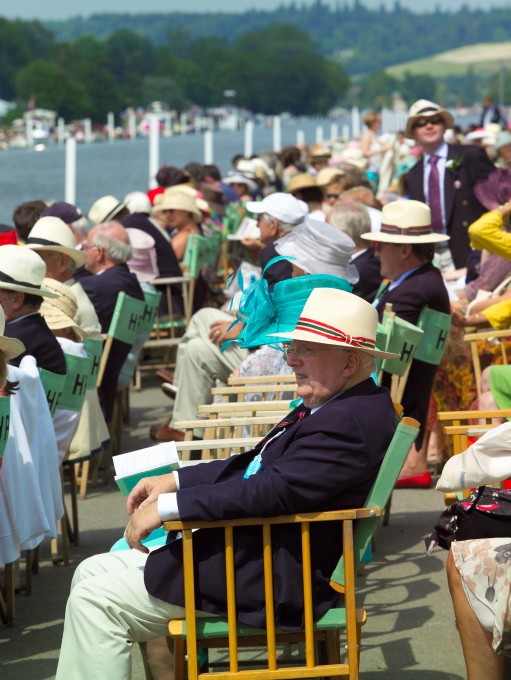
Prizegiving takes place here at the Regatta's conclusion, and there is a strict dress code: suits, blazer and flannels or evening dress, and of course neckties, are required for gentlemen while women must wear dresses or skirts that cover the knees. The waiting list for the Stewards' Enclosure, tactfully referred to as "a haven from the general bustle of the Regatta," is several years long. Many gallons of Pimm's and champagne are consumed there. 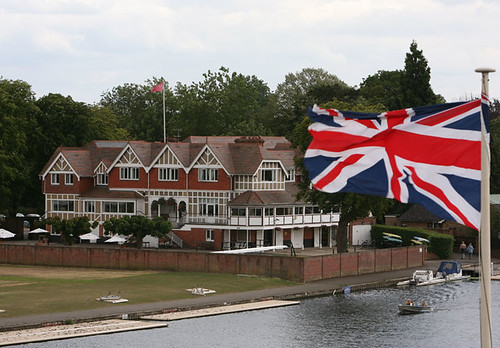
Another such stylish oasis is the Leander Club founded in 1818, situated just down from the Stewards' Enclosure. The largest, most historic and prestigious rowing club in the world, its members wear bright pink in sometimes surprising combinations. 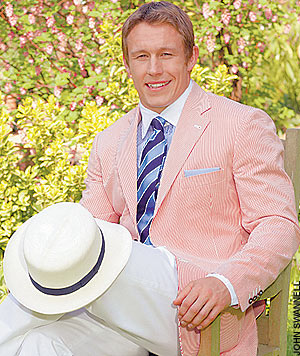 Straw Boater tip to The Classicist for the above article.
HOW MANY POOR SOULS made yet another new year's resolution promising themselves they're going to quit smoking? Hah! As a social smoker (and occasional drinker), I intend to carry on handsomely, thank you very much. With a few precautionary safeguards to protect the family from the pungent fumes, and a smoking jacket to keep the ashes and embers off my clothing, my resolution in 2008 is to take up pipe smoking - a promise I intend to keep! Do read on - the tobacco pipe is good for the soul, and a blessing to all who are near.
TOBACCO AND THE SOUL
by Michael P. Foley
Copyright (c) 2006-2008 First Things (April 1997).
The current brouhaha over smoking has made everyone painfully aware of tobacco’s effects on the body, but it has also obscured a more profound reason for smoking’s popularity: its relation to the soul. As the heyday of smoking passes into the ashheap of history, it is meet that we reflect on this connection.
The soul, of course, is a complex thing. Long ago Plato suggested that we consider it as divided into three parts—the appetitive, spirited, and rational—that correspond to the three basic kinds of human desires: the desire to satisfy physical appetites, the desire for recognition, and the desire for truth. Once this tripartite division is recalled, tobacco’s relation to the soul becomes clear: the three prevalent types of smoking tobacco—cigarettes, cigars, and pipes—correspond to the three parts of the soul.
Cigarettes correspond to the appetitive part of the soul, a fact that explains their association with both food and sex. The connection with the latter is particularly obvious: think of the proverbial postcoital cigarette, or of the ubiquity of cigarettes at singles bars. People with strong physical desires demand instant gratification, and they try to make what they desire as much a part of their own bodies as possible: hunger demands eating, thirst drinking, and lust making the body of one’s lover a part of one’s own. So too with cigarettes. A cigarette is inhaled: it must be fully and internally consumed in order to give pleasure. And a cigarette, with its quick buzz, is also instant gratification. Even the cigarette’s notorious connection to death ties it into appetites: both are indifferent to health in their quest for satisfaction, and both, when they reach addictive levels, become hostile to it.
Cigars, on the other hand, correspond to the spirited part of the soul. This explains their traditional popularity among men seeking honor or reputation—politicians, executives, etc. The reason for this correspondence can be found in the similarity between cigars and ambition. A cigar is visually impressive: with its large size and great billows of smoke, it often leaves a greater impact on the spectator than on the smoker. Further, a cigar is phallic—not with regard to male lust, but to male power. “Testis” in Latin means “witness”: the phallic status of the cigar is meant to bear public witness to the smoker’s prominence, his virility. The fact that a cigar is not inhaled reflects this external focus.
Ambition also has these traits: it too is more external than internal. Unlike physical desires, which are satisfied simply by consumption, ambition requires the consensus of others. The honor-seeker, for example, has to be honored by as many people as possible in order to be satisfied.
Finally, the pipe corresponds to the rational part of the soul, which explains why we tend to picture wise figures smoking pipes: the Oxford don surrounded by his great books, or Sherlock Holmes, who, in Doyle’s original stories, actually smoked other sorts of tobacco as well, yet is almost always portrayed with a pipe. Unlike cigars and cigarettes, a pipe endures. Similarly, the questions of the philosopher far outlast the passing concerns of physical desires on the one hand and human ambitions on the other. Further, while the cigar is entirely masculine, the pipe has both masculine and feminine elements (the stem and the bowl). This corresponds to the philosopher’s activity, which is both masculine and feminine: masculine in its pursuit of Lady Truth, feminine in its reception of anything that she discloses. Finally, the effect that the pipe has on others is analogous to the effect of philosophizing: the sweet fragrance of a pipe, like good philosophy, is a blessing to all who are near.
It is fitting that all three kinds of smoking tobacco involve the use of fire, for each relates to the soul’s responsiveness to reason, and fire, at least from the days of Prometheus, is especially emblematic of reason. But there are also nonhuman parts to the human soul. The growth of our hair and fingernails, for example, is due to the soul’s activity, yet is not responsive to rational instruction.
The use of tobacco that does not involve fire, therefore, somehow corresponds to these nonhuman—or more accurately, subhuman—parts of the soul. Chewing tobacco, for example, is a quintessentially subhuman activity. It is the rumination of bovine men. Or perhaps we should say it is camel-like, for camels not only chew, but spit as well. In either case, the point is clear: chewing tobacco is a sub-rational activity, which is why we usually associate it with men of limited acumen.
Snuff, too, would fall into this category, but with some minor differences. First, because it is not so disgusting, it would not have the same negative connotations as “chew.” (Activities can be sub-rational without being bad.) Second, snuff taken through the nose would fall under a different category. Everything else we have seen involves the mouth, and this is only natural, for the mouth was made to receive things into itself. But to sniff something up one’s nose . . . this is unnatural.
A question remains, however, about smoking non-tobacco. One candidate immediately comes to mind because it, like tobacco, is a natural leaf. Marijuana is also noteworthy because it is used in the same ways as smoking tobacco.
The key to the difference between the two is how each one affects the smoker. Tobacco—whether in a cigarette, cigar, or a pipe—leads to conversation, loosening the tongue just enough to incline it towards speaking, but not enough to disconnect it from the brain. Marijuana, on the other hand, does not keep this balance, loosening the tongue only to have it reel away from rational thought. It does not truly facilitate conversation, drawing the smoker into himself (not outwards, as does all good conversation) and dumbing-down any speech that is uttered. Thus the appearance of conversation can be created, but it is usually only that—an appearance. Marijuana is therefore a charlatan-weed, an impostor that apes its distant relative tobacco in a shallow and perverse way.
The uses of marijuana are twisted imitations of the uses of tobacco. Joints perversely imitate cigarettes in both their appearance and in their users’ claim to be erotic. But while the claim is one thing, the reality is another. Eros requires both a healthy tension and a sense of discrimination in order to be truly human. Marijuana, however, eliminates both. Think of the counterculture of the 1960s, which, in preaching sexual liberation, actually destroyed the human part of our sexuality by robbing sex of any sense of mystery, standards, or fidelity. Where once sex was a magical moment between eternally committed lovers, it was now purely animalistic, something that had no more meaning than any other bodily function. The pot-smoker fancies himself an erotic man, but ends up being an unerotic animal.
Similarly, the hash pipe is a perverse imitation of the tobacco pipe. The pot-smoker often fancies himself an intellectual: he gets high and thinks “deep thoughts” (again bringing the 1960s to mind). But the appearance is one thing, the reality another. Just as the wisdom of the 1960s student turns out to be sophomoric, so too do the deep thoughts of the pot-smoker end up being moronic.
And yes, there is even a marijuana counterpart to the cigar. In the early 1990s the inner cities gave birth to a new practice called “blunting,” in which cheap cigars are gutted and stuffed with marijuana. It is fitting that this practice originated in the same place where gangs come from. An inner-city gang seems supremely concerned with honor and courage: its elaborate codes would suggest as much. But seeming is one thing, being another. The gang-member fancies himself honorable, but is in reality a thug. Just as the cigar is the counterpart to the real virtues of honor and courage, the marijuana-blunt is the counterpart to the fake virtues of gang-honor and gang-courage.
As every student of Plato knows, if something has a relation to the soul it has a relation to the city. Thus if our theory is anything more than the smoke it purports to explain, it can be used to analyze political phenomena. For example, in recent years we have witnessed a concerted effort to sterilize our erotic attachments, to sap them of their danger but also of their vigor. The flat, unerotic words we now use for these attachments confirm this. Instead of “lover” and “beloved,” we now have “significant other” and, even worse, “partner” (a term which lends to the affairs of the heart all the excitement of filling out a tax form). Given this environment, it is no wonder that our most vigorous moral war waged today is against cigarette-smoking. Nor is it any wonder that this war’s only rival in intensity is the one in favor of “safe sex,” for condoms sterilize sex not only literally but figuratively as well.
Further, the relation between cigars and spiritedness may explain why cigars are now for the first time gaining a significant number of female disciples. For as women continue to enter the traditionally male world of competition, many are beating men at their own game by using the same tactics of gaining power. And with the tactics have come the symbols.
Most significantly, however, the relative rarity of pipe-smoking in America is a telling sign of its current intellectual crisis. If the pipe epitomizes the intellectual way of life, then is it any surprise that it cannot be found where schools substitute politically correct ideology for real philosophy, or where the intelligentsia, instead of engaging in serious thought, pander to the latest activist fads? Is it any surprise that America’s most famous pipe-smoker in the last thirty years has been Hugh Hefner, pajama prophet of the trite philosophy of hedonism? No, the age of the pipe-smoker is as far from us as the day when philosophers will be kings and kings will philosophize, a sad reality to which the thick blue haze of non-pipe smoke is only too ready to attest.
It should also be no surprise in this pipeless age that the ferocious battle over tobacco has missed the real point about its addictive power. Tobacco holds sway over the soul as much as it does the body. The qualities it takes in its various forms make it a near irresistible complement to the particular desire dominant in an individual’s soul. How we react to these forms says as much about our attitude toward those desires as it does toward the weed itself.
Readers of this blog will know that The Monarchist is an Old World stiff with a taste for Old World things. Stone edifices, ancient orders, historical regiments, colourful heraldry, etc - those unappreciated bits and pieces of glory and splendor that the fleeting modernist willfully ignores when not attempting to tear them down with his wrecking ball. You can add to this list the quaint Old World civility of the traditional gentlemen’s club, which as an institution has a stronger chance of survival than any of those other worthies, including the monarchy, precisely because it is not in the public sphere. Even with blow torch in hand, the modernist hasn’t the faintest prospect against the hidden pleasures of the private club.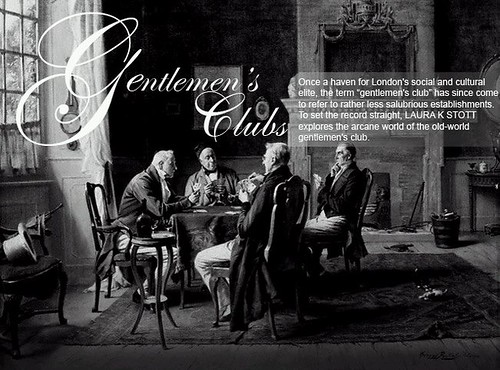 I’m not yet a member of one of these esteemed clubs, but having been raised in an Officer's Mess and missing it, will one day hopefully find my way. In the meantime, I rely on a close personal friend who hangs out at the swanky Rideau Club, and who by reciprocal benefit, is also entitled to transitory membership in most other gentlemen clubs across the English-speaking world. The spirit of that great line from The Sound of Music applies here: "I like how the rich live. I like how I live when I'm with them".
But the truth of the matter is, for a $1,500 per year annual membership fee (more or less), you don't have to be so well-to-do to afford it. For the price of a London hotel, better to stay at the Carlton Club than fork out a hundred pounds at the Four Seasons. So long as you appreciate the old ethos of “gaming, gossip and good dress”, along with fine dining, smoking cigars, drinking port and other manly pleasures, you're well on your way. On the other hand, the blackballing tradition is still prevalent in many of the clubs, and some of the London ones are still downright impossible to get into, even if you happen to be stonkingly rich, on the not unsound pretense “that it would be better that ten unobjectionable men should be excluded than one terrible bore should be admitted” (- Garrick Club's motto):
...anyone hoping for membership must be proposed and seconded by existing members just to be placed on a waiting list. No proposal and seconding by existing members means you will not even be considered for membership – even having all the money in the world would have no sway with these establishments. Once at the top of the waiting list – which usually takes a few years – the proposal goes before a committee where there is still a very high risk that a proposed member will be blackballed and - as was proved by the Prince of Wales when he proposed a friend at Whites a few years ago - even a royal nomination does not guarantee membership. In this instance, the proposer of such a candidate is usually also expected to resign as he has failed to withdraw his ‘unsuitable’ candidate, although royalty may manage to avoid this rule!Historically, such clubs were for the aristocratic and elite, and the first establishments were founded in London. Although no longer purely a sanctum for the males of the English upper classes, very little has changed:
The original Gentlemen’s clubs were established in the St James’s area of the west end of London in the 18th century, and this is where the oldest and most blue chip clubs – Whites, Boodles, and Brooks's – can still be found today...A cursory glance at a few noteworthy clubs:
Women are still not permitted in these establishments or are only permissible through a separate entrance. Other clubs - and those probably considered by members of the aforementioned three to be second tier - still tend to be characterized by a specific constituency. Some of London’s most notable include the Garrick (authors, actors, and barristers), the Carlton (Conservative Party members), the Athenaeum (civil service, clergy, and academics), and the Beefsteak (intellectuals). More recent modern additions such as the Groucho Club, Century, and Soho House cater to a younger, more media-minded set of members. A unique aspect of the majority of the traditional clubs is that any discussion of business or trade is strictly forbidden – a rule which is usually strictly enforced.
 DEFENDER OF THE FAITH
 KING AND COUNTRY
 LORD OF THE BLOG
 THE WEEPING CAVALIER
 THE GENTLEMAN
 THE PROUD TOWER
 QUEEN ELIZABETH II (1952 -)
King George VI (1936-52)
King Edward VIII (1936)
King George V (Windsor)
King Edward VII (Saxe-Coburg)
Queen Victoria (1837-1901)
King William IV (1830-37)
King George IV (1820-30)
QUEEN ELIZABETH II (1952 -)
King George VI (1936-52)
King Edward VIII (1936)
King George V (Windsor)
King Edward VII (Saxe-Coburg)
Queen Victoria (1837-1901)
King William IV (1830-37)
King George IV (1820-30)
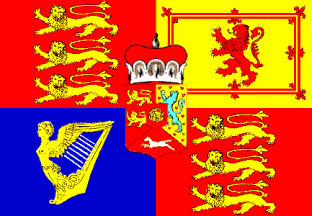 King George III (1760-1820)
King George II (1727-60)
King George I (Hanover)
Queen Anne (1702-14)
King William III (Orange)
King James II (1685-88)
King Charles II (1660-85)
King George III (1760-1820)
King George II (1727-60)
King George I (Hanover)
Queen Anne (1702-14)
King William III (Orange)
King James II (1685-88)
King Charles II (1660-85)
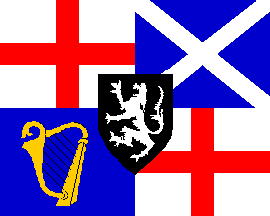 Richard Cromwell (1658-59)
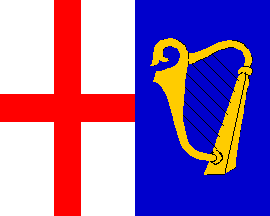 Oliver Cromwell ("Protector")
King Charles I ("Martyr")
King James I (Stuart)
Queen Elizabeth I ("Gloriana")
Queen Mary ("Bloody Mary")
Lady Jane Grey (Regent)
King Edward VI (1547-53)
King Henry VIII ("Majesty")
King Henry VII (Tudor)
King Richard III (1483-85)
King Edward V (1483)
King Edward IV (York)
King Henry VI (1422-61)
King Henry V (1413-22)
King Henry IV (Lancaster)
King Richard II (1377-99)
King Edward III (1327-77)
King Edward II (1307-27)
King Edward I ("Longshanks")
King Henry III (1216-72)
King John (Magna Carta)
King Richard I ("Lionheart")
King Henry II (Plantagenet)
King Stephen (House of Blois)
King Henry I (Charter Liberties)
King William II ("Rufus")
King William I ("Conqueror")
King Harold II (Godwinson)
King Edward ("Confessor")
Oliver Cromwell ("Protector")
King Charles I ("Martyr")
King James I (Stuart)
Queen Elizabeth I ("Gloriana")
Queen Mary ("Bloody Mary")
Lady Jane Grey (Regent)
King Edward VI (1547-53)
King Henry VIII ("Majesty")
King Henry VII (Tudor)
King Richard III (1483-85)
King Edward V (1483)
King Edward IV (York)
King Henry VI (1422-61)
King Henry V (1413-22)
King Henry IV (Lancaster)
King Richard II (1377-99)
King Edward III (1327-77)
King Edward II (1307-27)
King Edward I ("Longshanks")
King Henry III (1216-72)
King John (Magna Carta)
King Richard I ("Lionheart")
King Henry II (Plantagenet)
King Stephen (House of Blois)
King Henry I (Charter Liberties)
King William II ("Rufus")
King William I ("Conqueror")
King Harold II (Godwinson)
King Edward ("Confessor")
 HER MAJESTY
Queen of Canada
Queen of Australia
Queen of New Zealand
Queen of Jamaica
Queen of Barbados
Commonwealth Realms
Style of the British Sovereign
The Prince Consort
The Prince of Wales
The Duke of York.Org
The Monarchy Today
Monarchy Media Centre
History of the Monarchy
Royal Art and Residences
Royal Society Portrait Painters
The Royal Collection
The Queen's Images
The Royal YouTube Channel
Official Royal Image Library
LOYAL PROCLAMATION
HOUSE OF WINDSOR
British Royal Family
Her Majesty The Queen
HRH The Duke of Edinburgh
HRH Prince Charles of Wales
HRH The Duchess of Cornwall
HRH Prince William of Wales
HRH Prince Henry of Wales
HRH The Princess Royal
HRH The Duke of York
HRH The Earl of Wessex
HRH The Countess of Wessex
HRH The Duke of Gloucester
HRH The Duchess of Gloucester
HRH The Duke of Kent
HRH The Duchess of Kent
HRH Prince Michael of Kent
HRH Princess Michael of Kent
HRH Princess Alexandra
Lord Mountbatten of Burma
SA Monarchist Society
Monarchy Wales
Orange Lodge of Ireland
Junior Lodge of Ireland
HER MAJESTY
Queen of Canada
Queen of Australia
Queen of New Zealand
Queen of Jamaica
Queen of Barbados
Commonwealth Realms
Style of the British Sovereign
The Prince Consort
The Prince of Wales
The Duke of York.Org
The Monarchy Today
Monarchy Media Centre
History of the Monarchy
Royal Art and Residences
Royal Society Portrait Painters
The Royal Collection
The Queen's Images
The Royal YouTube Channel
Official Royal Image Library
LOYAL PROCLAMATION
HOUSE OF WINDSOR
British Royal Family
Her Majesty The Queen
HRH The Duke of Edinburgh
HRH Prince Charles of Wales
HRH The Duchess of Cornwall
HRH Prince William of Wales
HRH Prince Henry of Wales
HRH The Princess Royal
HRH The Duke of York
HRH The Earl of Wessex
HRH The Countess of Wessex
HRH The Duke of Gloucester
HRH The Duchess of Gloucester
HRH The Duke of Kent
HRH The Duchess of Kent
HRH Prince Michael of Kent
HRH Princess Michael of Kent
HRH Princess Alexandra
Lord Mountbatten of Burma
SA Monarchist Society
Monarchy Wales
Orange Lodge of Ireland
Junior Lodge of Ireland
 CROWN JEWELS
The Sleeping King
DIEU ET MON DROIT
The Devine Right of Kings
House of God, House of Kings
Throne and Altar
Order of Succession
Royal Line of Succession
King is Dead. Long Live the King!
The Interregnum
Accession Proclamation
QUEEN'S CORONATION:
Swearing of the Oath
Presenting of the Holy Bible
Anointing with Holy Oil
Presenting of Spurs and Sword
Investing with the Armills
Delivery of the Orb
Investiture and Crowning
"God Save the Queen!"
The Benediction
Enthroning and Homage
Holy Communion and the Recess
CROWN JEWELS
The Sleeping King
DIEU ET MON DROIT
The Devine Right of Kings
House of God, House of Kings
Throne and Altar
Order of Succession
Royal Line of Succession
King is Dead. Long Live the King!
The Interregnum
Accession Proclamation
QUEEN'S CORONATION:
Swearing of the Oath
Presenting of the Holy Bible
Anointing with Holy Oil
Presenting of Spurs and Sword
Investing with the Armills
Delivery of the Orb
Investiture and Crowning
"God Save the Queen!"
The Benediction
Enthroning and Homage
Holy Communion and the Recess
 ELIZABETH REGINA
The Royal Yacht Britannia
In Defence of Pomp
Coronation of Elizabeth II
Reserve Powers of the Crown
Her Majesty's Privy Council
Queen's Privy Council
Queen's Golden Jubilee
Diamond Wedding Anniversary
Queen's Silver Jubilee
Trooping the Colour
Changing of the Guard
Sovereign's Fleet Review
Battle of Britain Memorial Flight
Accession Day (Feb 2)
Commonwealth Day (Mar 13)
Victoria Day (May 24)
Coronation Day (Jun 2)
Queen's Official B'day (Jun 6)
Remembrance Day (Nov 11)
Royal Xmas Message (Dec 25)
State Opening of Parliament
Sovereign's Ceremonial Mace
THE ROYAL TOURNAMENT
ELIZABETH REGINA
The Royal Yacht Britannia
In Defence of Pomp
Coronation of Elizabeth II
Reserve Powers of the Crown
Her Majesty's Privy Council
Queen's Privy Council
Queen's Golden Jubilee
Diamond Wedding Anniversary
Queen's Silver Jubilee
Trooping the Colour
Changing of the Guard
Sovereign's Fleet Review
Battle of Britain Memorial Flight
Accession Day (Feb 2)
Commonwealth Day (Mar 13)
Victoria Day (May 24)
Coronation Day (Jun 2)
Queen's Official B'day (Jun 6)
Remembrance Day (Nov 11)
Royal Xmas Message (Dec 25)
State Opening of Parliament
Sovereign's Ceremonial Mace
THE ROYAL TOURNAMENT
 Royal Nova Scotia Tattoo
Royal International Air Tattoo
Royal Nova Scotia Tattoo
Royal International Air Tattoo
 Quebec City Military Tattoo
Windsor Castle Royal Tattoo
SPEECH FROM THE THRONE
Quebec City Military Tattoo
Windsor Castle Royal Tattoo
SPEECH FROM THE THRONE
 QUEEN AND THE LAW
At Her Majesty's Pleasure
The Queen's Peace
KING'S COLLEGE
Trinity College, Dublin (1592)
University King's College (1789)
McGill University (1821)
King's College, Toronto (1827)
Upper Canada College (1829)
Queen's University (1841)
KING'S SCHOLAR
QUEEN AND THE LAW
At Her Majesty's Pleasure
The Queen's Peace
KING'S COLLEGE
Trinity College, Dublin (1592)
University King's College (1789)
McGill University (1821)
King's College, Toronto (1827)
Upper Canada College (1829)
Queen's University (1841)
KING'S SCHOLAR
 "MY GOVERNMENT"
The Royal Prerogative
Rt. Hon. Prime Minister
Minister of the Crown
Order-in-Council
Letters Patent
Petition of Right (1628)
The King-Byng Affair (1926)
Dropping the Writ
QUEEN-IN-PARLIAMENT
Palace of Westminster
Granting of Royal Assent
Act of Parliament
Prorogation of Parliament
National Assembly for Wales
"MY GOVERNMENT"
The Royal Prerogative
Rt. Hon. Prime Minister
Minister of the Crown
Order-in-Council
Letters Patent
Petition of Right (1628)
The King-Byng Affair (1926)
Dropping the Writ
QUEEN-IN-PARLIAMENT
Palace of Westminster
Granting of Royal Assent
Act of Parliament
Prorogation of Parliament
National Assembly for Wales
 HANSARD
Ireland Hansard
Wales Hansard
HANSARD
Ireland Hansard
Wales Hansard
 Northern Ireland Hansard
KNIGHTS AND CHIVALRY
Illustrious Order of St. Patrick
Honourable Order of the Bath
Order of the Star of India
Order of the Crown of India
The Order of Merit
Royal Victorian Order
Order of the Indian Empire
Venerable Order of St. John
Northern Ireland Hansard
KNIGHTS AND CHIVALRY
Illustrious Order of St. Patrick
Honourable Order of the Bath
Order of the Star of India
Order of the Crown of India
The Order of Merit
Royal Victorian Order
Order of the Indian Empire
Venerable Order of St. John
 For Valour: The Monarchist
Victoria Cross at Sea
For Valour: The Monarchist
Victoria Cross at Sea
 QUEEN AND ARMED FORCES
 The British Army
The Royal Air Force
THE ROYAL NAVY
My Royal Canadian Navy
The British Army
The Royal Air Force
THE ROYAL NAVY
My Royal Canadian Navy

 LORD HIGH ADMIRAL
First Lord of the Admiralty
The First Sea Lord
Vice-Admiral United Kingdom
Rear-Admiral United Kingdom
THE ROYAL NAVY
Royal Canadian Navy
Britannia Royal Naval College
Royal Naval College Greenwich
Royal Naval College Osborne
HMY BRITANNIA
Royal Yacht Squadron
The Royal Yacht Britannia
LORD HIGH ADMIRAL
First Lord of the Admiralty
The First Sea Lord
Vice-Admiral United Kingdom
Rear-Admiral United Kingdom
THE ROYAL NAVY
Royal Canadian Navy
Britannia Royal Naval College
Royal Naval College Greenwich
Royal Naval College Osborne
HMY BRITANNIA
Royal Yacht Squadron
The Royal Yacht Britannia
 Royal Thames Yacht Club
 Royal Canadian Yacht Club
 Royal Sydney Yacht Squadron
Royal Nova Scotia Yacht Sqn.
Royal Cork Yacht Club
Royal Perth Yacht Club
Royal Ulster Yacht Club
Royal Sydney Yacht Squadron
Royal Nova Scotia Yacht Sqn.
Royal Cork Yacht Club
Royal Perth Yacht Club
Royal Ulster Yacht Club
 The New York Yacht Club
Royal Brighton Yacht Club
Royal Irish Yacht Club
Royal Southampton Yacht Club
Royal Yacht Club of Tasmania
The New York Yacht Club
Royal Brighton Yacht Club
Royal Irish Yacht Club
Royal Southampton Yacht Club
Royal Yacht Club of Tasmania
 THE QUEEN'S GUARD
Yeomen of the Guard
Gentlemen at Arms
Yeomen Warders
Warden of the Cinque Ports
HOUSEHOLD DIVISION
The Irish Guards
The Welsh Guards
HOUSEHOLD CAVALRY
DRAGOON REGIMENTS:
The Saskatchewan Dragoons
HUSSAR REGIMENTS:
The Sherbrooke Hussars
LANCER REGIMENTS:
LIGHT HORSE REGIMENTS:
South Alberta Light Horse
The Fort Garry Horse
TANK REGIMENTS:
The Ontario Regiment
Prince Edward Island Regiment
King's Own Calgary Regiment
Le Regiment de Hull
The Windsor Regiment
THE QUEEN'S GUARD
Yeomen of the Guard
Gentlemen at Arms
Yeomen Warders
Warden of the Cinque Ports
HOUSEHOLD DIVISION
The Irish Guards
The Welsh Guards
HOUSEHOLD CAVALRY
DRAGOON REGIMENTS:
The Saskatchewan Dragoons
HUSSAR REGIMENTS:
The Sherbrooke Hussars
LANCER REGIMENTS:
LIGHT HORSE REGIMENTS:
South Alberta Light Horse
The Fort Garry Horse
TANK REGIMENTS:
The Ontario Regiment
Prince Edward Island Regiment
King's Own Calgary Regiment
Le Regiment de Hull
The Windsor Regiment
 REMEMBRANCE DAY
War Graves Commission
For King and Empire
Queen's Book of the Red Cross
Surviving WW1Veterans
O VALIANT HEARTS (mp3)
The Verdun Memorial
Ireland War Memorial
REMEMBRANCE DAY
War Graves Commission
For King and Empire
Queen's Book of the Red Cross
Surviving WW1Veterans
O VALIANT HEARTS (mp3)
The Verdun Memorial
Ireland War Memorial
 Nfld National War Memorial
Saint Julien Memorial
Douaumont Ossuary Verdun
The Welsh Memorial
Nfld National War Memorial
Saint Julien Memorial
Douaumont Ossuary Verdun
The Welsh Memorial
 Old City Hall Cenotaph
Ottawa Memorial
South African War Memorial
Old City Hall Cenotaph
Ottawa Memorial
South African War Memorial
 Next of Kin Memorial Avenue
Saskatchewan Memorial Gates
Beaumont-Hamel Memorial
Notre Dame de Lorette
Groesbeek War Cemetery
Garden of Remembrance
Juno Beach Centre
LAST POST ASSOCIATION
YES, PRIME MINISTER
Next of Kin Memorial Avenue
Saskatchewan Memorial Gates
Beaumont-Hamel Memorial
Notre Dame de Lorette
Groesbeek War Cemetery
Garden of Remembrance
Juno Beach Centre
LAST POST ASSOCIATION
YES, PRIME MINISTER
 David Thompson (2008-)
Kevin Rudd (2007-)
David Thompson (2008-)
Kevin Rudd (2007-)
 Bruce Golding (2007-)
Gordon Brown (2007-)
Bruce Golding (2007-)
Gordon Brown (2007-)
 Hubert Ingraham (2007-)
Stephen Harper (2006-)
P. Simpson-Miller (2006-07)
Hubert Ingraham (2007-)
Stephen Harper (2006-)
P. Simpson-Miller (2006-07)
 Michael Somare (2002-)
Perry Christie (2002-07)
Paul Martin (2003-06)
Mekere Morauta (1999-2002)
Michael Somare (2002-)
Perry Christie (2002-07)
Paul Martin (2003-06)
Mekere Morauta (1999-2002)
 Helen Clark (1999-)
Bill Skate (1997-99)
Tony Blair (1997-2007)
Jenny Shipley (1997-99)
John Howard (1996-2007)
Helen Clark (1999-)
Bill Skate (1997-99)
Tony Blair (1997-2007)
Jenny Shipley (1997-99)
John Howard (1996-2007)
 Keith Mitchell (1995-)
Julius Chan (1994-97)
Owen Arthur (1994-2008)
Jean Chretien (1993-2003)
Kim Campbell (1993)
Paias Wingti (1992-94)
Hubert Ingraham (1992-2002)
P.J. Patterson (1992-2006)
Paul Keating (1991-96)
Nicholas Brathwaite (1990-95)
Jim Bolger (1990-97)
John Major (1990-97)
Mike Moore (1990)
Geoffrey Palmer (1989-90)
Ben Jones (1989-90)
Michael Manley (1989-92)
Rabbie Namaliu (1988-92)
Paias Wingti (1985-88)
Brian Mulroney (1984-93)
Erskine Sandiford (1987-94)
Errol Barrow (1986-87)
Bernard St. John (1985-86)
David Lange (1984-89)
Herbert Blaize (1984-89)
John Turner (1984)
Nicholas Brathwaite (1983-84)
Bob Hawke (1983-91)
Michael Somare (1982-85)
Edward Seaga (1980-89)
Julius Chan (1980-82)
Pierre Trudeau (1980-84)
Margaret Thatcher (1979-90)
Joe Clark (1979-80)
Tom Adams (1976-85)
James Callaghan (1976-79)
Michael Somare (1975-80)
Robert Muldoon (1975-84)
Malcolm Fraser (1975-83)
Bill Rowling (1974-75)
Harold Wilson (1974-76)
Lynden Pindling (1973-92)
Gough Whitlam (1972-75)
Norman Kirk (1972-74)
Michael Manley (1972-80)
Jack Marshall (1972)
William McMahon (1971-72)
Edward Heath (1970-74)
John Gorton (1968-71)
Pierre Trudeau (1968-79)
Hugh Shearer (1967-72)
John McEwen (1967-68)
Errol Barrow (1966-76)
Harold Holt (1966-67)
Donald Sangster (1967)
Harold Wilson (1964-70)
Lester Pearson (1963-68)
Alec Douglas-Home (1963-64)
Alex Bustamante (1962-67)
Keith Holyoake (1957-72)
John Diefenbaker (1957-63)
Harold Macmillan (1957-63)
Walter Nash (1957-60)
Anthony Eden (1955-57)
Louis St. Laurent (1948-57)
Sidney Holland (1949-57)
Keith Mitchell (1995-)
Julius Chan (1994-97)
Owen Arthur (1994-2008)
Jean Chretien (1993-2003)
Kim Campbell (1993)
Paias Wingti (1992-94)
Hubert Ingraham (1992-2002)
P.J. Patterson (1992-2006)
Paul Keating (1991-96)
Nicholas Brathwaite (1990-95)
Jim Bolger (1990-97)
John Major (1990-97)
Mike Moore (1990)
Geoffrey Palmer (1989-90)
Ben Jones (1989-90)
Michael Manley (1989-92)
Rabbie Namaliu (1988-92)
Paias Wingti (1985-88)
Brian Mulroney (1984-93)
Erskine Sandiford (1987-94)
Errol Barrow (1986-87)
Bernard St. John (1985-86)
David Lange (1984-89)
Herbert Blaize (1984-89)
John Turner (1984)
Nicholas Brathwaite (1983-84)
Bob Hawke (1983-91)
Michael Somare (1982-85)
Edward Seaga (1980-89)
Julius Chan (1980-82)
Pierre Trudeau (1980-84)
Margaret Thatcher (1979-90)
Joe Clark (1979-80)
Tom Adams (1976-85)
James Callaghan (1976-79)
Michael Somare (1975-80)
Robert Muldoon (1975-84)
Malcolm Fraser (1975-83)
Bill Rowling (1974-75)
Harold Wilson (1974-76)
Lynden Pindling (1973-92)
Gough Whitlam (1972-75)
Norman Kirk (1972-74)
Michael Manley (1972-80)
Jack Marshall (1972)
William McMahon (1971-72)
Edward Heath (1970-74)
John Gorton (1968-71)
Pierre Trudeau (1968-79)
Hugh Shearer (1967-72)
John McEwen (1967-68)
Errol Barrow (1966-76)
Harold Holt (1966-67)
Donald Sangster (1967)
Harold Wilson (1964-70)
Lester Pearson (1963-68)
Alec Douglas-Home (1963-64)
Alex Bustamante (1962-67)
Keith Holyoake (1957-72)
John Diefenbaker (1957-63)
Harold Macmillan (1957-63)
Walter Nash (1957-60)
Anthony Eden (1955-57)
Louis St. Laurent (1948-57)
Sidney Holland (1949-57)
 Robert Menzies (1949-66)
Winston Churchill (1951-55)
MacKenzie King (1935-48)
Richard Bennett (1930-35)
MacKenzie King (1926-30)
Arthur Meighen (1926)
MacKenzie King (1921-26)
Arthur Meighen (1920-21)
Robert Borden (1911-20)
Wilfred Laurier (1896-1911)
Charles Tupper (1896)
Mackenzie Bowell (1894-96)
John Thompson (1892-94)
John Caldwell Abbott (1891-92)
John A. MacDonald (1878-91)
Alexander Mackenzie (1873-78)
John A. MacDonald (1867-73)
Duke of Portland (1807-09)
Lord Grenville (1806-07)
William Pitt (1804-06)
Henry Addington (1801-04)
William Pitt (1783-1801)
Duke of Portland (1783)
Earl of Shelburne (1782-83)
Marquess of Rockingham (1782)
Lord North (1770-82)
Duke of Grafton (1768-70)
Earl of Chatham (1766-68)
Marq. of Rockingham (1765-66)
George Grenville (1763-65)
Earl of Bute (1762-63)
Duke of Newcastle (1757-62)
Duke of Devonshire (1756-57)
Duke of Newcastle (1754-56)
Henry Pelham (1743-54)
Earl of Wilmington (1742-43)
Robert Walpole (1721-42)
RIGHT HONOURABLE
Robert Menzies (1949-66)
Winston Churchill (1951-55)
MacKenzie King (1935-48)
Richard Bennett (1930-35)
MacKenzie King (1926-30)
Arthur Meighen (1926)
MacKenzie King (1921-26)
Arthur Meighen (1920-21)
Robert Borden (1911-20)
Wilfred Laurier (1896-1911)
Charles Tupper (1896)
Mackenzie Bowell (1894-96)
John Thompson (1892-94)
John Caldwell Abbott (1891-92)
John A. MacDonald (1878-91)
Alexander Mackenzie (1873-78)
John A. MacDonald (1867-73)
Duke of Portland (1807-09)
Lord Grenville (1806-07)
William Pitt (1804-06)
Henry Addington (1801-04)
William Pitt (1783-1801)
Duke of Portland (1783)
Earl of Shelburne (1782-83)
Marquess of Rockingham (1782)
Lord North (1770-82)
Duke of Grafton (1768-70)
Earl of Chatham (1766-68)
Marq. of Rockingham (1765-66)
George Grenville (1763-65)
Earl of Bute (1762-63)
Duke of Newcastle (1757-62)
Duke of Devonshire (1756-57)
Duke of Newcastle (1754-56)
Henry Pelham (1743-54)
Earl of Wilmington (1742-43)
Robert Walpole (1721-42)
RIGHT HONOURABLE

